Table of Contents
- What Is Land Clearing?
- What Is Excavation?
- Key Differences Between Land Clearing and Excavation Services
- Forestry Mulching Benefits for Residential Properties
- Residential Site Preparation Costs and Budget Planning
- Excavation Permit Requirements and Compliance
- When to Choose Land Clearing vs Excavation
Last Updated: August 25, 2026
What Is Land Clearing?
Land clearing is the process of removing vegetation, brush, trees, and debris from a property to reclaim usable space and improve accessibility. Unlike excavation, which focuses on moving soil and creating subsurface work, land clearing prioritizes vegetation management and surface-level debris removal. This service prepares properties for construction, farming, pasture expansion, or reducing wildfire risk.
The scope of land clearing varies significantly depending on property conditions. A half-acre lot overgrown with brush requires different equipment and techniques than a 3-acre tract with mature trees and old stumps. Professional contractors assess the entire property to determine whether traditional methods, forestry mulching, or a combination approach will deliver the best results.
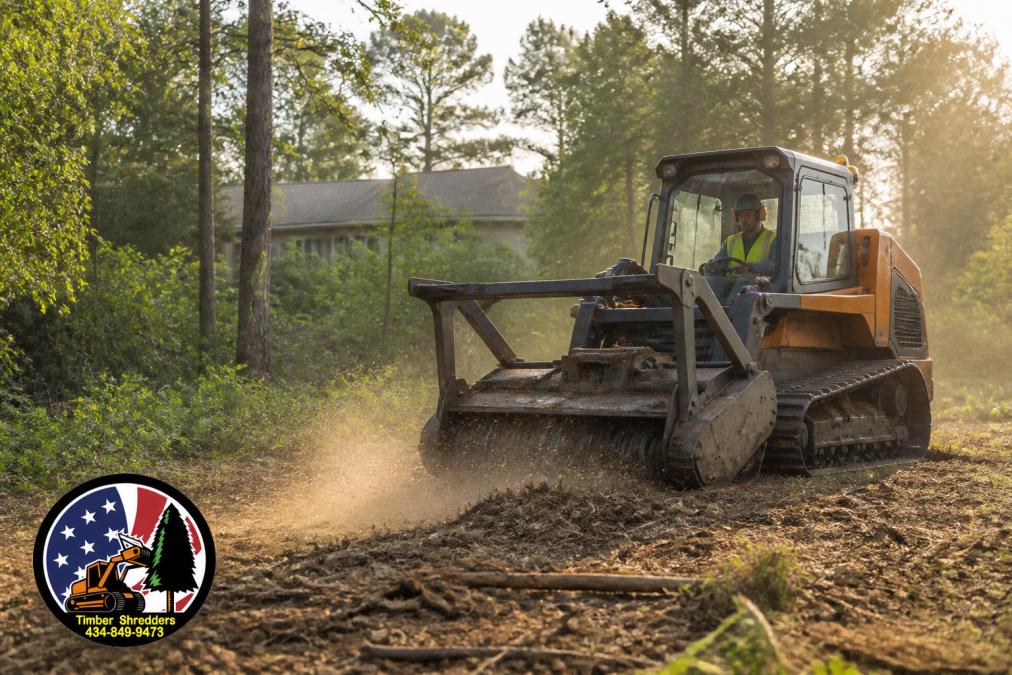
Forestry mulching has become increasingly popular for residential properties because it addresses a core concern: how to clear land without destroying topsoil or creating massive cleanup obligations. A mulching head attachment grinds standing vegetation into fine chips on-site, enriching the soil rather than hauling debris away. This approach preserves soil structure and eliminates the erosion problems that traditional bulldozing can cause.
Timber Shredders LLC specializes in comprehensive land clearing for residential and rural properties throughout Central Virginia. Their process begins with a detailed property assessment to evaluate vegetation density, stump conditions, soil type, and project goals, ensuring the right equipment and method are deployed from day one.
The biggest mistake homeowners make is assuming all land clearing contractors use the same methods. Some rely primarily on bulldozers that compact soil and require extensive debris hauling. Others use forestry mulching equipment that preserves soil health and eliminates most cleanup. Ask directly about their approach before committing to a quote.
What Is Excavation?
Excavation is the controlled removal and relocation of soil, rock, and subsurface materials to create foundations, utility trenches, drainage systems, or graded surfaces. While land clearing removes what’s above ground, excavation works below the surface. A backhoe or compact excavator digs, moves, and compacts earth to establish structural support, install utilities, or reshape property topography.
Excavation projects require precision because they directly affect drainage, foundation stability, and long-term property usability. A foundation dug too shallow or on unstable soil creates structural problems. Utility trenching that doesn’t account for proper slope results in water pooling and drainage failure.
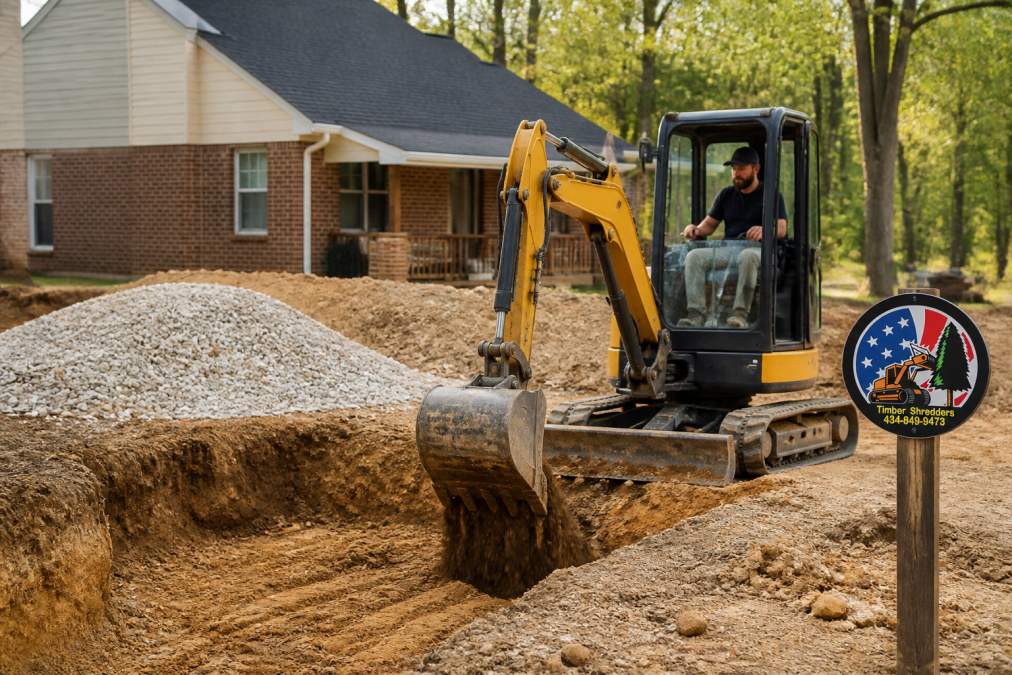
The equipment used in excavation work ranges from small compact excavators like the Bobcat E35 to larger hydraulic excavators for commercial development. Choosing the right equipment depends on project scope, site access, and the type of material being moved.
Excavation contractors must understand soil composition because different materials behave differently. Clay compacts well but resists digging. Sandy soil moves easily but may require stabilization. Rocky subsurface conditions demand specialized equipment. Professional excavators assess soil conditions before quoting work to avoid underestimating costs or timelines.
Excavation is not optional for construction projects. Building codes require proper site preparation, foundation depth, and drainage systems. Cutting corners on excavation work creates expensive problems that appear months or years after construction finishes.
Key Differences Between Land Clearing and Excavation Services
Land clearing and excavation serve fundamentally different purposes, though properties often need both. Understanding when each applies prevents confusion during project planning and helps landowners budget appropriately.
Land clearing removes surface vegetation and debris. Excavation moves soil and subsurface materials. A property might need land clearing to remove overgrown brush, then excavation to prepare a foundation for a new building. These are sequential steps in site preparation, not interchangeable services.
The equipment differs significantly. Forestry mulching tractors grind vegetation into chips. Excavators dig, scoop, and move earth. Bulldozers push and grade. Each machine excels at its specific task and performs poorly outside its intended use.
Timeline and cost structures diverge as well. Land clearing typically costs less per acre and completes faster because it focuses on surface work. Excavation projects take longer because subsurface work requires careful planning, soil assessment, and often permitting. A 2-acre land clearing might take 1-2 days (peer-reviewed research). A foundation excavation for the same property might take 3-5 days and require inspections at multiple stages.
Soil impact tells another story. Forestry mulching preserves topsoil and improves it with organic material. Traditional land clearing with bulldozers can compact soil and remove the nutrient-rich top layer. Excavation necessarily disturbs soil but, when done properly, creates stable subsurfaces for construction.
Here’s where it gets practical: a homeowner clearing 3 acres of brush for pasture expansion needs land clearing, not excavation. The goal is vegetation removal and soil improvement. But that same homeowner building a house on the cleared land then needs excavation to establish a proper foundation.
| Service | Primary Purpose | Equipment | Timeline | Soil Impact |
|---|---|---|---|---|
| Land Clearing | Remove vegetation and debris | Mulching tractors, brush cutters | 1-3 days per acre | Improved (with mulching) or neutral |
| Excavation | Move soil and create subsurfaces | Excavators, backhoes, bulldozers | 3-7 days for typical project | Disturbed but structured |
| Forestry Mulching | Grind vegetation into beneficial mulch | Specialized mulching head on tracked carrier | 1-2 days per acre | Improved with organic material |
| Site Grading | Level and shape property surface | Bulldozers, graders | 1-2 days | Compacted and stable |
Forestry Mulching Benefits for Residential Properties
Forestry mulching has transformed residential site preparation because it solves multiple problems simultaneously: it clears land, improves soil, and eliminates the disposal headache that traditional clearing creates.
The core benefit is on-site processing. Instead of grinding vegetation into chips that sit in piles requiring hauling, the mulch stays on the property and enriches the soil. This organic material improves water retention, adds nutrients, and creates a healthier growing environment for future pasture or landscaping. Homeowners with pasture expansion plans particularly value this because the mulched area is ready for seeding within weeks.
Erosion control matters significantly. A property cleared with bulldozers leaves bare, compacted soil vulnerable to washout during heavy rain. Mulched areas retain water better and resist erosion because the organic layer acts as a buffer. For properties on slopes or in areas with seasonal flooding, this difference is substantial.
Cost efficiency emerges when you factor in debris removal. Traditional clearing generates massive piles of brush, logs, and stumps requiring burning, chipping off-site, or hauling to landfills. Forestry mulching eliminates this problem entirely, reducing or eliminating disposal fees.
The timeline advantage is significant. Properties cleared with traditional methods often require a second pass to process debris. Forestry mulching completes the job in one pass. Timber Shredders LLC can typically complete residential forestry mulching projects within 1-2 days depending on acreage and vegetation density.
One concern homeowners raise: will mulching equipment damage my topsoil? The answer depends on soil conditions and operator skill. Wet clay soils can be rutted by heavy tracked equipment. Dry, well-drained soils typically handle it well. Professional operators assess soil moisture before starting work and adjust accordingly.
Avoid contractors who cannot clearly explain how they’ll handle your specific soil conditions. If your property has clay soil and has been wet recently, mulching equipment can create ruts. A good contractor will either wait for drier conditions or use alternative methods. Cheap quotes that ignore soil conditions often result in expensive repairs later.
Residential Site Preparation Costs and Budget Planning
Site preparation costs vary dramatically based on property size, vegetation density, soil conditions, and whether excavation or grading is required alongside clearing. Understanding the cost drivers prevents sticker shock and helps you evaluate quotes accurately.
Land clearing typically ranges based on acreage and vegetation complexity. Vegetation density is the primary cost driver. Dense brush mixed with stumps takes longer and requires more powerful equipment than sparse, low-growth vegetation. Rock removal, if encountered, adds significant cost because it requires specialized equipment or manual extraction.
Forestry mulching generally costs more than basic brush clearing but less than traditional clearing with debris removal. You’re paying for equipment efficiency and soil improvement, but eliminating separate disposal costs. Many properties see net savings because the mulch stays on-site rather than being hauled away.
Excavation and grading services are quoted separately and depend on the scope of subsurface work. Foundation digging, utility trenching, and drainage installation each have specific requirements and costs. These services typically require site surveys and permitting, adding time and expense.
When evaluating quotes, look for clarity on what’s included. Does the estimate cover stump removal below ground or just surface grinding? Are rocks removed or left in place? Will the contractor haul debris or leave it on-site? These details dramatically affect final cost.
Timber Shredders LLC provides comprehensive property assessments before quoting work. This process identifies potential complications, hidden rocks, unexpected stump depth, and soil conditions before work begins. Clear project planning and upfront estimates prevent mid-project surprises that derail budgets.
Properties under 5 acres where the primary goal is vegetation removal and soil improvement. Forestry mulching excels in this scenario because it completes quickly, improves soil health, and eliminates disposal complications.
Excavation Permit Requirements and Compliance
Excavation work often requires permits and inspections, particularly for construction projects. Understanding these requirements before starting prevents costly delays and ensures your project meets code.
Foundation excavation for new construction requires building permits in virtually all jurisdictions (iccsafe.org). The permit process includes site plan review, foundation design verification, and inspections at multiple stages: after excavation, before pouring concrete, and after backfill. These inspections ensure the foundation sits on stable soil at proper depth and that drainage systems are installed correctly.
Utility trenching for installing water, sewer, electric, or communications lines requires locating existing underground utilities before digging. The national 811 call-before-you-dig system identifies utility locations at no cost (call811.com). Hitting an unmarked utility line creates safety hazards, service interruptions, and substantial liability. Professional excavators always call 811 before breaking ground.
Stormwater management and erosion control become regulatory requirements on larger projects or in sensitive areas. Contractors must implement erosion control measures like silt fencing, sediment traps, or temporary stabilization. These measures add cost and timeline but are non-negotiable for compliance.
Some jurisdictions require environmental assessments before clearing or excavating, particularly on properties with known contamination history or in protected ecological areas. Wetlands, stream buffers, and sensitive habitats have specific regulations. Violating these regulations creates fines and project shutdown orders.
The permitting timeline varies by locality but typically adds time to project start. Reputable contractors are familiar with local permitting and can guide you through the process.
Ask your contractor about permitting requirements during the initial consultation. Contractors experienced in your area understand local regulations and can identify which permits your project needs. This saves time and prevents mid-project discoveries that halt work.
When to Choose Land Clearing vs Excavation
The decision between land clearing and excavation depends on your specific project goals. Clarity on what you’re trying to accomplish makes the choice straightforward.
Choose land clearing if your primary goal is vegetation removal and property restoration. You’re clearing overgrown brush to restore visibility, reduce wildfire risk, expand pasture, or improve property aesthetics. You’re not moving significant amounts of soil or preparing for construction. Forestry mulching is ideal here because it improves soil while clearing vegetation.
Choose excavation if you’re preparing for construction, installing utilities, or reshaping property drainage. You need subsurface work, foundation digging, grading, trenching, or drainage installation. Excavation is essential for structural projects because proper soil preparation prevents foundation failure and drainage problems.
Choose both if you’re developing raw land for construction. First, clear vegetation to access the property and remove obstacles. Second, excavate and grade to establish proper foundation preparation, drainage systems, and site topography. Most construction projects follow this sequence.
The timeline consideration matters too. If you need the work done quickly and your goal is vegetation removal, land clearing completes in days. If you need excavation with permitting and inspections, expect a longer timeframe depending on project complexity and local requirements.
Cost structure also guides the decision. Land clearing is typically the less expensive service and should be your choice if it accomplishes your goal. Adding excavation when it’s not necessary wastes money. Conversely, skipping necessary excavation to save money creates expensive problems later.
Soil condition assessment helps clarify the choice. If your property has compacted clay soil and you want to improve it for pasture or landscaping, forestry mulching preserves and improves soil. If your property needs structural support for building, excavation establishes stable subsurfaces.
Property size influences the decision as well. Small residential properties typically need land clearing for vegetation removal. Larger rural properties or development sites often require both services at different stages.
The difference between land clearing and excavation services comes down to surface versus subsurface work and vegetation removal versus soil movement. Land clearing reclaims property and improves soil health, while excavation prepares stable foundations and drainage systems. Most property projects require clarity on which service addresses your specific goal, and often, both services working in sequence.
If you’re planning site work on your property and need professional guidance on which approach makes sense, Timber Shredders LLC offers comprehensive property assessments to evaluate your options. Their team identifies the most efficient method for your property conditions and project timeline, providing clear estimates before work begins. Get a free quote to discuss your specific property needs and understand exactly what your project requires.
=== FAQ ANSWERS (audit these too, same rules) ===
[1] Q: Is land clearing the same as excavation?
A: No. Land clearing removes vegetation, brush, stumps, and debris from the surface, often using forestry mulching to preserve topsoil. Excavation digs below ground level for foundations, utility trenching, grading, and drainage systems. Land clearing prepares the surface; excavation modifies the subsurface structure. Many projects need both services in sequence.
[2] Q: Do I need a permit to clear land on my property?
A: Permit requirements depend on your location, project scope, and local regulations. Most residential land clearing for vegetation removal doesn’t require a permit, but excavation typically does. Check with your county or city building department before starting any earthmoving work. Professional contractors can guide you through permit requirements and handle applications.
[3] Q: How does forestry mulching improve soil health compared to traditional clearing?
A: Forestry mulching grinds vegetation into fine mulch on-site, which breaks down and enriches soil with organic matter. Traditional clearing often removes topsoil or leaves bare ground vulnerable to erosion. The mulch layer retains moisture, reduces compaction, and creates a stable base for future use, whether pasture, landscaping, or construction. This is why many property owners choose mulching for land that will remain in use.
[4] Q: What factors affect residential site preparation costs?
A: Costs depend on acreage, vegetation density, stump and rock removal, equipment access, and whether mulching or traditional clearing is used. Steep terrain, utility lines, and debris hauling add expense. Get a free property assessment and quote from a professional contractor, they’ll evaluate your specific conditions and provide transparent pricing based on actual site needs.
Frequently Asked Questions
Is land clearing the same as excavation?
No. Land clearing removes vegetation, brush, stumps, and debris from the surface, often using forestry mulching to preserve topsoil. Excavation digs below ground level for foundations, utility trenching, grading, and drainage systems. Land clearing prepares the surface; excavation modifies the subsurface structure. Many projects need both services in sequence.
Do I need a permit to clear land on my property?
Permit requirements depend on your location, project scope, and local regulations. Most residential land clearing for vegetation removal doesn't require a permit, but excavation typically does. Check with your county or city building department before starting any earthmoving work. Professional contractors can guide you through permit requirements and handle applications.
How does forestry mulching improve soil health compared to traditional clearing?
Forestry mulching grinds vegetation into fine mulch on-site, which breaks down and enriches soil with organic matter. Traditional clearing often removes topsoil or leaves bare ground vulnerable to erosion. The mulch layer retains moisture, reduces compaction, and creates a stable base for future use, whether pasture, landscaping, or construction. This is why many property owners choose mulching for land that will remain in use.
What factors affect residential site preparation costs?
Costs depend on acreage, vegetation density, stump and rock removal, equipment access, and whether mulching or traditional clearing is used. Steep terrain, utility lines, and debris hauling add expense. Get a free property assessment and quote from a professional contractor, they'll evaluate your specific conditions and provide transparent pricing based on actual site needs.
This article was written using GrandRanker