Table of Contents
- What to Look for in a Land Clearing Contractor
- Understanding Land Clearing Permit Requirements
- How to Estimate Land Clearing Costs
- Questions to Ask Before Hiring
- Red Flags and What to Avoid
- Getting a Free Estimate and Site Evaluation
- Conclusion
Last Updated: August 23, 2026
What to Look for in a Land Clearing Contractor
Choosing the right land clearing contractor is one of the most important decisions you’ll make for your property. A poor choice leaves you with incomplete work, damaged topsoil, unpermitted debris piles, and bills that balloon beyond the initial estimate. The right contractor, one with proper licensing, the right equipment, and a clear process, transforms your land efficiently while protecting soil health and maintaining compliance with local regulations.
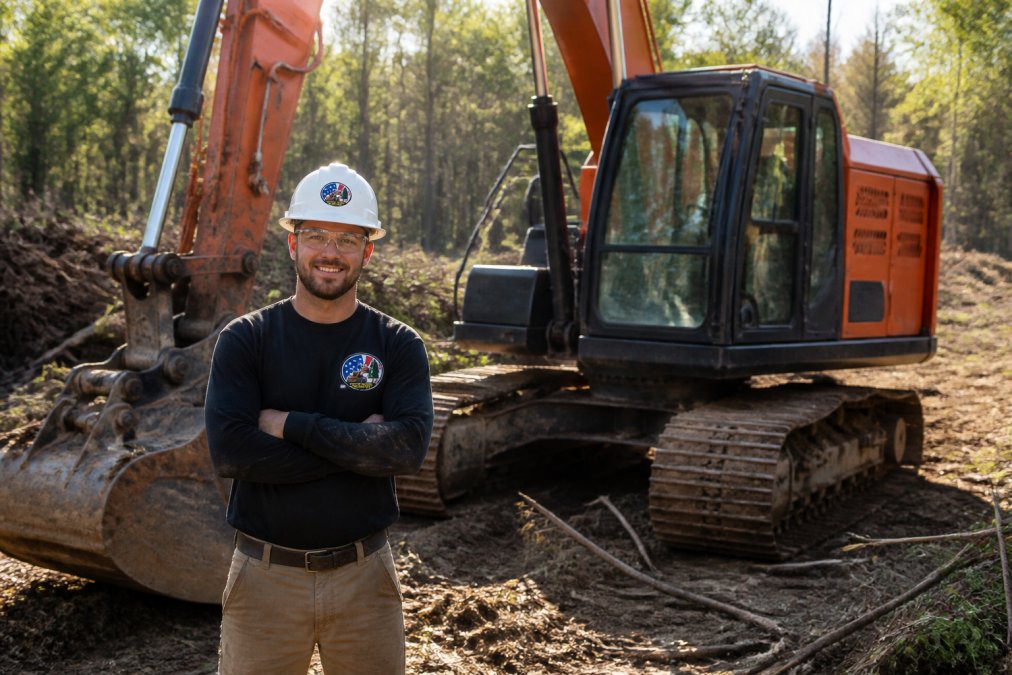
When evaluating a land clearing contractor, start by verifying credentials. This isn’t optional paperwork, it’s your protection against liability, abandoned projects, and shoddy work.
Licensing and Insurance Requirements
A licensed land clearing contractor carries the weight of accountability. In Virginia, contractors performing land clearing work should hold a Class A contractor license or equivalent classification depending on project scope. This license verifies the contractor has met bonding requirements, passed background checks, and maintains insurance coverage. Ask for proof of current licensing before any conversation about pricing or timelines.
Insurance is equally critical. The contractor should carry general liability insurance (minimum $1 million), workers’ compensation coverage, and equipment insurance. Liability coverage protects your property if the contractor’s equipment damages neighboring land, utilities, or structures. Workers’ compensation ensures that if an operator is injured on your property, you’re not liable for medical bills. Request certificates of insurance directly from the contractor’s insurance agent, not just photocopies they provide, this confirms coverage is active and current.
Many property owners skip this step to save money on the estimate. That’s exactly backwards. An uninsured contractor who causes damage leaves you personally liable for repair costs, sometimes exceeding the original project budget by thousands of dollars. Timber Shredders LLC maintains full licensing and insurance coverage, which is why property owners can move forward without worrying about compliance or liability exposure.
Equipment and Service Capabilities
The equipment a contractor owns determines what they can actually accomplish on your property. A land clearing contractor needs multiple tools because different terrain and vegetation types require different approaches.
The core equipment includes excavators (tracked or wheeled), bulldozers, skid steers, and forestry mulching equipment. Excavators handle stump removal and heavy digging. Bulldozers grade slopes and move large volumes of soil. Skid steers work in tighter spaces where larger machines can’t fit. Forestry mulching equipment grinds brush, saplings, and small trees into mulch that stays on-site, improving soil health rather than creating debris piles.
Ask the contractor which equipment they own versus rent. Owned equipment means faster response times and lower costs passed to you. Rented equipment adds time and expense. For a 3-acre property with mixed brush, stumps, and rocks, you need a contractor with excavation capability, not just a mulcher. Timber Shredders LLC utilizes professional equipment, which helps ensure predictable project timelines.
Also ask about site-specific challenges. Can they handle steep slopes without destabilizing the hillside? Do they have experience with rocky terrain? Can they navigate wet soil conditions without creating ruts that damage topsoil? A contractor who says "yes to everything" hasn’t thought through the logistics. A contractor who asks detailed questions about your terrain is thinking through the actual work.
Understanding Land Clearing Permit Requirements
Most property owners don’t realize that land clearing isn’t always a "do what you want" project. Local zoning compliance and clearing permits exist to protect water quality, prevent erosion, and maintain neighborhood standards. Skipping permits creates liability and can result in fines or mandatory restoration work.
Permit requirements vary by location within the region. Some areas require a clearing permit for any removal of vegetation on slopes steeper than 15 percent (the EPA). Others require permits only for projects over a certain acreage. Wetland areas have additional restrictions under state and federal environmental regulations (the EPA). If your property borders a stream or wetland, clearing activities near those areas may require permits from the Department of Environmental Quality.
The contractor should ask about permit requirements during the initial site evaluation. If they don’t mention permits, that’s a red flag. A professional contractor knows the local code and either obtains permits themselves or clearly explains which permits you need to secure before work begins. This protects both parties and ensures the work is legally defensible if questions arise later.
Many contractors absorb permit costs into their estimate. Others pass the cost to you separately. Either way, permits are non-negotiable, they’re part of the actual cost of the project, not an optional add-on. Budget for permitting when you’re comparing estimates.
How to Estimate Land Clearing Costs
Land clearing pricing depends on multiple factors: acreage, vegetation density, terrain slope, stump removal depth, debris disposal method, and whether the contractor is improving soil health or just removing obstacles.
A contractor’s estimate should itemize these factors. If the estimate says "land clearing: $X," that’s too vague. You can’t compare it to other quotes, and you have no protection against surprise charges. A detailed estimate breaks down stump removal, brush cutting, grading, mulching, debris hauling, and site restoration as separate line items. This transparency lets you understand where your money goes and identify where costs are highest.
The contractor should also specify what "finished" looks like. Does the estimate include grading to level the site? Does it include mulching the brush in place or hauling debris off-site? Does it include topsoil restoration? Does it include erosion control measures on slopes? These details change the final cost significantly.
Request the estimate in writing. Phone quotes are worthless when disputes arise. A written estimate should include the contractor’s name, license number, insurance information, project scope, timeline, and payment terms. It should also specify what happens if the contractor encounters unexpected conditions, rocks, stumps deeper than anticipated, utility lines, contaminated soil. A good estimate includes a contingency clause that defines how additional charges are calculated if conditions change mid-project.
Forestry Mulching Cost Per Acre and Budget Planning
Forestry mulching is a specific service within land clearing that deserves its own consideration. Instead of removing vegetation and hauling debris, mulching grinds brush, saplings, and small trees into fine mulch that stays on-site. This improves soil health, reduces erosion, and eliminates disposal costs.
Forestry mulching cost per acre depends on vegetation density and equipment efficiency. Dense brush costs more per acre than light undergrowth. Rocky terrain slows the mulcher and increases cost. Wet soil conditions may make mulching impossible until the ground dries. A contractor should give you a per-acre estimate with clear conditions attached ("$X per acre for brush under 4 inches diameter, on slopes under 20 percent").
Budget planning requires understanding whether mulching makes sense for your property goals. If you’re clearing land for pasture, mulching adds organic matter that improves soil structure and water retention. If you’re clearing for a driveway or building pad, you may want debris removed entirely. If you’re managing erosion on a slope, mulching stabilizes the soil better than bare ground. The contractor should explain these trade-offs and recommend the approach that matches your actual goals, not just the cheapest option.
Questions to Ask Before Hiring
Before signing a contract, ask these questions to separate professionals from contractors who cut corners:
"Can you walk my property and explain the site-specific challenges?" A contractor who gives a phone estimate without seeing your land hasn’t done their job. They’re guessing. The site evaluation should include discussion of slope stability, soil conditions, vegetation types, and obstacles like rocks or utility lines.
"What’s your timeline for this project, and what could delay it?" Weather delays are normal. Wet soil, heavy rain, or frozen ground can halt work for days. A contractor should explain realistic timelines and what conditions might extend the schedule. If they promise completion in 3 days on a 3-acre property with heavy brush, they’re either lying or planning to do sloppy work.
"How do you handle unexpected conditions?" Rocks, stumps deeper than anticipated, or contaminated soil can emerge once work begins. Ask the contractor how they handle these surprises. Do they call you immediately? Do they have a process for calculating additional charges? Do they stop work until you approve the extra cost? This protects you from $1,000 surprises.
"What happens after the work is done?" Does the contractor remove all debris, or is some left on-site? Do they grade and smooth the land, or leave it rough? Do they install erosion control measures on slopes? Clarify the definition of "complete" before work starts.
"Can you provide references from similar projects?" Ask for contact information for three recent clients with properties similar to yours. Call them. Ask whether the contractor finished on time, stayed within budget, cleaned up properly, and was responsive to questions during the project. References are your best predictor of actual performance.
Request the contractor’s references in writing during the initial consultation. If they hesitate or say “I’ll email them later,” that’s a warning sign. Contractors confident in their work provide references immediately.
Red Flags and What to Avoid
Certain contractor behaviors predict poor outcomes. Watch for these warning signs:
No written estimate. A contractor who gives only a verbal quote or a vague one-liner estimate is avoiding accountability. You can’t compare quotes, and you have no protection if costs balloon. Insist on a detailed written estimate before committing.
Unwillingness to discuss permits. If a contractor says "permits aren’t necessary" or "we’ll handle it without permits," they’re either ignorant of local regulations or deliberately avoiding compliance. This creates liability for you. Walk away.
Pressure to pay upfront in full. Standard practice is a deposit (typically 25-50 percent) to secure the start date, with remaining balance due upon completion. If a contractor demands full payment before work begins, they’re signaling financial instability or planning to abandon the project.
No insurance documentation. If they can’t provide a current certificate of insurance, they’re uninsured. That’s a dealbreaker. An accident on your property leaves you liable for medical bills and property damage.
Vague answers about equipment. If you ask what equipment they’ll use and they say "whatever we need," they haven’t planned the project. They’re making it up as they go, which leads to delays, inefficiency, and cost overruns.
References who are hard to reach. If the contractor’s references don’t answer calls or seem reluctant to talk, that’s telling. A satisfied customer is happy to recommend their contractor.
A contractor who avoids putting commitments in writing is a major red flag. Verbal agreements mean no recourse if the work is incomplete or doesn’t meet expectations. Always require a written contract that specifies scope, timeline, payment terms, and what happens if conditions change.
Getting a Free Estimate and Site Evaluation
The site evaluation is where professionals separate themselves from amateurs. A proper evaluation takes 30-60 minutes and includes walking the entire property, assessing vegetation density, identifying obstacles, checking for utilities, evaluating soil conditions, and discussing your property goals (asla.org).
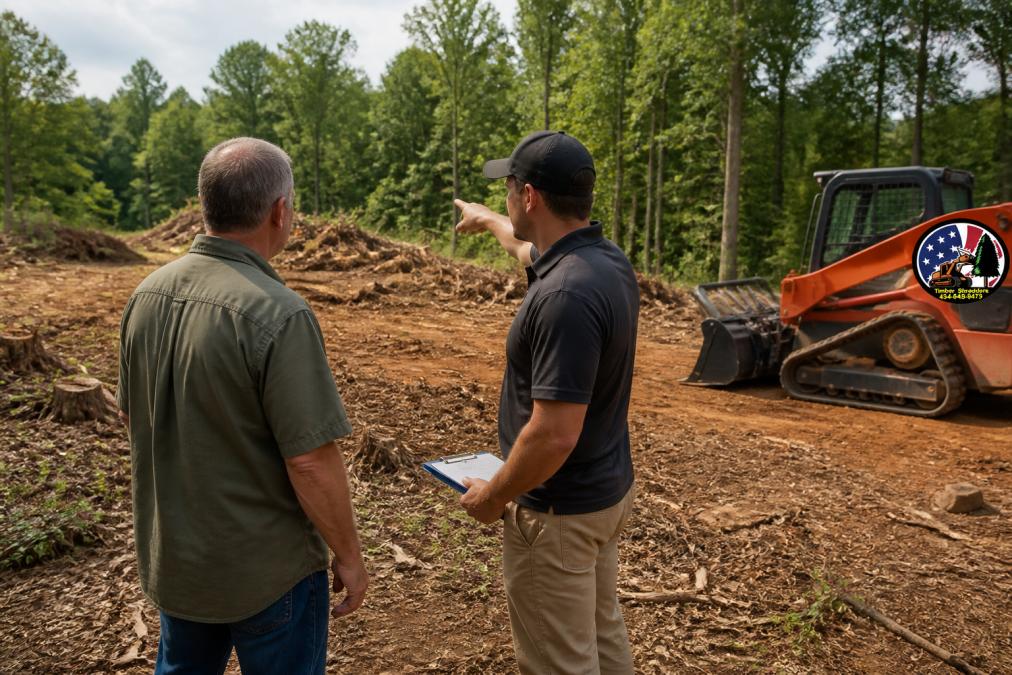
During the evaluation, the contractor should ask detailed questions: What are your goals for this land? How quickly do you need it done? Are there areas you want to preserve? Do you have concerns about erosion or topsoil damage? What’s your budget range? These questions show the contractor is thinking about your specific situation, not just applying a generic formula.
A good evaluation includes discussion of soil health. If the contractor mentions forestry mulching, erosion control, or topsoil restoration, they’re thinking beyond just removing vegetation. They’re considering the long-term usability of your land. This is especially important if you plan to use the cleared land for pasture, gardens, or future construction.
The free estimate should be just that, free. If a contractor charges for an estimate, that’s unusual and worth questioning. Most professionals offer free estimates because they know a detailed evaluation leads to a contract.
After the evaluation, the contractor should provide a written estimate within 3-5 business days. If it takes longer, they’re disorganized. The estimate should reflect the specific conditions discussed during the site visit, not generic pricing.
Timber Shredders LLC provides comprehensive property assessments that identify site-specific challenges and opportunities. The free estimate includes a detailed walkthrough, clear explanation of the work required, and a written quote that breaks down costs by service. This approach eliminates surprises and ensures you understand exactly what you’re paying for before work begins.
Choosing a land clearing contractor requires diligence, but the effort pays dividends. The right contractor clears your land efficiently, protects your soil, maintains legal compliance, and finishes on time and within budget. Verify licensing and insurance, ask detailed questions about equipment and timeline, request references, and insist on a written estimate. Get a free site evaluation from at least two contractors to compare approaches and pricing. Timber Shredders LLC offers a thorough property assessment, detailed written estimate, and professional execution from start to finish. Contact us for your free consultation and discover how professional land clearing transforms your property.
Frequently Asked Questions
What qualifications should a land clearing contractor have?
A qualified land clearing contractor should hold a Class A contractor license, carry general liability and workers' compensation insurance, and have verifiable references from completed projects. Ask to see current insurance certificates and licensing documentation before hiring. Check that their equipment is well-maintained and their crew has experience with the specific type of clearing your property needs, whether that's brush removal, stump extraction, or forestry mulching.
Do I need a permit for land clearing on my property?
Permit requirements for land clearing vary by county and locality. Many areas require permits for significant vegetation removal, especially near waterways or in conservation zones. Your contractor should be familiar with local land clearing permit requirements and help you navigate the process. Contact your county zoning office or planning department to confirm what permits apply to your specific project before work begins.
How do I estimate land clearing costs for my property?
Land clearing costs depend on acreage, vegetation density, terrain difficulty, equipment access, and debris disposal. Forestry mulching cost per acre typically varies based on brush thickness and stump size. Request a detailed site evaluation from multiple contractors to compare estimates. A professional estimate should itemize labor, equipment, permits, and disposal costs separately so you understand where your money goes and can identify hidden fees.
Will forestry mulching damage my topsoil like traditional bulldozing?
Forestry mulching is designed to preserve topsoil and improve soil health by grinding vegetation in place, leaving nutrient-rich mulch on the ground. Unlike bulldozing, which removes and relocates soil, forestry mulching minimizes erosion and compaction. The mulch layer actually protects remaining soil and can improve conditions for future pasture or landscaping. Ask your contractor about erosion control measures and soil protection as part of their site-specific plan.
This article was written using GrandRanker