Table of Contents
- What Is Forestry Mulching?
- What Is Stump Grinding and Stump Removal?
- Key Differences Between Mulching and Grinding
- Pros and Cons of Forestry Mulching
- Pros and Cons of Stump Grinding
- Cost of Forestry Mulching Per Acre and Budget Comparison
- Forestry Mulching Regrowth Management and Long-Term Soil Health
- When to Choose Forestry Mulching
Last Updated: August 13, 2026
What Is Forestry Mulching?
Forestry mulching is a land clearing method that uses specialized heavy equipment to grind standing vegetation, brush, stumps, and small trees into fine mulch in a single pass. Unlike traditional clearing that removes debris for hauling or burning, forestry mulching leaves the processed material on-site as a protective ground cover. This approach simultaneously clears land and improves soil conditions, making it an efficient solution for property owners managing dense vegetation across multiple acres.
The process works by feeding vegetation through a rotating drum or rotor equipped with carbide teeth that reduce material to a consistent size. The mulch layer created serves multiple functions: it controls erosion, suppresses regrowth, and gradually breaks down to enrich the soil with organic matter. A three-acre parcel choked with dense brush and small trees can be cleared and prepared for pasture, driveway installation, or building site preparation in a fraction of the time traditional methods require.
What Is Stump Grinding and Stump Removal?
Stump grinding is the process of using a specialized rotating cutter wheel to mechanically break down tree stumps below ground level, typically leaving a depression that can be filled with soil or mulch. Stump removal involves extracting the entire stump and root system from the ground, a more labor-intensive process that leaves a hole requiring backfill. In common usage, these terms are often used interchangeably, though they describe different end states.
Stump grinders come in various sizes and configurations. Track-mounted models like the Vermeer SC30TX offer excellent maneuverability on uneven terrain and can access confined spaces. The grinding process produces wood chips that typically remain on-site unless the property owner requests removal or spreading.
The key distinction between stump grinding and forestry mulching lies in scope. Stump grinding addresses the remnants of trees already cut down, while forestry mulching handles the entire vegetation management challenge: standing trees, brush, undergrowth, and stumps all in one operation. For properties with only a few isolated stumps and no significant brush concerns, stump grinding alone may be sufficient. For comprehensive land clearing, stump grinding becomes just one component of a larger project.
Key Differences Between Mulching and Grinding
Equipment and Process
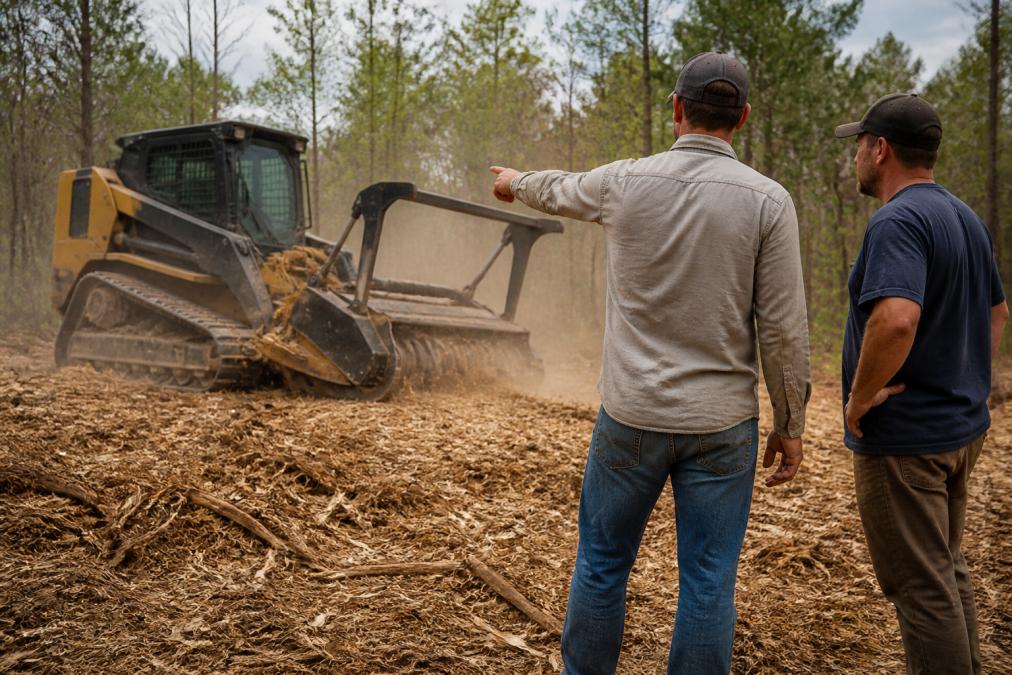
Forestry mulchers are typically mounted on skid steers or excavators and feature drum or rotor systems with multiple carbide teeth that can process vegetation of varying sizes in a single operation. Stump grinders, by contrast, are specialized machines with a single purpose: grinding individual tree stumps. Models like the Rayco RG Series feature a command cut cutter wheel optimized specifically for breaking down wood below grade.
The operational difference is significant. Forestry mulching is a continuous process where an operator moves across a property systematically, reducing all vegetation to mulch as they progress. Stump grinding requires positioning the machine over each individual stump and working until that stump is fully processed. On a property with scattered stumps and significant brush coverage, forestry mulching covers the ground faster and more comprehensively.
Site Preparation and Surface Finish
Forestry mulching leaves behind a mulch layer that provides immediate erosion control and soil enrichment. The surface finish is relatively uneven, creating a protective blanket across the cleared area rather than a flat, graded surface. This works well for pasture restoration or wildlife habitat improvement, but if you need a level surface ready for construction, additional grading is typically required.
Stump grinding creates a different surface condition. Once stumps are ground, the area is left with a depression that requires backfilling. The advantage is that stump grinding produces a cleaner, more level result, particularly valuable if the property needs to be immediately usable for construction or vehicle access.
Pros and Cons of Forestry Mulching
Pros of forestry mulching:
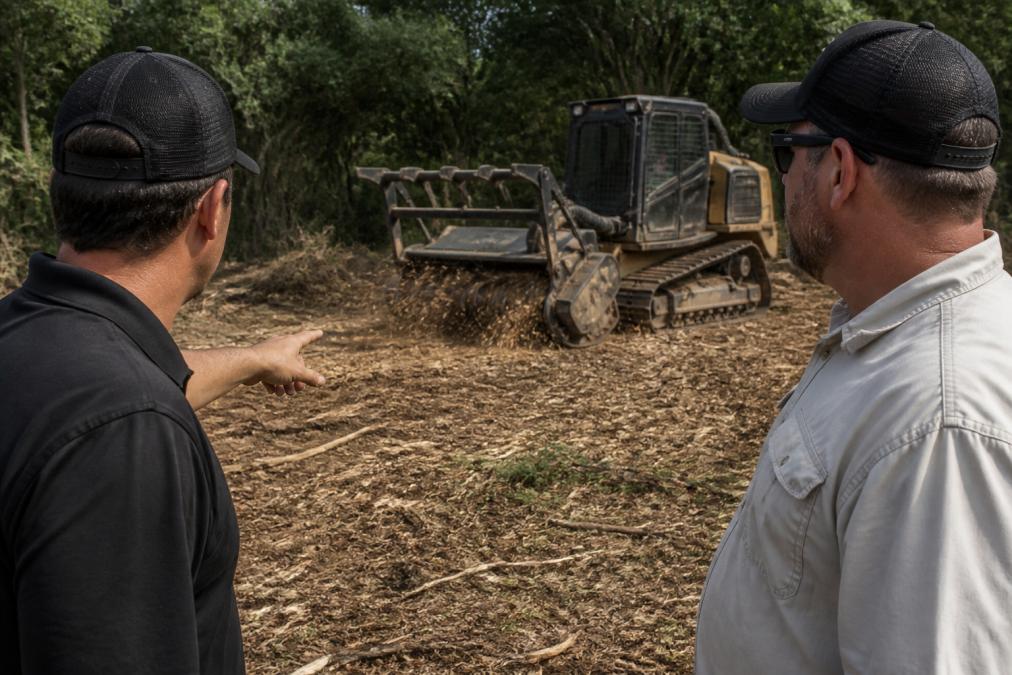
Forestry mulching eliminates standing trees, brush, undergrowth, and stumps simultaneously in a single operation. The mulch layer created provides immediate erosion control, suppresses regrowth, and begins breaking down to enrich soil with organic matter. This is particularly valuable on slopes or areas prone to runoff.
The process is environmentally sound compared to traditional clearing. Nothing is burned, hauled away, or buried. The organic material stays on-site where it benefits the land. Accessibility is another significant advantage, forestry mulching equipment can navigate terrain that would bog down conventional bulldozers, making rocky areas, uneven ground, and dense vegetation manageable.
Cons of forestry mulching:
Forestry mulching leaves an uneven surface covered with mulch, not a level, graded area ready for construction. If your project requires a flat surface, additional grading is necessary. Regrowth can occur if the mulch layer isn’t thick enough or if root systems remain viable in the soil. The equipment investment is substantial for contractors, which can translate to higher service costs for property owners.
Pros and Cons of Stump Grinding
Pros of stump grinding:
Stump grinding is highly targeted and efficient when removing specific stumps. For properties with a manageable number of stumps and no significant brush concerns, this direct approach is cost-effective. The result is a relatively clean surface ready for grading or landscaping. Stump grinding equipment is widely available for rent or professional service, making it easy to find providers in most areas.
Cons of stump grinding:
Stump grinding addresses only stumps and doesn’t touch standing vegetation, brush, or undergrowth. On a property with significant vegetation management needs, stump grinding is incomplete. The process generates wood chips that require management, and below-grade grinding can leave depressions requiring backfilling and compaction.
Cost of Forestry Mulching Per Acre and Budget Comparison
Forestry mulching is typically priced per acre or per hour of equipment operation, depending on the contractor and project scope. Dense vegetation covering multiple acres often becomes more cost-effective per acre than scattered stump grinding because the equipment moves continuously across the property.
Stump grinding is commonly priced per stump, often with minimum service charges.
The key budget consideration is scope. If your project involves comprehensive vegetation management across multiple acres, forestry mulching typically delivers better value. If you’re addressing a limited number of stumps on an otherwise clear property, stump grinding is often more economical.
Get a detailed site assessment before committing to a clearing method. Contractors like Timber Shredders LLC can evaluate your specific property conditions and provide transparent estimates based on actual vegetation density, accessibility, and equipment requirements. This prevents budget surprises and ensures you’re choosing the method that truly fits your project needs.
Forestry Mulching Regrowth Management and Long-Term Soil Health
Preventing Regrowth After Clearing
A properly applied mulch layer, typically 4-6 inches thick, suppresses regrowth by blocking sunlight and creating an environment where seeds cannot germinate. Some vegetation will attempt regrowth regardless of mulch depth, particularly invasive species or plants with aggressive root systems. A common approach is to monitor cleared areas in the first growing season and address any emerging vegetation early through light mulching or spot treatment.
The thickness of the mulch layer directly affects regrowth suppression. Thinner applications (2-3 inches) provide some protection but may allow determined vegetation to push through. Thicker applications (5-6 inches) provide more reliable suppression but require more material. The optimal balance depends on your property’s vegetation history and your tolerance for follow-up management.
Soil Acidity and Nutrient Impact
As mulch breaks down over time, it gradually becomes incorporated into the soil, enriching it with organic matter. Fresh wood mulch, particularly from hardwood species, can temporarily increase soil acidity as it decomposes. This is rarely a concern for pasture restoration or general land reclamation, but soil testing before and after clearing can clarify whether pH adjustment is needed.
The organic matter contribution from mulch is significant for soil health. As the mulch layer breaks down over 1-2 years depending on climate and material composition, it becomes humus that improves soil structure, increases water-holding capacity, and supports beneficial microbial activity. This is why land cleared with forestry mulching is often more productive for pasture or vegetation establishment than land cleared with traditional methods.
When to Choose Forestry Mulching
Forestry mulching is the superior choice for comprehensive land clearing projects where multiple vegetation management challenges exist simultaneously. If your property has dense brush, standing trees, accumulated undergrowth, and scattered stumps, forestry mulching addresses all of these in a single operation.
Choose forestry mulching when erosion control is a priority. The mulch layer created during clearing immediately stabilizes soil and prevents runoff, essential on slopes or properties with poor drainage. Accessibility challenges also favor forestry mulching, rocky terrain, uneven ground, and confined spaces that would bog down conventional bulldozers are manageable for skilled operators with proper equipment.
Forestry mulching also makes sense when you want to minimize environmental impact and avoid burning or hauling debris. The organic material stays on-site, working to improve soil health rather than being removed or destroyed.
The choice between forestry mulching and stump grinding comes down to project scope. Comprehensive vegetation management across multiple acres favors mulching. Targeted stump removal on otherwise clear property favors grinding. Mixed situations often benefit from a combination approach tailored to your specific property conditions.
Choosing between forestry mulching and stump grinding requires honest assessment of your property’s specific challenges and your project goals. Comprehensive vegetation management, erosion control, and long-term soil health improvements point toward forestry mulching. Limited stump removal on clear property points toward grinding. Timber Shredders LLC offers comprehensive property assessment and clear project planning to ensure you’re investing in the right solution. Get a free quote today and discover how professional land clearing can restore access, improve visibility, and enhance your property’s long-term usability.
Frequently Asked Questions
Will forestry mulching tear up my topsoil and cause erosion like a bulldozer would?
No. Forestry mulching grinds vegetation in place and leaves the mulch layer on-site, which actually protects topsoil from erosion and runoff. The grinding process doesn’t compact or remove soil the way mechanical clearing equipment does. The resulting mulch blanket stabilizes the ground, reduces water runoff, and helps retain moisture. This is one of the key advantages over traditional clearing methods that can leave bare, exposed soil vulnerable to erosion.
What’s the difference between stump grinding and stump removal?
Stump grinding uses a specialized grinder to pulverize the stump below ground level into wood chips, leaving the root system in place underground. Stump removal involves extracting the entire stump and root ball from the ground, which requires excavation and leaves a hole. Grinding is faster and less invasive but doesn’t eliminate roots; removal is more thorough but more labor-intensive and may require backfill. For most residential land clearing, grinding is sufficient and more cost-effective.
How do I prevent regrowth after forestry mulching?
Forestry mulching itself reduces regrowth significantly because the grinding process destroys most root systems and vegetation. To maximize prevention, ensure the mulch layer is thick enough (at least 3-4 inches) to suppress new growth. The organic matter also acidifies the soil slightly, which inhibits certain invasive species. For stubborn areas, a follow-up treatment or herbicide application may be needed, but most properties see minimal regrowth within the first year after professional mulching.
How long does a typical land clearing project take?
Clearing speed depends on vegetation density, acreage, and equipment type. A forestry mulcher can typically clear 1-3 acres per day for light to moderate brush, while dense vegetation with large trees may take longer. Stump grinding alone processes fewer stumps per day (5-15 depending on size and spacing). Site accessibility, terrain, and unexpected obstacles like rocks or buried debris can extend timelines. A professional assessment of your property determines the realistic schedule for your specific project.
This article was written using GrandRanker