
Table of Contents
- What Is a Land Clearing Permit and When You Need One
- Land Disturbance Permit Requirements by County
- Square Footage Thresholds and Exemptions
- Erosion and Sediment Control Plan Requirements
- Step-by-Step Permit Application Process
- Cost to Clear One Acre of Land and Budget Factors
- Environmental Compliance and Regulatory Requirements
- Conclusion
Last Updated: August 26, 2026
What Is a Land Clearing Permit and When You Need One
Aland clearing permit is an official authorization from your local government that allows you to remove vegetation, trees, stumps, and other debris from your property. This permit ensures your land disturbance activity complies with environmental protection standards, erosion control requirements, and local zoning ordinances.
Most property owners in Central Virginia need a land clearing permit when planning to disturb the land surface meaningfully. Whether clearing brush for a driveway, removing trees to reduce wildfire risk, or preparing a construction site, the permit process protects both your property and the surrounding environment. Without proper authorization, you risk fines, project delays, and liability for erosion damage.
Land disturbance can trigger soil erosion, stormwater runoff problems, and impacts on neighboring properties. Local jurisdictions mandate permits to ensure vegetation removal is done responsibly. At Timber Shredders LLC, we help property owners navigate these requirements so they can move forward with confidence.
Land Disturbance Permit Requirements by County
Central Virginia spans multiple counties, each with its own land disturbance permit requirements. What’s permitted in one county might require additional documentation in another.
Albemarle County requires a land clearing permit for vegetation removal exceeding 2,500 square feet on a single parcel (albemarle.org). The Community Development Department processes applications within 10-15 business days and requires a site plan showing the clearing area and erosion control measures.
Fluvanna County follows similar thresholds but emphasizes stormwater management plans for properties near waterways or wetlands. Processing times can extend to 20 business days depending on complexity.
Goochland County requires permits for land disturbance removing vegetation from more than 1 acre or affecting slopes steeper than 15 percent. Their site development review process requires a formal grading plan.
Louisa County takes a more lenient approach for residential properties, often exempting clearing projects under 5,000 square feet if they don’t involve grading or fill. Commercial and agricultural operations face stricter requirements.
Hanover County requires permits for clearing activity disturbing more than 2,500 square feet and mandates an erosion and sediment control plan for all projects. Processing typically takes 15-20 business days.
Contact your specific county’s Community Development Department or Planning Division first. They’ll clarify whether your project requires a permit and what documentation you’ll need.
Square Footage Thresholds and Exemptions
Understanding square footage thresholds is critical because it determines whether you need a permit. Most Central Virginia counties use 2,500 square feet as the baseline trigger for land disturbance permits.
Common threshold scenarios:
Projects under 2,500 square feet typically don’t require a permit in most counties, provided you’re not grading, filling, or creating slopes. Exemptions often disappear if your work involves grading or if your property sits in a sensitive area like a floodplain or near a stream.
Projects between 2,500 and 5,000 square feet usually require a basic land clearing permit but may not need a full erosion and sediment control plan. You’ll submit a simple site plan showing the clearing area and basic erosion prevention measures.
Projects exceeding 5,000 square feet almost always require a detailed erosion and sediment control plan, a grading plan showing topography changes, and potentially a stormwater management analysis.
Exemptions that sometimes apply:
Many counties exempt routine landscape maintenance, mowing, pruning, and removal of dead vegetation from permit requirements. The key distinction is that maintenance doesn’t alter the site’s topography or create new slopes.
Agricultural operations sometimes receive exemptions if they’re on land zoned for farming, though this varies by county.
Forestry operations occasionally qualify for exemptions under state forestry guidelines, but only if they follow specific best-management practices.
The safest approach is to measure your project area and contact your county office. A quick phone call answering "How many square feet am I clearing?" often clarifies whether a permit is required.
Erosion and Sediment Control Plan Requirements
An erosion and sediment control plan is the centerpiece of most land disturbance permits. This document demonstrates how you’ll prevent soil from washing into neighboring properties, streams, or stormwater systems during and after clearing.
What the plan must include:
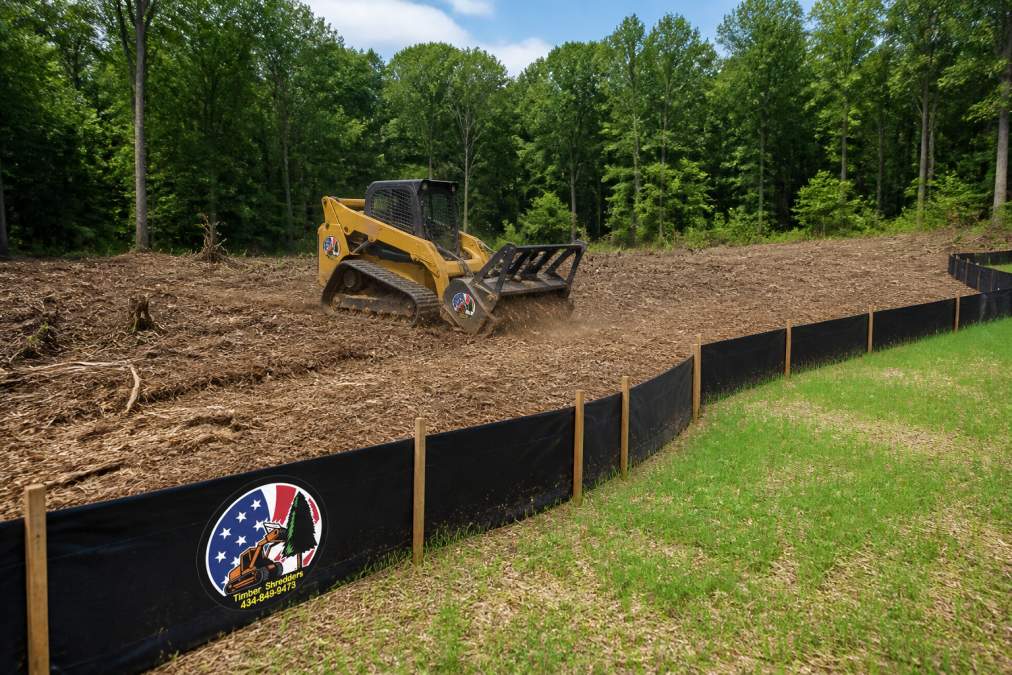
Your plan needs to show the specific measures you’ll use to stabilize exposed soil. Common practices include silt fencing, sediment traps, erosion control blankets, and temporary seeding. The plan should identify where each measure will be installed and how it will remain in place throughout the project.
Stormwater management is a major component. You’ll need to show how water will flow across the cleared site, where sediment will settle, and how runoff will be directed away from sensitive areas. For larger projects, this might include temporary sediment basins or check dams.
Vegetation stabilization timing matters. Many plans require temporary seeding or mulching to stabilize exposed soil within 14 days after clearing (the CDC).
Who prepares the plan:
Some property owners prepare simple plans themselves for smaller projects. However, most counties prefer plans prepared by professionals, landscape architects, engineers, or experienced land management companies. Professional preparation increases approval likelihood and ensures compliance.
Common mistakes in plan submission:
Vague erosion control measures fail. You need specific, measurable practices with installation details.
Ignoring site-specific conditions causes rejections. A plan that doesn’t account for slopes, drainage patterns, or nearby waterways will be sent back for revision.
Underestimating the project timeline delays approvals. If your plan shows clearing in two weeks but doesn’t address erosion control during that period, reviewers will request revisions.
Step-by-Step Permit Application Process
Getting a land clearing permit involves five distinct steps.
Step 1: Determine Your County’s Requirements
Before preparing any paperwork, identify which county’s regulations apply to your property. If your land crosses county lines, you may need permits from multiple jurisdictions.
Contact your county’s Community Development Department or Planning Division directly. Ask: Does my project require a land clearing permit? What’s the square footage threshold? What documentation do I need? How long does approval typically take?
Most counties have websites with permit requirements listed, but calling is faster and more reliable.
Step 2: Prepare Your Site Plan and Documentation
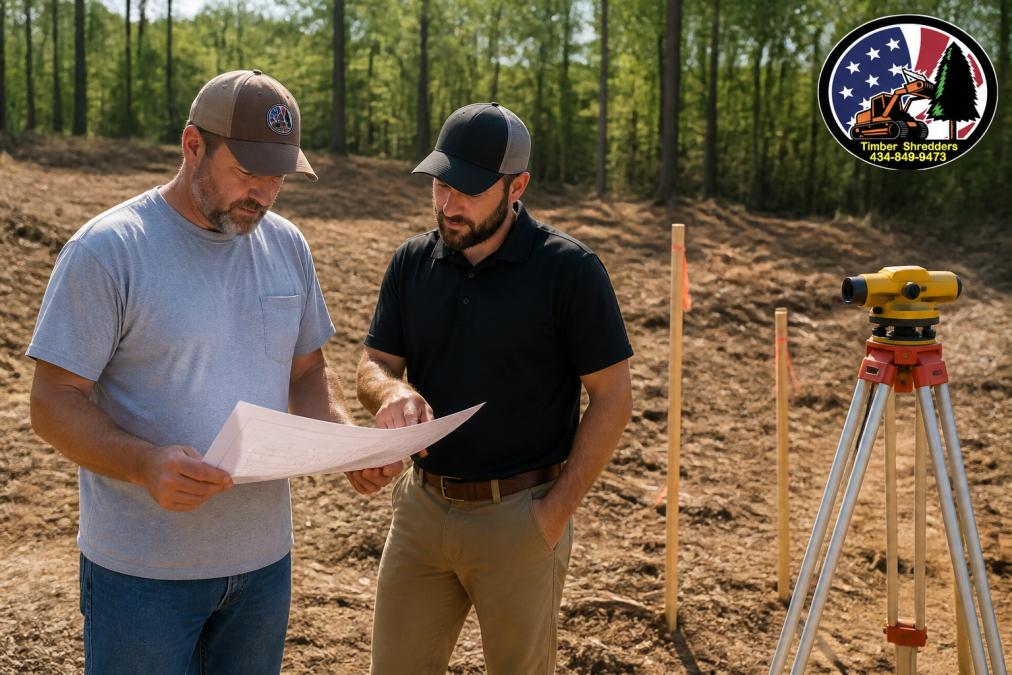
Your site plan is the core document. It shows your property boundaries, the area to be cleared, existing vegetation, proposed erosion control measures, and any sensitive features like streams or steep slopes.
Hand-drawn plans are acceptable if they’re clear and include measurements. Many property owners use property surveys as a base and mark the clearing area on top. Digital plans created with basic mapping software also work well.
Include photographs of the current site from multiple angles showing vegetation density, slopes, and existing drainage patterns.
For projects requiring an erosion and sediment control plan, document the specific measures you’ll use. Describe silt fence placement, sediment trap locations, and stabilization methods. If you’re using professional equipment like forestry mulching, note that in your plan.
Gather any existing surveys, deed records, or topographic information.
Step 3: Submit Your Application
Submit your completed application to your county’s Community Development Department. Most counties accept applications in person, by mail, or through online portals.
Include your site plan, erosion and sediment control plan (if required), property survey or deed, photographs, and the completed permit application form. Double-check that all required signatures are in place.
Keep copies of everything you submit and request a receipt or confirmation number showing your submission date.
Application fees vary by county and project size, typically ranging from $100 to $500 for residential clearing permits.
Step 4: Await Administrative Approval
After submission, your application enters the review queue. Processing times typically range from 10 to 30 business days, depending on complexity and county workload.
Staff will examine your site plan for completeness, check erosion control measures against county standards, and verify compliance with zoning ordinances and environmental regulations. If your plan is thorough, approval often comes without questions.
Some applications require revisions. Respond promptly to revision requests. Stay in contact with your county reviewer if possible; a brief phone call can sometimes surface concerns early.
Step 5: Schedule Your Site Inspection
Once your permit is approved, you’ll receive an official permit document. Before you begin clearing, most counties require a pre-construction site inspection to confirm that conditions match your submitted plan and that erosion control measures are properly installed.
Schedule the inspection with your county’s inspector. Many counties require inspections within 30 to 60 days of permit issuance.
During the inspection, have your site plan available and show the inspector where clearing will occur and where erosion control measures will be placed.
After clearing begins, most counties require post-construction inspections to verify that erosion control measures performed as planned and that the site is stabilized. This typically happens 14 to 30 days after clearing completion.
Cost to Clear One Acre of Land and Budget Factors
Land clearing costs depend on vegetation density, terrain, equipment requirements, and whether you’re hiring professional services.
Factors affecting clearing costs:
Vegetation type matters significantly. Light brush clearing costs less than removing dense forest with large trees and stumps.
Terrain impacts equipment choice and efficiency. Steep slopes require more careful work and specialized equipment.
Debris management determines final costs. Forestry mulching chips material on-site, which is more efficient than hauling debris away.
Equipment choice affects both timeline and cost. Professional equipment like forestry mulching machines handles large areas quickly but requires trained operators.
Budget considerations for professional services:
Professional land clearing companies typically charge by the acre or hourly equipment rates. Projects under one acre might be quoted as a flat rate, while larger projects are often quoted per-acre or per-hour.
When requesting quotes, provide clear information: acreage, vegetation type, terrain conditions, and your timeline. Be specific about what you want done, complete clearing versus selective tree removal, for example.
Ask contractors about their approach to erosion control and soil health. Forestry mulching preserves topsoil better than traditional bulldozing, which can justify higher costs through better long-term land usability. At Timber Shredders LLC, we use professional equipment that protects soil structure while clearing efficiently.
Get multiple quotes and compare what’s included. Some contractors include debris removal and site grading; others charge separately.
Timeline considerations:
Permit approval can take 2-4 weeks. Factor this into your budget timeline.
Actual clearing on one acre typically takes 1-3 days depending on vegetation density and equipment used. However, scheduling delays and weather can extend this.
Post-clearing work like stabilization and seeding adds time and cost.
Environmental Compliance and Regulatory Requirements
Environmental compliance goes beyond erosion control. Your clearing project must align with broader regulations protecting water quality, wildlife habitat, and soil health.
Water quality protection:
If your property contains streams, wetlands, or drainage swales, regulations typically require buffer zones where clearing is restricted. These buffers, often 25 to 50 feet from waterways, protect water quality by filtering runoff and stabilizing banks (the EPA).
Stormwater runoff from cleared land can carry sediment and nutrients into local waterways. Your erosion and sediment control plan addresses this, but you’re also responsible for maintaining controls throughout the project and afterward.
Soil and habitat considerations:
Some properties contain soils classified as hydric or highly erodible. These soils require extra protection during clearing. Your county may require additional erosion control measures or restrictions on when clearing can occur.
If your property contains wildlife habitat or species of concern, additional restrictions may apply. Many counties coordinate with state wildlife agencies to identify sensitive areas.
Post-clearing stabilization:
Exposed soil must be stabilized within a required timeframe, typically 14 days. Methods include temporary seeding with fast-growing grasses, erosion control blankets, or mulching.
Permanent stabilization follows temporary measures. This might involve seeding native vegetation, installing permanent erosion control, or preparing the site for its intended use.
Compliance documentation:
Keep records of all erosion control installation, maintenance, and stabilization activities. Photograph your controls in place and document maintenance work. This documentation demonstrates compliance during county inspection and protects you from liability claims.
Working with professionals:
Professional land management companies understand these requirements and build compliance into their work process. They know which erosion control methods pass county inspection and which stabilization approaches work best for your specific soil and climate conditions.
Getting a land clearing permit in Central Virginia requires understanding your specific county’s requirements, preparing thorough documentation, and following the approval process carefully. The permit exists to protect your property and your community.
Start by contacting your county’s Community Development Department to clarify whether your project requires a permit and what documentation you’ll need. Prepare a detailed site plan and erosion control measures that address your county’s specific standards. Submit a complete application with all required signatures and supporting documents. Once approved, schedule your required inspections and proceed with clearing using methods that protect soil health.
If you’re clearing more than a few hundred square feet or working with challenging terrain, professional land management is worth the investment. Timber Shredders LLC offers comprehensive property assessment, detailed project planning, and equipment-based clearing that protects soil structure while achieving fast, reliable results. Our team handles erosion control requirements and post-clearing stabilization, ensuring your property is ready for its next use. Get a FREE Quote and discuss your specific project needs with our experienced team.
Frequently Asked Questions
Does land clearing require a permit in Central Virginia?
Most land clearing projects in Central Virginia require a land disturbance permit if the work disturbs more than a specific square footage threshold, typically 2,500 square feet, though this varies by county. Small residential projects, tree removal, and certain maintenance activities may be exempt. Contact your county's community development department to confirm whether your specific project needs a permit before starting work.
What are the main land disturbance permit requirements I need to know?
Land disturbance permit requirements typically include submitting a site plan showing the project area, preparing an erosion and sediment control plan, obtaining approval from your local jurisdiction, and passing a site inspection before and after clearing. Some counties also require proof of stormwater management compliance. Requirements vary by county and project size, so verify with your community development department.
How much does it cost to clear one acre of land?
Clearing costs depend on vegetation density, terrain, rock and stump removal, and whether you need equipment like forestry mulching machinery. Pricing varies significantly by location and site conditions. For an accurate estimate specific to your property, contact a professional land management company for a comprehensive assessment and quote based on your actual site conditions.
What should I include in an erosion and sediment control plan?
An erosion and sediment control plan outlines measures to prevent soil loss and water runoff during clearing, including silt fences, sediment basins, stabilization methods, and stormwater management strategies. The plan must address your site's topography and soil conditions. Your county's community development department provides specific guidelines, and many require professional preparation of this document.
This article was written using GrandRanker