Table of Contents
- Why Heavy Excavation Isn’t Always Necessary for Land Clearing
- Manual Land Clearing Methods That Work
- Land Clearing Equipment for Homeowners: Rental vs. Purchase
- Forestry Mulching Benefits vs. Traditional Excavation
- Cost of Land Clearing Per Acre: Budget-Friendly Strategies
- DIY vs. Professional: When to Hire a Clearing Contractor
- Conclusion
Last Updated: August 19, 2026
Why Heavy Excavation Isn’t Always Necessary for Land Clearing
Heavy excavation equipment can feel like the default solution when you’re facing overgrown property, dense brush, or site preparation work. It’s visible, it’s powerful, and it gets the job done fast. But here’s what most landowners don’t realize: affordable alternatives to heavy excavation for clearing often deliver better results at a fraction of the cost, especially for residential and rural properties where precision and soil health matter.
The real problem isn’t that excavation doesn’t work. It’s that excavation is designed for complete site removal and foundation work, not vegetation management. When you’re clearing brush, managing invasive species, or reclaiming pasture, you’re paying for equipment and methods built for a different job entirely. That’s where alternatives come in.
At Timber Shredders LLC, we’ve spent years helping property owners in Central Virginia understand what actually works for their specific situation. The methods you choose depend on vegetation density, property size, budget constraints, and what you want to do with the land afterward. Some projects need professional equipment. Others respond better to targeted manual labor or rental equipment. And some benefit most from a hybrid approach.
This guide breaks down the most practical affordable alternatives to heavy excavation for clearing, from manual techniques that cost almost nothing to equipment rentals that deliver professional results without the six-figure price tag.
Manual Land Clearing Methods That Work
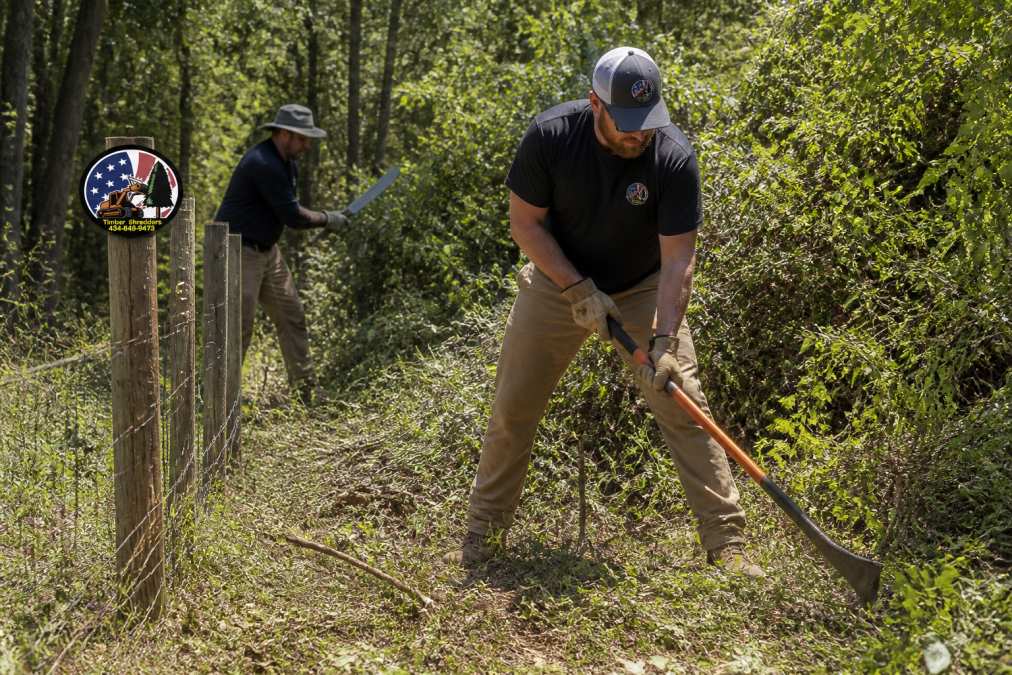
Manual clearing isn’t just for small properties or light brush. Strategic hand-tool work removes vegetation precisely, preserves topsoil, and costs virtually nothing compared to machinery. For selective clearing, invasive species removal, and fence-line maintenance, manual labor often outperforms equipment.
Hand Tools for Small-Scale Projects
A machete, brush hook, and axe accomplish more than most people expect. These tools let you target specific vegetation, avoid disturbing surrounding plants, and work in tight spaces where equipment can’t fit. A brush hook, with its curved blade and use design, cuts through woody stems up to two inches thick efficiently. Machetes handle lighter brush and tall weeds. Axes work for thicker saplings or small trees.
The advantage here is control. You decide exactly what stays and what goes. There’s no collateral damage to desirable plants, and you’re not compacting soil with heavy equipment. For properties with scattered problem vegetation mixed with healthy growth you want to preserve, hand tools are genuinely superior to machinery.
The trade-off is time. Clearing a half-acre of dense brush with hand tools takes days of physical labor. But for a quarter-acre fence-line cleanup or removing invasive honeysuckle from a wooded area, a weekend of work beats waiting for equipment and spending thousands of dollars.
Root Removal Tools for Invasive Species
Invasive species, buckthorn, privet, honeysuckle, Scotch broom, come back unless you remove the roots. Chemical treatments kill the visible plant but leave the root system intact, guaranteeing regrowth within months. Pulling by hand or using a use tool removes the entire plant and prevents that cycle.
A Weed Wrench or similar invasive plant puller uses mechanical use to extract plants by the root. You position the jaws around the stem at ground level, step on the footrest, and pull the handle back. The use does the work. These tools handle plants up to about 2.25 inches in diameter and work on many species.
The Brush Grubber Original works differently, you attach it to an ATV or small tractor and pull the vegetation out by force. It’s faster for scattered plants across larger areas and works on slightly larger diameter stems. Both methods remove roots completely, eliminating the regrowth problem that makes chemical-only approaches frustrating.
For small infestations, hand tools can cost between thirty and two hundred dollars and last decades. For moderate infestations spread across an acre or two, the labor time is reasonable. For dense infestations covering multiple acres, this method becomes impractical, that’s when professional equipment or contractors make sense.
Land Clearing Equipment for Homeowners: Rental vs. Purchase
Equipment ownership makes sense if you have regular clearing work or operate a landscaping business. For most homeowners, renting delivers better economics. You pay for the equipment only when you need it, avoid maintenance and storage, and don’t tie up capital in machines that sit idle most of the year.
Stump Grinder Rentals
A stump grinder removes tree stumps below ground level, eliminating the tripping hazard and the eyesore. Home Depot and similar rental centers offer walk-behind models with daily rates typically in the one-hundred-fifty-dollar range, with some models starting around eighty dollars for two hours. These machines handle individual stumps or small clusters efficiently.
The process is straightforward: position the grinder over the stump, lower the cutting wheel, and work it side to side. The machine grinds the wood into chips. You’re left with a depression filled with mulch that you can backfill with soil. The stump won’t regrow because you’ve destroyed the root system.
Rental stump grinders work best for five to fifteen stumps. Beyond that, hiring a professional contractor becomes more economical, they bring equipment, handle debris removal, and finish faster. Also, operating a stump grinder requires safety gear and proper technique. If you’re not comfortable with power equipment or you have large diameter stumps, professional service is the better choice.
Mini Skid Steer Loaders
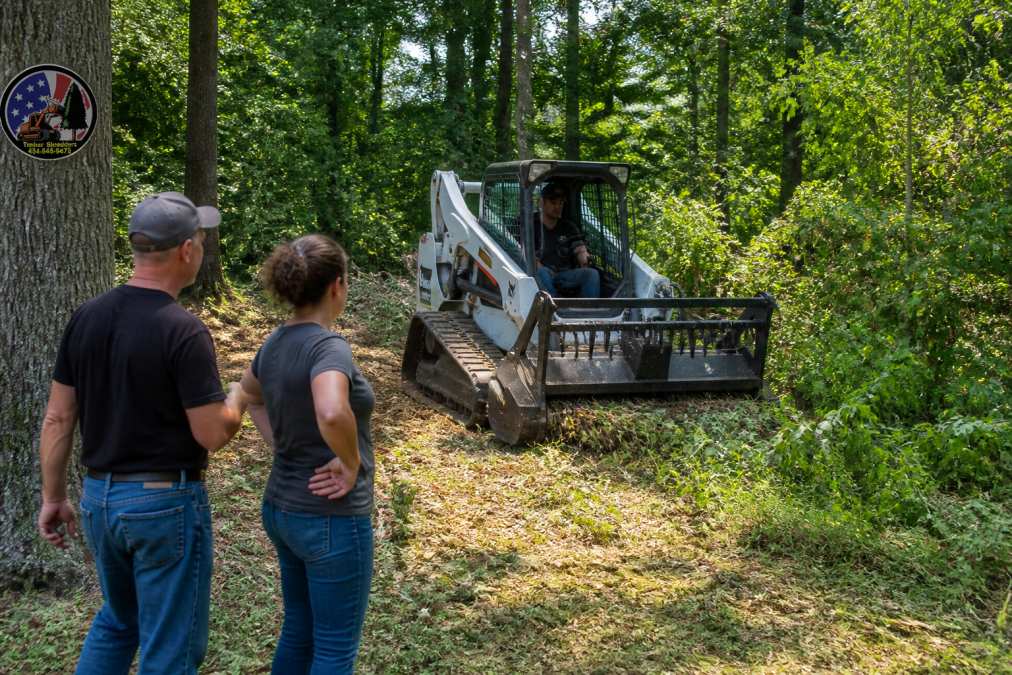
A mini skid steer is a compact utility loader that fits in spaces where full-size excavators won’t go. These machines accept various attachments, brush cutters, grapples, trenching buckets, making them versatile for multiple tasks. Rental rates vary by location and duration, typically ranging from one hundred fifty to three hundred dollars per day.
Mini skid steers excel at grading, moving material, and light site preparation. They’re small enough to maneuver around trees and structures but powerful enough to handle moderate clearing and soil work. The real value is versatility, one machine handles multiple phases of a project.
The limitation is that mini skid steers aren’t suitable for very dense brush or large trees. They work best when vegetation is already down to manageable sizes or when you’re combining them with other clearing methods. For three to five acres of moderate overgrowth, renting a mini skid steer for three to five days often costs less and finishes faster than hiring a full excavation crew.
Field and Brush Mowers
A walk-behind field and brush mower handles overgrown fields, dense brush, and saplings up to three inches thick. These are self-propelled machines, you guide them, they do the cutting. DR Power Equipment manufactures widely available models. Rental options exist but are less common than stump grinders or skid steers.
For property owners with regular mowing needs, maintaining cleared land, managing overgrowth seasonally, purchase makes sense. These machines last decades with basic maintenance. For a one-time clearing project, renting from a landscaping company or equipment dealer is more practical.
The advantage over handheld trimmers is speed and reduced physical strain. A field mower covers an acre in a few hours where a handheld string trimmer would take days. The disadvantage is that field mowers work best on relatively open terrain. Very rocky ground or extremely dense brush slows progress significantly.
Forestry Mulching Benefits vs. Traditional Excavation
Forestry mulching is where affordable alternatives to heavy excavation for clearing really shine for most Central Virginia properties. This method chips vegetation on-site, leaving behind nutrient-rich mulch that improves soil instead of creating disposal problems.
The process works like this: professional equipment with rotating drums or teeth grinds brush, small trees, vines, and saplings into mulch while you watch. The operator controls the depth, so topsoil stays in place. Vegetation that would require hauling away and burning gets processed into a soil amendment in one pass.
The benefits are substantial. You eliminate the cost and hassle of debris removal, no burning permits, no hauling to a landfill, no piles of slash left behind. The mulch layer protects against erosion, suppresses weed growth, and adds organic matter back to the soil. Properties that get forestry mulching typically see better vegetation recovery and less erosion than sites cleared with traditional excavation.
The concern landowners often raise is valid: will this tear up my topsoil like a bulldozer? The answer depends on equipment and operator skill. Professional forestry mulching equipment is designed to float on the mulch layer and preserve topsoil. Inexperienced operators or wrong equipment can cause compaction and erosion. That’s why equipment choice and operator experience matter enormously.
Timber Shredders LLC uses professional-grade forestry mulching equipment specifically designed for soil preservation. The streamlined process ensures your topsoil stays intact while problem vegetation gets eliminated.
Compared to traditional excavation, forestry mulching typically costs less, finishes faster, and leaves your land in better condition for whatever comes next, pasture, trails, construction, or simply restored usability.
Cost of Land Clearing Per Acre: Budget-Friendly Strategies
Cost per acre varies wildly depending on vegetation density, terrain, accessibility, and what you’re clearing. A light brush mowing might cost a few hundred dollars per acre. Dense woodland clearing with large trees can run into thousands. Understanding what drives costs helps you make budget-conscious decisions.
Vegetation density is the primary cost driver. Light overgrowth clears faster than dense brush with mature trees and extensive root systems. Terrain matters too, steep hillsides require more careful work than flat ground. Site access affects equipment mobilization costs. A property with a clear driveway costs less to access than one requiring trail building just to get equipment on-site.
Budget-friendly strategies start with honest assessment of what actually needs clearing. Do you need to clear the entire property, or just problem areas? Selective clearing costs less than complete clearing and often delivers better results if your goal is improving usability rather than starting from bare ground.
Breaking the project into phases spreads costs across time. Clear the most critical areas first, access routes, safety hazards, primary use zones. Handle lower-priority areas later when budget allows. This approach keeps immediate costs manageable while still making progress.
Equipment choice affects budget significantly. Manual labor is cheapest upfront but slowest. Rental equipment costs less than hiring a contractor but requires you to do the work. Professional contractors cost more per hour but finish faster, often working out to similar or better total cost depending on project size.
A practical table for rough cost planning:
| Clearing Type | Typical Scope | Cost Approach | Time Frame |
|---|---|---|---|
| Manual hand tools | Small areas, selective removal | $0-500 total | Weeks |
| Equipment rental | Light to moderate clearing | $500-2,000 total | Days to weeks |
| Professional service | Dense vegetation, large areas | Contact for quote | Days |
| Forestry mulching | Soil preservation priority | Contact for quote | Days |
DIY vs. Professional: When to Hire a Clearing Contractor
The decision between DIY and professional work comes down to three factors: project scope, your skill level with equipment, and your time availability.
DIY makes sense for small projects, clearing a quarter-acre or less, removing scattered problem trees, maintaining fence lines. Hand tools cost almost nothing. Rental equipment is affordable for short-term use. You control the timeline and can work at your own pace.
DIY becomes impractical when vegetation is extremely dense, the property is large, or terrain is difficult. Operating heavy equipment safely requires training. Mistakes, compacting soil, damaging desirable trees, leaving debris scattered, cost more to fix than hiring a professional initially. Also, if you hit unexpected obstacles, large rocks, extensive root systems, unstable terrain, you might get stuck mid-project without the expertise to adapt.
Professional contractors bring experience, proper equipment, and efficiency. They assess the property, identify potential problems before they become expensive surprises, and finish quickly. The upfront cost is higher, but the result is professional-grade work that improves your property rather than creating new problems.
For most residential properties in Central Virginia, a hybrid approach works best. Handle small, straightforward clearing yourself using hand tools or rental equipment. Bring in professionals for dense areas, large-scale work, or situations where soil preservation and final grading matter. This strategy keeps costs reasonable while ensuring quality results.
Timber Shredders LLC offers free property assessments and clear estimates. That consultation alone helps you understand what your property actually needs, sometimes less work than you expected, sometimes more than DIY can handle efficiently. Getting that clarity before committing to a method saves money and frustration.
The most affordable alternative to heavy excavation for clearing isn’t a single method, it’s choosing the right method for your specific situation. Manual labor works for small areas. Equipment rentals handle moderate projects cost-effectively. Professional services deliver quality results for large or complex work. Forestry mulching preserves soil while eliminating disposal headaches. The key is matching your approach to your property’s actual needs rather than defaulting to the most visible or traditional solution.
If you’re uncertain about what your property needs or want a professional assessment before deciding on a clearing method, Get A FREE Quote from Timber Shredders LLC. The team evaluates your specific situation, explains what actually needs clearing, and provides transparent estimates so you can make an informed decision with confidence.
Frequently Asked Questions
What is the cheapest method of clearing land?
Manual hand tools like machetes and brush hooks offer the lowest upfront cost, starting around $10-$100, but require significant labor. For larger areas, renting equipment like stump grinders ($80-$185 per day) or mini skid steers provides better value than hiring full excavation crews. Forestry mulching services balance cost and efficiency by processing debris on-site, eliminating hauling expenses and reducing overall site preparation time.
How does forestry mulching improve soil health compared to traditional excavation?
Forestry mulching grinds vegetation into nutrient-rich mulch that stays on-site, protecting topsoil and reducing erosion. Traditional excavation removes topsoil entirely, leaving bare, compacted ground prone to erosion and weed growth. The mulch layer improves moisture retention, adds organic matter, and suppresses weeds naturally, making your land more usable for pasture or future development without the soil damage and cleanup costs of heavy equipment.
Can I clear dense brush and stumps without renting heavy equipment?
Yes, depending on density and scale. Root removal tools like the Weed Wrench or Brush Grubber work well for scattered vegetation up to 2-5 inches in diameter. For denser areas with mixed brush and stumps, a rented stump grinder or mini skid steer handles the job efficiently. If your property has 3+ acres of thick brush with rocks and old stumps, professional forestry mulching or a clearing contractor can complete the work faster and more safely than DIY rental equipment.
What permits or regulations apply to land clearing on my property?
Clearing regulations vary by county and locality. Most jurisdictions require permits for removing trees above a certain diameter, clearing near wetlands, or disturbing steep slopes. Some areas have erosion control requirements to prevent soil runoff. Contact your local county planning office or soil conservation district before starting any clearing project to confirm permit needs, setback rules, and environmental restrictions specific to your property.
This article was written using GrandRanker