Table of Contents
- Understanding Land Clearing Costs
- Average Cost Per Acre for Land Clearing
- Factors Affecting Land Clearing Prices
- Forestry Mulching vs Bulldozer Clearing
- Land Clearing Permit Requirements
- Getting an Accurate Cost Estimate
- Conclusion
Last Updated: August 11, 2026
Understanding Land Clearing Costs
Land clearing costs in Appomattox vary dramatically based on property size, vegetation type, and terrain. Understanding the key factors that drive pricing helps you anticipate expenses and avoid surprises when contractors submit estimates.
Without understanding what influences land clearing costs, you’re essentially guessing whether a quote is fair or inflated. Transparent pricing starts with education. When landowners understand what affects costs, they make better decisions and feel confident in their investment. This guide breaks down the real factors that shape land clearing pricing so you can evaluate quotes accurately and plan your budget with confidence.
Average Cost Per Acre for Land Clearing
Land clearing costs per acre vary based on complexity. Per-acre pricing gives you a starting point but is misleading without context, two properties quoted at the same rate can result in vastly different bills depending on soil conditions and debris removal needs.
Most land clearing projects fall into three categories: light clearing (scattered brush and small trees), moderate clearing (denser vegetation and mixed tree sizes), and heavy clearing (thick brush, large stumps, rocky soil, poor access). Heavy clearing significantly increases labor and equipment time.
Small job minimums also affect per-acre math. Many contractors won’t take projects under a certain size because setup costs don’t justify the work. A half-acre clearing might cost more per acre than a five-acre project simply because equipment costs are spread across less land.
Factors Affecting Land Clearing Prices
Multiple variables influence what you’ll actually pay for land clearing.
Vegetation Density and Type
The thickness and type of vegetation directly determines clearing time and required equipment. Dense brush with small trees clears faster than property choked with mature hardwoods mixed with tangled underbrush.
Appomattox properties commonly feature mixed deciduous forests, dense underbrush, and invasive species that complicate clearing. Native vegetation like oak, hickory, and maple requires different handling than invasive species like multiflora rose or autumn olive, which spread aggressively and demand thorough removal to prevent regrowth.
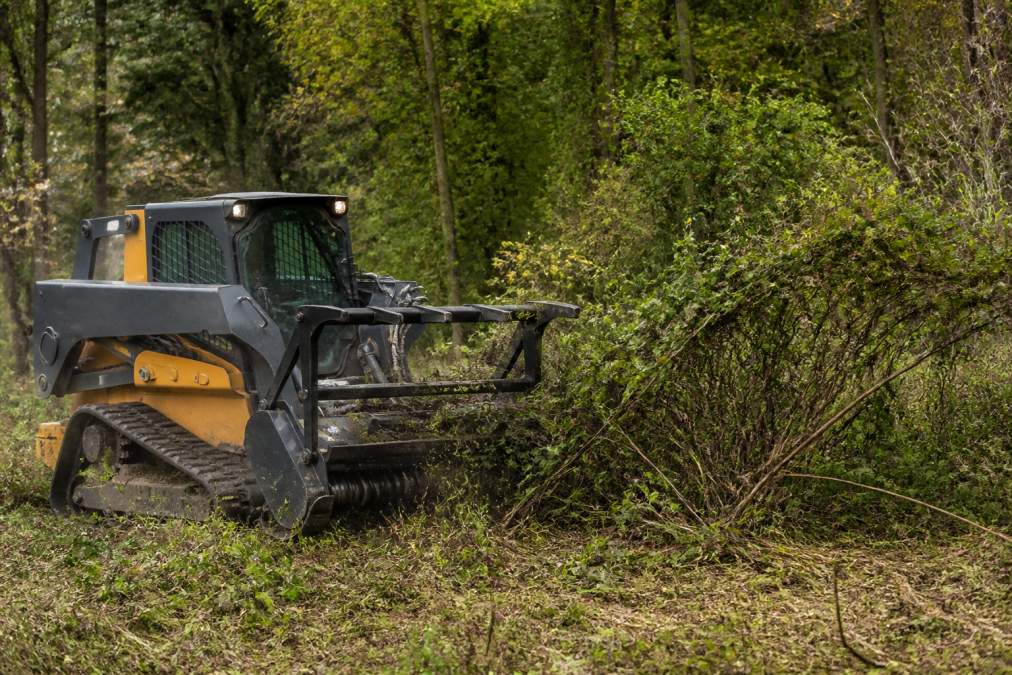
Invasive species present special challenges. They regrow aggressively if not completely removed, which means contractors sometimes recommend additional treatment or follow-up work. This adds to total clearing costs but prevents your cleared land from reverting to overgrowth within a season.
Terrain and Site Accessibility
Steep slopes, rocky soil, and poor access routes dramatically increase clearing costs. Rocky terrain in Appomattox is common, and rocks hidden beneath soil cause real problems, equipment gets damaged, operators must work slowly, and debris removal becomes more complex.
Site accessibility determines whether heavy equipment can reach all areas or must work around obstacles. A property with existing driveway access costs less because equipment moves freely. Steep slopes require specialized techniques to prevent erosion and soil damage.
Debris Removal and Disposal
What happens to cleared material significantly affects total costs. Some contractors include debris removal in their quote; others charge separately. On-site processing through forestry mulching eliminates removal costs but requires specific equipment. Hauling debris away involves truck time, dump fees, and labor.
Disposal fees vary based on material type and local regulations. Some materials can be chipped or composted; others require landfill disposal. Clarify disposal expectations before work begins so you understand the final cost structure.
Forestry Mulching vs Bulldozer Clearing
Two primary methods dominate land clearing in Appomattox: forestry mulching and traditional bulldozer clearing.
Forestry mulching uses specialized equipment with a rotating drum that chips vegetation into fine mulch while processing material in place. The mulch remains on the property, improving soil health and preventing erosion. This method works well for moderate vegetation and preserves topsoil better than traditional clearing.
Bulldozer clearing pushes vegetation and debris into piles for removal or burning. This method works quickly on heavily overgrown properties and handles large trees and stumps effectively. However, it disturbs soil more significantly and leaves the property requiring additional grading and finishing work.
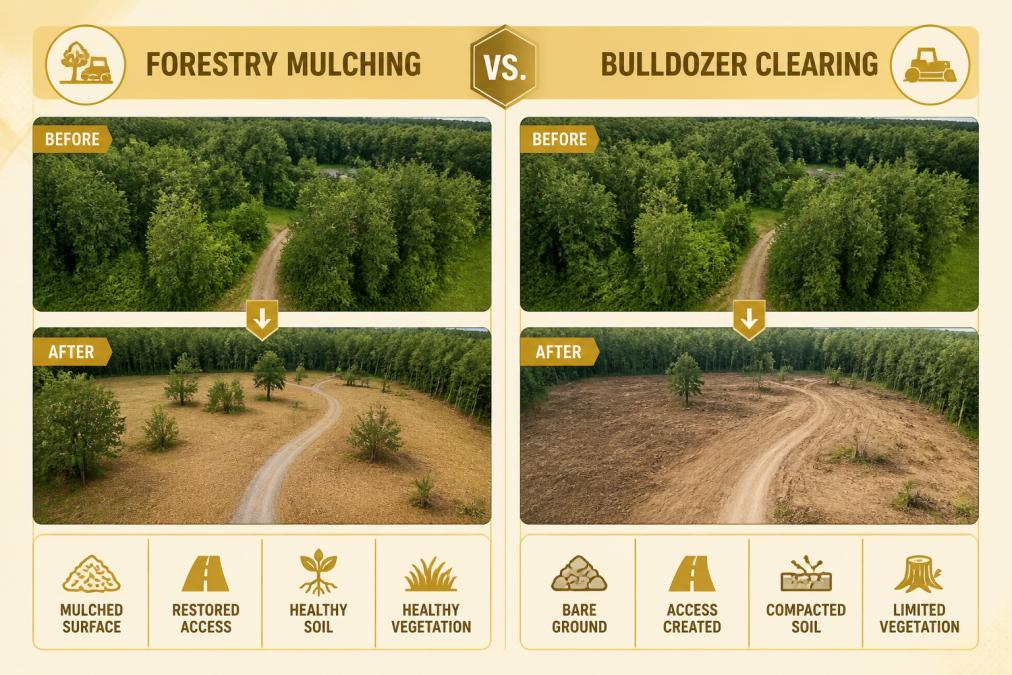
Forestry mulching typically costs more per hour but may cost less overall because it completes faster and requires less follow-up work. For pasture development, forestry mulching provides superior results because the mulch improves soil structure and fertility. For construction sites, bulldozer clearing followed by grading might make more sense.
Land Clearing Permit Requirements
Appomattox County requires permits for most land clearing activities. Understanding local requirements prevents costly delays and potential fines.
Zoning and Vegetation Removal Limits
Appomattox County zoning ordinances govern how much vegetation you can remove based on your property’s zoning classification. Residential zones typically allow clearing for home construction, pasture development, and sight line improvement, but conservation overlay zones and properties within floodplain districts face stricter limits. Verify your property’s zoning designation through the Appomattox County Planning and Zoning Department.
Properties under conservation easements or within designated environmental protection areas may require written approval from the easement holder before any clearing begins, which can add 2-4 weeks to your timeline. Some properties fall under Virginia’s Forest Stewardship Program or similar conservation agreements that restrict clear-cutting and require selective harvesting instead.
Erosion and Sediment Control Permits
Appomattox County requires erosion and sediment control (ESC) permits for land disturbance activities exceeding 2,500 square feet. Most residential land clearing projects trigger this threshold. The ESC permit process requires a site plan showing existing vegetation, slopes, drainage patterns, and proposed clearing boundaries; an erosion control plan detailing sediment containment; proof of Virginia Stormwater Management Program compliance; and county inspection before and after work.
The permit application typically takes 5-10 business days for approval. Contractors familiar with Appomattox County can often prepare the ESC plan, but some charge separately ($200-$500 depending on property size and complexity). Clarify whether your contractor includes ESC permitting in their quote.
Once work begins, the county may conduct inspections to verify erosion control measures are in place. Failure to maintain erosion controls can result in stop-work orders and fines up to $100 per day of non-compliance.
Debris Burning and Disposal Permits
If your contractor plans to burn cleared debris on-site, Appomattox County requires a burn permit from the Virginia Department of Forestry. Burn permits are seasonal (typically October through April) and depend on weather conditions and air quality forecasts.
Alternatively, debris can be hauled to approved disposal facilities. Disposal costs typically range from $25-$75 per ton depending on material type and facility location. Ask your contractor whether disposal is included in their quote or charged separately.
Permit Costs and Timeline Impact
Permit fees for land clearing in Appomattox County are typically modest ($50-$150 for ESC permits), but the real cost comes from timeline delays. A project that could theoretically start immediately may require 2-3 weeks for permitting and county review. If your project has a deadline, factor in permit processing time when planning your schedule.
Some contractors include permit coordination in their pricing; others charge a coordination fee ($150-$300). Clarify responsibility before signing a contract. Contractors familiar with Appomattox County requirements often expedite approvals and prevent costly mistakes.
Working with the Appomattox County Planning and Zoning Department
Contact information: Appomattox County Planning and Zoning Department, (434) 352-8245. Staff can confirm zoning restrictions, explain erosion control requirements, and provide guidance on permit applications before you hire a contractor. A 15-minute call can clarify whether your project faces unusual restrictions that affect cost or feasibility.
Getting an Accurate Cost Estimate
A reliable estimate requires a professional site assessment that evaluates not just the clearing work itself, but also post-clearing maintenance needs.
The Site Assessment Process
Contractors who quote over the phone without visiting your property are guessing. Request estimates from multiple contractors who actually visit your property. They should evaluate vegetation type and density, measure slopes and terrain challenges, assess soil conditions, identify rocks or stumps, and evaluate access routes. A thorough assessment takes 30-45 minutes and provides the foundation for accurate pricing.
During the assessment, ask the contractor to identify invasive species on your property. Native Appomattox vegetation can be cleared once and remain controlled. Invasive species like multiflora rose, autumn olive, and Japanese stiltgrass regrow aggressively from root systems and seeds. A contractor who identifies these species upfront can quote for follow-up treatment or recommend post-clearing maintenance strategies.
Understanding the Full Estimate Breakdown
Detailed estimates specify what’s included: equipment used, labor hours, debris removal or processing, site restoration, and any follow-up work. Vague estimates make it impossible to compare quotes fairly or understand where costs concentrate.
Ask contractors to explain how they calculated estimates and what assumptions they made about vegetation density and terrain challenges. Expect estimates to include contingencies for unexpected conditions (typically 10-15%) rather than rock-bottom prices that guarantee cost overruns.
Comparing Estimates Based on Total Cost of Ownership
Compare estimates based on scope and method, not just total price. A lower estimate using less efficient equipment might result in poor outcomes or extended timelines. Ask each contractor about post-clearing maintenance needs specific to your property. This is where estimates diverge significantly and where most property owners encounter unexpected costs.
Post-Clearing Maintenance: The Hidden Cost Most Estimates Miss
After initial clearing, most Appomattox properties require maintenance to prevent regrowth and erosion.
Invasive Species Follow-Up: If your property contains multiflora rose, autumn olive, or other aggressive invasives, initial clearing removes above-ground growth, but roots and seeds remain viable. Within 6-12 months, regrowth emerges. Professional contractors recommend follow-up treatments: targeted herbicide application to cut stumps ($200-$500 per acre, 4-8 weeks after clearing), broadcast herbicide application for seedling control ($150-$400 per acre, 6-12 months after clearing), or manual removal of regrowth ($50-$150 per hour). A heavily infested property might require $500-$1,500 in follow-up treatment to achieve lasting results.
Erosion Control and Stabilization: Cleared land without vegetation is vulnerable to erosion, especially on slopes. Options include native grass seeding ($200-$600 per acre), mulch application ($20-$40 per ton if additional mulch is needed), or erosion control blankets on slopes ($0.50-$1.50 per square yard). Forestry mulching leaves beneficial mulch in place, reducing stabilization costs. Bulldozer clearing leaves bare soil that typically requires additional investment in erosion control.
Ongoing Maintenance: Even after initial clearing and follow-up treatment, most properties benefit from periodic maintenance: annual mowing or brush cutting ($50-$200 per acre), seasonal monitoring for invasive species emergence ($100-$300 per visit if hired), or ditch and drainage maintenance ($200-$500 annually).
Building Your Total Project Budget
When evaluating contractor estimates, ask for a three-year maintenance projection. Initial clearing might cost $2,000-$5,000, but if follow-up treatment costs $1,500 and annual maintenance runs $300-$500, your true project cost is $4,000-$7,500 over three years.
Request estimates that break down: initial clearing and debris removal; site stabilization; recommended follow-up treatments; and estimated annual maintenance for years 2-3. This comprehensive approach prevents budget surprises and helps you understand whether a lower initial quote will actually cost more when maintenance is factored in.
Conclusion
Land clearing costs depend on specific property conditions, not just acreage or generic regional averages. Vegetation type, terrain accessibility, debris disposal, and clearing method all influence final pricing. Getting accurate estimates requires professional site assessments that evaluate your actual conditions rather than assumptions.
When you’re ready to understand your property’s specific clearing costs, Timber Shredders LLC provides comprehensive property assessments and transparent estimates. Our team evaluates vegetation density, terrain challenges, and soil conditions to quote accurately. We specialize in forestry mulching that improves soil health while restoring access and visibility. Get a free quote today and understand exactly what your land clearing project will cost.
Frequently Asked Questions
How do professionals calculate land clearing costs per acre?
Professionals assess vegetation density, terrain slope, accessibility, and debris disposal requirements to determine per-acre pricing. They conduct a site survey to measure acreage, identify obstacles like stumps and rocks, and evaluate equipment access routes. The base rate is adjusted based on these factors, dense brush costs more than light underbrush removal. Most contractors provide tiered estimates: one price for easily accessible flat land with light vegetation, higher rates for steep terrain or heavy brush. A detailed site visit ensures your estimate accounts for all variables specific to your property.
What's the difference between forestry mulching and bulldozer clearing, and which costs less?
Forestry mulching uses a skid steer with a specialized mulcher attachment to grind vegetation into mulch while leaving it on-site, improving soil health and eliminating debris removal costs. Bulldozer clearing removes all vegetation and topsoil, requiring separate debris disposal and site grading. Forestry mulching typically costs more upfront but eliminates disposal fees and restores soil quality for pasture or future use. Bulldozer clearing may appear cheaper initially but adds grading and disposal expenses. For residential properties prioritizing soil health and erosion control, forestry mulching offers better long-term value.
Do I need a permit to clear land in Appomattox County?
Appomattox County requires permits for land clearing on most residential and commercial properties. You'll need to contact the Appomattox County Planning and Zoning Department to determine if your project requires a land disturbance permit, especially if clearing involves more than 2,500 square feet or impacts drainage patterns. Steep slopes and properties near waterways have additional restrictions under state erosion and sediment control regulations. Your contractor should verify permit requirements during the initial site assessment. Failing to obtain permits can result in fines and project delays, so confirm requirements before work begins.
How much does land clearing cost, and what affects the final price?
Land clearing costs depend on acreage, vegetation type, terrain accessibility, equipment needed, and debris disposal method. Pricing varies significantly based on whether your property has light brush, dense forest, rocky terrain, or steep slopes. Small jobs under one acre may have a minimum service fee. Site accessibility, whether equipment can reach all areas, dramatically impacts labor time and equipment costs. Debris removal and disposal add to the total. Rather than a fixed price range, request a free site assessment for an accurate estimate tailored to your specific property conditions and clearing goals.
This article was written using GrandRanker