Table of Contents
- Assess Your Property and Plan the Clearing
- Best Tools for Clearing Brush and Overgrown Land
- Brush Clearing Permits and Regulations in Virginia
- Step-by-Step Clearing Process
- How to Dispose of Cleared Brush and Debris
- Cost to Clear Land Per Acre and Budget Planning
- Safety Gear and Protective Equipment
- Timeline and Seasonal Considerations
Last Updated: August 6, 2026
Assess Your Property and Plan the Clearing
Before you touch a single branch, understand what you’re dealing with. Walk your property and identify vegetation density, marking problem areas: thick stands near structures, along fence lines, or blocking access routes.
Check for invasive species like multiflora rose and autumn olive, which require different removal techniques. Look for stumps and root systems, old stumps won’t disappear on their own. Scan for buried rocks, especially in the Piedmont region, as hitting them with machinery creates safety risks and expensive downtime. Document the acreage you’re clearing, as a quarter-acre of dense brush requires completely different equipment than three acres.
Best Tools for Clearing Brush and Overgrown Land
Manual tools vs. mechanical equipment
Manual tools (chainsaws, machetes, hand saws) work for properties under half an acre but are physically demanding and slow on dense vegetation. Mechanical equipment, brush hogs, wood chippers, stump grinders, and forestry mulchers, handles larger properties efficiently. Forestry mulchers are the heavy hitters, grinding standing vegetation into mulch in a single pass, eliminating separate debris removal.
When to rent vs. hire professionals
Renting equipment makes sense if you have operator experience and a straightforward project. Hiring professionals like Timber Shredders LLC transfers risk and guarantees results. Professional operators understand terrain, adjust technique for different vegetation types, and complete projects without damaging topsoil.
If you’re considering DIY equipment rental, factor in operator training time, potential equipment damage costs, and the reality that inexperienced operators often take two to three times longer than professionals. For most residential properties, professional clearing saves money overall when you include your time value.
Brush Clearing Permits and Regulations in Virginia
Virginia requires permits for land clearing in many jurisdictions. Contact your local soil and water conservation district before starting, processing times vary from two weeks to longer.
Environmental considerations and erosion control
Clearing removes vegetation that holds soil in place. Without protection, heavy rain washes topsoil downhill, violating water quality standards. Forestry mulching addresses this directly by grinding vegetation into mulch that stays on-site, protecting and improving soil over time.
If using traditional clearing methods, implement erosion control immediately: silt fences along downhill edges, mulching exposed areas, and native vegetation to prevent long-term erosion. Soil health matters if you plan to use cleared land for pasture, crops, or construction, erosion removes the best topsoil, while mulching preserves it.
Step-by-Step Clearing Process
Step 1: Clear underbrush and smaller vegetation
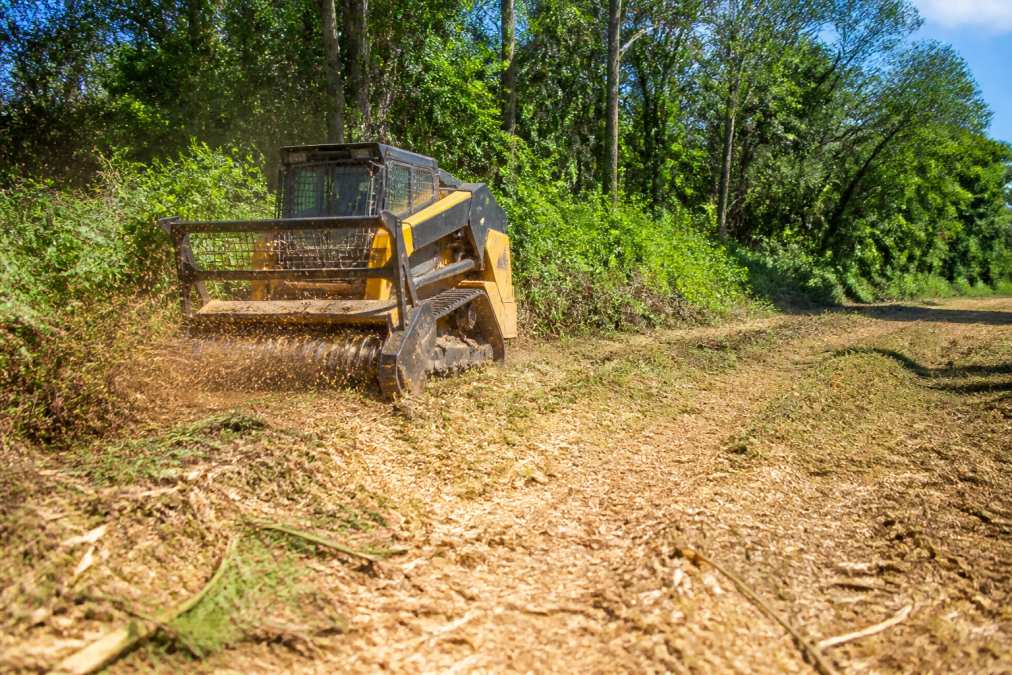
Start with the smallest material. For larger areas, a brush hog makes one or two passes, cutting everything down to near ground level and opening up the property.
Step 2: Remove stumps and root systems
After underbrush is cleared, stumps become visible. Stump grinders remove them below ground level. Forestry mulchers grind stumps along with surrounding vegetation, incorporating them into mulch. Professional operators assess root systems and adjust technique accordingly.
Step 3: Handle debris and mulching
Forestry mulching eliminates debris piles by processing everything into mulch in one pass. On-site mulching means no debris piles, no separate hauling, no disposal fees. The mulch stays on your property, improving soil as it breaks down.
How to Dispose of Cleared Brush and Debris
On-site mulching and chipping options
On-site mulching through forestry mulching is the most efficient option. Everything stays on your property as mulch, improving soil structure and moisture retention while preventing erosion. Wood chipping creates chips suitable for pathways or landscaping, breaking down over one to two years.
Hauling and off-site disposal
Off-site disposal is necessary if you want the property completely clear of debris. Brush removal services haul material to local landfills or composting facilities. Burning is an option in some Virginia jurisdictions but requires permits and strict conditions.
Leaving brush piles on your property creates fire hazards, pest habitat, and eyesores that persist for years. If you’re not mulching on-site, arrange debris removal before clearing begins.
Cost to Clear Land Per Acre and Budget Planning
Factors that affect clearing costs
Vegetation density is the primary cost driver. Stumps and root systems add time and complexity. Acreage matters significantly, per-acre costs typically decrease as acreage increases. Debris handling adds cost; on-site mulching eliminates separate chipping and hauling fees.
DIY vs. professional cost-benefit analysis
DIY clearing with rented equipment seems cheaper initially, but the math changes when you factor in operator time, learning curve, equipment damage risk, and extended timelines. Most property owners underestimate project duration. Professional services complete projects faster and more thoroughly, often resulting in lower total project costs despite higher hourly rates.
For small areas under half an acre, DIY with manual tools can make sense. For anything larger or denser, professional clearing usually saves money overall.
Safety Gear and Protective Equipment
Personal protective equipment includes safety glasses, hearing protection, steel-toed boots, and heavy work gloves. Long pants and long sleeves protect skin. If operating a chainsaw, add a helmet with face shield and cut-resistant chaps.
Professional operators follow OSHA safety standards. Equipment operators need training and certification for heavy machinery. A forestry mulcher or stump grinder in untrained hands creates serious hazards.
Timeline and Seasonal Considerations
Spring and early summer are ideal for clearing. Vegetation is actively growing, making invasive species easier to identify. The ground is typically firm enough for equipment access. Fall clearing works but requires immediate erosion control. Winter clearing is difficult, wet ground causes equipment to sink and rut.
A typical one to three-acre property takes three to seven days with professional equipment. Plan your project timeline around your goals and allow time to address erosion control before heavy rains.
The most important factor in successful clearing is planning before you start. Know your vegetation, understand permit requirements, assess equipment needs, and budget realistically. Rushing into clearing without planning creates problems that cost more to fix than proper planning would have cost upfront.
Post-Clearing Land Management and Soil Health
Clearing removes vegetation that protects soil. Without proper management, erosion degrades soil quality for years. Mulching preserves and improves soil while native vegetation establishment prevents future overgrowth.
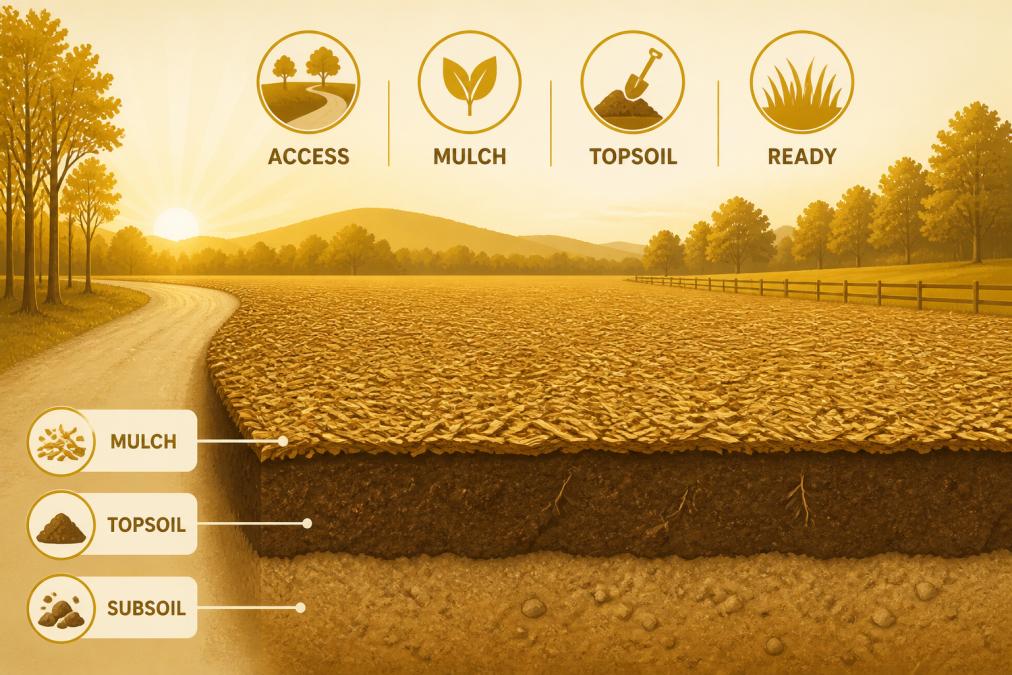
Implement erosion control immediately after clearing. Mulch stabilizes exposed soil. Silt fences slow runoff on slopes. Native plantings establish ground cover. For pasture use, wait four to six weeks for mulch to settle before introducing animals. For construction, the cleared, mulched property is ready for grading or building.
Regular maintenance prevents re-growth of invasive species. Cleared properties don’t stay clear without management. Mowing or spot-treating regrowth keeps the land open.
Clearing brush on rural property isn’t just about removing vegetation, it’s about reclaiming usable land while protecting soil and preventing erosion. Professional land management services like Timber Shredders LLC handle assessment, equipment operation, debris management, and erosion control as an integrated process, ensuring your property is genuinely improved. If you’re facing overgrown acreage and want results that last, get a free quote and let professionals evaluate what your specific property needs.
Frequently Asked Questions
How long does it take to clear an acre of brush on a rural property?
Timeline depends on vegetation density, terrain, and equipment used. Light underbrush clearing may take 1-2 days per acre, while dense brush with stumps and root systems can require 3-5 days or more. Professional equipment like forestry mulchers significantly speeds the process compared to manual labor. Seasonal conditions, soil moisture, and site accessibility also affect duration. Get a property assessment to receive an accurate timeline for your specific situation.
What permits do I need for brush clearing in Virginia?
Virginia brush clearing requirements vary by locality and property size. Most residential properties in Central Virginia require local permits from your county or city before clearing begins. If your property borders a stream or wetland, you may need state permits from the Virginia Department of Environmental Quality. Check with your local zoning office or building department for specific requirements. Some localities also regulate debris burning, so confirm regulations before planning burn piles.
Is it better to burn brush or haul it away?
Both methods have trade-offs. Burning is cost-effective but requires permits, poses fire risk, and may violate local ordinances. Hauling away debris is safer and leaves no residue, but costs more. On-site mulching offers a middle ground: the forestry mulcher grinds brush into useful mulch that improves soil health and can remain on your property. For most rural properties, mulching provides the best balance of cost, environmental benefit, and land restoration.
Will clearing brush damage my topsoil like a bulldozer would?
Professional forestry mulching preserves topsoil far better than traditional bulldozing. Unlike heavy machinery that compacts soil, a forestry mulcher grinds vegetation in place and actually improves soil health by adding organic mulch. This approach prevents erosion, maintains soil structure, and leaves your land ready for future use like pasture or landscaping. Professional operators also understand soil management and can adjust techniques based on ground conditions to minimize compaction and protect your property’s long-term usability.
This article was written using GrandRanker