Table of Contents
- What Land Clearing Companies in Virginia Offer
- Forestry Mulching Services VA: How It Works
- Land Clearing Permits Virginia: What You Need
- Cost to Clear Land Per Acre in Virginia
- Site Preparation and Residential Land Clearing
- Brush Removal, Stump Grinding, and Debris Cleanup
- Commercial Land Clearing and Right of Way Work
- Why Choose Professional Land Clearing Companies in Virginia
Last Updated: August 3, 2026
When property owners in Virginia face overgrown land, thick brush, or sites that need development, land clearing companies in virginia provide essential services to reclaim usable space. Whether you’re dealing with dense vegetation, stumps, or preparing for construction, understanding what these companies offer and how much it costs can save you time and money. At Timber Shredders LLC, we’ve helped residential and rural landowners throughout Central Virginia clear their properties efficiently while protecting soil health and improving long-term land value.
This guide covers the services land clearing companies in virginia deliver, the permits you’ll need, real cost factors, and why professional equipment and experienced operators matter.
What Land Clearing Companies in Virginia Offer
Land clearing companies in virginia provide far more than just cutting trees. The best operators handle forestry mulching, site preparation, brush removal, stump grinding, and complete debris cleanup, often in a single project.
Core Services Overview
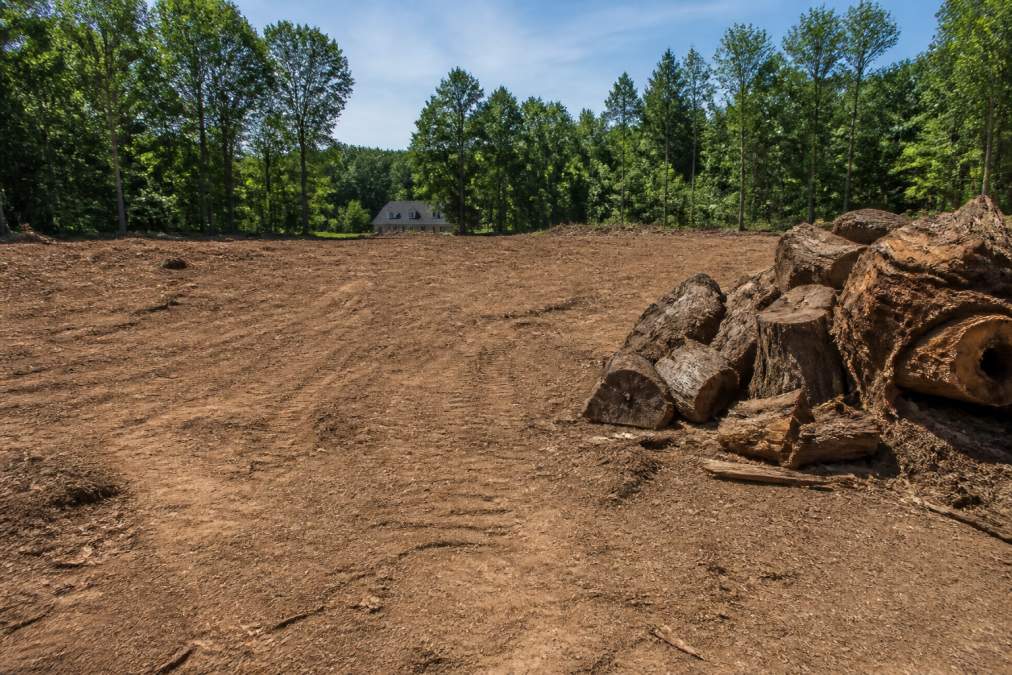
Professional land clearing companies in virginia typically offer forestry mulching, which grinds vegetation into mulch on-site, eliminating haul-away and protecting topsoil. Site preparation readies land for construction by removing obstacles and grading. Brush and vegetation removal clears underbrush and smaller trees. Stump grinding extracts roots below ground level. Debris removal and site restoration ensure your property is clean and accessible when work finishes.
Each service addresses specific challenges. A residential property with overgrown brush needs different equipment than a commercial development site requiring heavy excavation and grading.
Equipment and Approach
Land clearing companies in virginia use specialized heavy equipment designed for different terrain and vegetation types. Forestry mulchers mounted on tracked carriers navigate steep slopes without leaving deep ruts. Excavators with grapple attachments handle larger trees and debris. Experienced operators know which equipment suits each job, using a bulldozer where a forestry mulcher would work better wastes time and damages soil structure.
Professional equipment means faster work. A property that might take weeks with manual labor can be cleared in days. The operator’s experience matters as much as the equipment itself.
Forestry Mulching Services VA: How It Works
Forestry mulching grinds vegetation, trees, and brush into mulch while leaving it on-site. This approach protects topsoil, reduces erosion, and improves soil health, benefits that bulldozing cannot match.
Why Forestry Mulching Protects Your Topsoil
Bulldozers scrape away topsoil, compact remaining soil, and leave bare ground vulnerable to water runoff. Forestry mulching grinds vegetation in place, leaving a protective mulch layer that stabilizes soil and prevents erosion. As mulch breaks down, it adds organic matter that increases water retention and nutrient availability. Research from Virginia Cooperative Extension soil management guidance emphasizes that maintaining topsoil structure is critical for long-term land productivity and erosion control.
Forestry mulching works best on properties with mixed vegetation, brush, small trees, and underbrush combined. If your land has large mature trees you want to keep, selective mulching preserves those while clearing around them.
Best Applications for Mulching
Forestry mulching suits residential properties clearing brush for access and safety, pasture expansion, wildfire mitigation on properties near forest edges, and driveway improvements where debris removal would be expensive. It’s less ideal for sites with large valuable timber (which should be harvested separately) or properties requiring completely bare ground for construction.
The decision depends on what happens after clearing. If you want a usable pasture, landscaping-ready site, or reduced wildfire risk, forestry mulching delivers value beyond vegetation removal.
Land Clearing Permits Virginia: What You Need
Virginia’s permitting system for land clearing varies by locality, property size, and project type. Understanding permit requirements before work begins prevents costly delays and potential fines.
Permit Requirements by Project Type
Residential properties under 2.5 acres often have simpler permitting than larger commercial developments. Many counties require a land disturbance permit if clearing affects more than 1 acre or involves grading near waterways. Some jurisdictions require a site plan showing what’s being cleared and how erosion will be managed. Others focus mainly on stormwater and sediment control.
Right-of-way clearing, removing vegetation along property lines, easements, or utility corridors, sometimes falls under different rules. Virginia Department of Transportation (VDOT) has specific standards for right-of-way work on state routes.
Contact your local county or city planning department before scheduling clearing work. They’ll tell you exactly what permits are needed, what documentation is required, and typical approval timelines.
Starting clearing work without required permits can result in fines, work stoppages, and requirement to restore the property. Permit costs are typically modest (often $50-300) compared to potential violation costs. Always confirm requirements before equipment arrives on-site.
Environmental Regulations and Compliance
Virginia’s water quality standards protect streams, wetlands, and groundwater from sediment and pollution. If your property includes streams, wetlands, or drains toward sensitive areas, clearing work must include erosion control measures. Sediment fences, silt dikes, or temporary vegetation buffers prevent mulch and soil from washing into waterways.
Some properties fall within Virginia’s Chesapeake Bay watershed, which has stricter nutrient management rules to protect water quality. The Virginia Department of Environmental Quality (DEQ) provides guidance on water quality standards and land disturbance rules, and your local soil and water conservation district can explain what applies to your specific property.
| Permit Type | Typical Trigger | Approval Time | Cost Range |
|---|---|---|---|
| Land Disturbance | Clearing >1 acre or near water | 2-4 weeks | $50-200 |
| Erosion Control | Sloped terrain or waterway proximity | 1-2 weeks | Included in disturbance permit |
| Stormwater | Development or grading | 2-6 weeks | $100-300 |
| Right-of-Way | Utility or road easement work | 1-3 weeks | Varies by entity |
Cost to Clear Land Per Acre in Virginia
Land clearing costs vary widely based on vegetation density, equipment access, debris removal, and site conditions. Direct contact with land clearing companies in virginia for specific quotes is the only way to get accurate numbers for your property.
Factors That Affect Pricing
Dense brush costs more to clear than sparse vegetation. Steep terrain requires specialized equipment and takes longer, increasing labor costs. Properties with large debris piles, rocks, or unexpected obstacles discovered during work can exceed initial estimates.
Forestry mulching typically costs less than traditional clearing because mulch stays on-site, eliminating haul-away fees. Proximity to roads and equipment access also matters. A property with easy driveway access costs less than one requiring equipment to be brought in over difficult terrain.
Seasonal timing affects pricing too. Spring and fall are peak seasons when contractors charge premium rates due to demand. Summer work on accessible properties with light vegetation typically offers the best pricing.
Getting an Accurate Estimate
A professional estimate requires an on-site assessment. The contractor needs to see vegetation density, terrain, obstacles, and access conditions. During the assessment, ask about:
- Equipment that will be used
- Expected project timeline
- Whether debris stays on-site (mulched) or is removed
- What happens after clearing (grading, seeding, etc.)
- Whether the estimate is firm or subject to change if conditions differ
- Cleanup and site restoration included in the price
Timber Shredders LLC provides free property assessments that document existing conditions and explain exactly what the clearing process will involve.
Compare estimates from multiple contractors, but don’t choose based on price alone. The cheapest quote often reflects less experience, older equipment, or incomplete scope. A detailed estimate from an established operator who explains the work and stands behind results is worth more than a low-ball number.
Site Preparation and Residential Land Clearing
Residential land clearing serves two main purposes: improving property usability and preparing sites for construction. Understanding what “site preparation” means helps you communicate your needs to contractors and get the right work done.
Preparing Property for Construction
Construction sites require more than vegetation removal. The ground must be graded, compacted, and leveled to proper elevations. Utilities must be located and marked before any digging begins. Topsoil may need to be stripped and stockpiled separately, then replaced after grading.
Professional site preparation contractors understand building codes and engineering requirements. They know how to work with surveyors and engineers to ensure the site meets specifications while protecting existing features you want to keep.
Residential Clearing for Access and Safety
Many residential projects focus on improving property usability without full development. Clearing brush to open sightlines, removing dead trees that pose hazard risks, or opening access to the back of a property serves immediate safety and usability goals.
Wildfire mitigation, removing dead trees and dense brush near your home, has become increasingly important in Virginia. Properties within 30 feet of structures benefit from selective clearing that reduces fuel loads while preserving shade and privacy.
Brush Removal, Stump Grinding, and Debris Cleanup
Complete land clearing involves three distinct tasks: removing brush and vegetation, grinding stumps, and cleaning up debris.
Complete Brush and Vegetation Removal
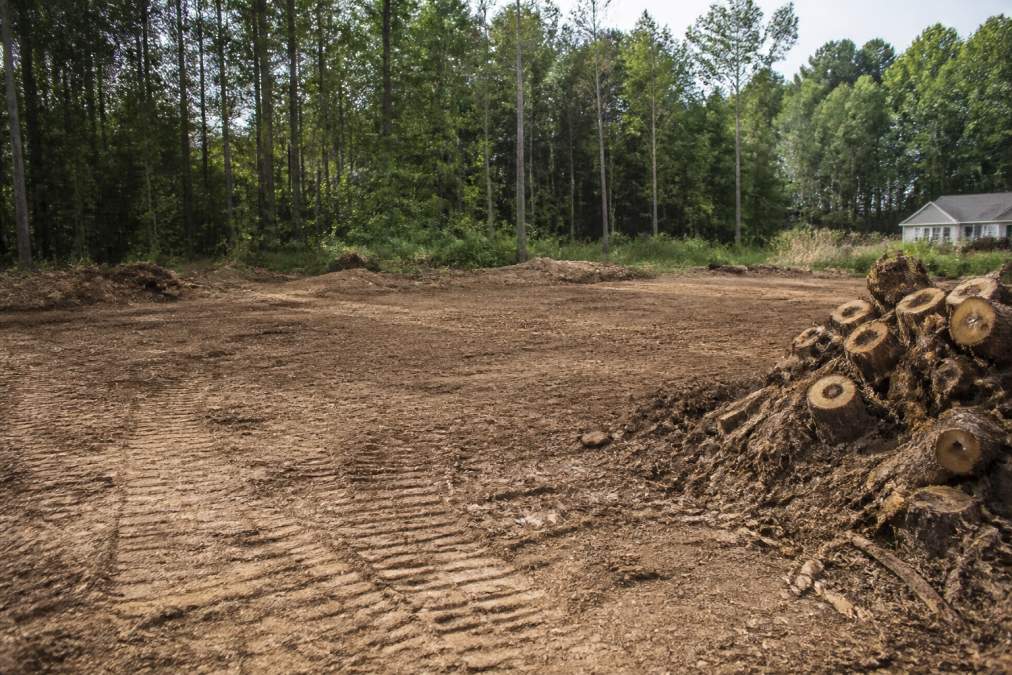
Brush removal targets small trees, saplings, vines, and underbrush that prevent property access and create fire hazards. Forestry mulching equipment removes brush efficiently, grinding it into mulch that stays on-site. Excavators with grapple attachments can pile brush for later chipping or haul-away if you prefer bare ground.
The choice between mulching and removal depends on your property goals. Mulch improves soil and prevents erosion. Removal leaves bare ground, appropriate for construction sites.
Stump Grinding and Root Extraction
Stumps left behind after tree removal create trip hazards, complicate future landscaping, and can sprout new growth. Stump grinding removes the visible stump and grinds roots below ground level, leaving the area level and usable.
Stump grinding requires specialized equipment. Professional grinding goes 12-18 inches deep, removing most root systems. The cost varies by stump size and root depth. A small stump might cost $50-150 to grind. Large stumps can cost several hundred dollars. Bundling stump work with other clearing services often reduces per-stump costs.
Professional Debris Removal and Site Restoration
After clearing and grinding, site restoration ensures your property is clean and safe. Debris piles are chipped for mulch, hauled away, or burned (where permitted). The ground is raked smooth and any necessary grading is completed. A complete job includes hauling debris, raking the site, and leaving it in the agreed-upon condition.
Commercial Land Clearing and Right of Way Work
Commercial clearing projects involve larger scales, tighter timelines, and often complex coordination with utilities, municipalities, and adjacent properties.
Large-Scale Development Projects
Commercial developments require site clearing that often involves multiple phases: initial clearing removes vegetation and trees, excavation removes topsoil and unsuitable material, grading establishes proper elevations and drainage, utilities are installed, and final site restoration prepares for construction or landscaping.
These projects demand experienced contractors who understand project scheduling, safety requirements, and coordination with engineers and builders. Equipment must be available on schedule and work must progress on timeline.
Timber Shredders LLC has experience with residential and small commercial projects throughout Central Virginia, providing the equipment and expertise to handle site preparation efficiently while protecting soil health and meeting local requirements.
Right of Way Clearing and Maintenance
Right-of-way clearing removes vegetation from utility easements, road shoulders, and property boundaries. VDOT has specific standards for state route right-of-way work. Power companies require vegetation management along transmission lines. Property line clearing prevents disputes and improves safety.
Right-of-way work often involves recurring maintenance as vegetation regrows. Contractors familiar with right-of-way standards understand what can be removed, what must be preserved, and how to work safely near utilities and traffic.
Why Choose Professional Land Clearing Companies in Virginia
The difference between DIY clearing attempts and professional work becomes obvious when you see the results. Professional contractors have equipment, experience, and knowledge that deliver better outcomes faster and more safely.
Experience With Local Conditions
Central Virginia’s soil, topography, and climate create specific clearing challenges. Experienced contractors understand seasonal windows and plan work accordingly. Local contractors also know Virginia’s permitting landscape, environmental regulations, and best practices for soil health. They’ve cleared hundreds of properties and understand what works in your specific area.
Proper Equipment and Licensed Operators
Professional equipment costs hundreds of thousands of dollars. Owning this equipment only makes sense for contractors who use it regularly. Licensed, experienced operators know how to use equipment safely and efficiently. Insurance and bonding protect you if something goes wrong. A professional contractor’s reputation depends on delivering quality work.
Soil Health and Long-Term Land Value
The clearing method you choose affects your property’s value and usability for years afterward. Forestry mulching preserves topsoil and improves soil structure. Bulldozing compacts soil and removes topsoil, leaving land difficult to use for pasture or landscaping. Properties cleared professionally with attention to soil health are easier to develop, more attractive to buyers, and more productive if used for agriculture or pasture.
Professional land clearing companies in virginia handle the work that transforms overgrown, inaccessible properties into usable land. Whether you need brush removal, stump grinding, site preparation, or complete land development, the right contractor delivers results that improve your property’s safety, usability, and long-term value. Timber Shredders LLC provides free property assessments and transparent estimates that explain exactly what the work involves and why professional equipment and experienced operators matter. Get a FREE quote today and see how professional land clearing can reclaim your property.
Frequently Asked Questions
How do land clearing companies in Virginia handle topsoil and erosion concerns?
Professional land clearing companies use forestry mulching and grading techniques that preserve topsoil rather than scraping it away like traditional bulldozing. Forestry mulching chips vegetation in place, creating ground cover that prevents erosion and improves soil health. Experienced operators assess drainage patterns and terrain before work begins. For larger sites, erosion control measures like silt fencing or sediment ponds may be installed. This approach protects your land’s long-term productivity while meeting Virginia’s environmental regulations.
What permits do I need for land clearing in Virginia?
Permit requirements depend on your project type and location. Residential clearing on your own property typically requires minimal permitting, though local zoning approval is often needed. Commercial projects, right-of-way work, and clearing near streams usually require Virginia Department of Environmental Quality approval and local permits. Properties in floodplains or near protected wetlands face stricter regulations. A reputable land clearing company will identify permit needs during the initial site assessment and handle the application process, ensuring compliance with state and local rules.
What’s included in the cost to clear land per acre in Virginia?
Land clearing pricing varies based on brush density, stump quantity, terrain, debris removal, and site restoration. Dense brush with rocks and old stumps costs more than light vegetation. Forestry mulching is typically priced per acre or hour, while stump grinding adds cost based on stump size and count. Site grading and driveway preparation increase the total. Get a site assessment for an accurate estimate rather than relying on per-acre quotes alone. Timber Shredders LLC provides free quotes after evaluating your specific property conditions.
How long does a typical land clearing project take?
Timeline depends on acreage, vegetation density, and site conditions. A 1-2 acre residential property with moderate brush typically takes 1-3 days. Larger properties or dense, rocky terrain may require a week or more. Seasonal weather affects scheduling: fall and spring offer better ground conditions than wet winter months. Most land clearing companies in Virginia can accommodate urgent timelines for winter driveway projects if you schedule early. Discuss your deadline during the initial consultation so the company can plan equipment availability and crew scheduling accordingly.
This article was written using GrandRanker