Table of Contents
- Heavy Equipment Rental for Land Clearing: What Actually Works
- Forestry Mulcher Rental Cost: What Drives the Price
- Skid Steer vs Bulldozer for Land Clearing
- Land Clearing Equipment Safety Tips Before You Start
- Permits, Environmental Rules, and Site Logistics
- DIY Rental vs. Hiring a Contractor: A Cost-Benefit Look
- Post-Clearing Soil Management and Site Prep
- Your Next Step
- Frequently Asked Questions
Last Updated: September 10, 2026
Heavy Equipment Rental for Land Clearing: What Actually Works
Heavy equipment rental for land clearing is the practice of leasing specialized machines on a short-term basis to remove trees, brush, stumps, and undergrowth from a property. For most landowners tackling a few acres of overgrown pasture or a brush-choked fence line, renting beats buying outright, because a new compact track loader can run well into six figures while a weekly rental covers the entire job. This guide breaks down which machines fit which jobs, how daily rates really work, and the safety and permitting steps most rental yards won’t mention.
Renting works best when you match the machine to the job, not the other way around. A forestry mulcher that clears a mile of fence line in a day is the wrong tool for pulling stumps, and a bulldozer that pushes a house pad is overkill for light brush. Get that match wrong and you’ll burn rental days, fuel, and patience.
Machines That Fit Different Clearing Jobs
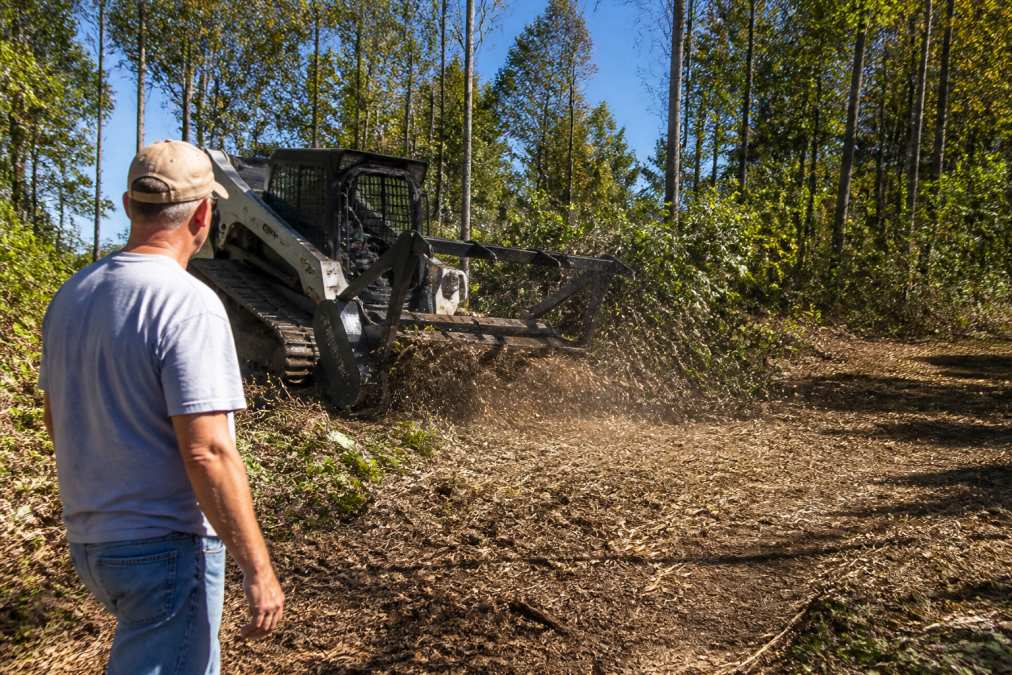
Four machine classes cover nearly every land clearing job, and each has a distinct role. A mini excavator handles stump removal and drainage work, while a compact track loader with a forestry mulcher turns standing brush into mulch in a single pass. Bulldozers move earth and knock down large trees, and a skid steer with a root rake cleans up debris after the heavy work is done.
| Machine | Best For | Typical Job | Watch Out For |
|---|---|---|---|
| Compact track loader + forestry mulcher | Brush, saplings, undergrowth | Fence lines, pasture | Needs high-flow hydraulics |
| Mini excavator | Stumps, drainage, tight access | Root balls, culverts | Slow on open ground |
| Bulldozer | Large trees, grading, earthmoving | House pads, roads | Compacts topsoil |
| Skid steer + root rake | Debris cleanup, light grading | Final pass | Limited in wet ground |
A common mistake is renting a single machine to do all four jobs. It rarely works. The right approach is to sequence them: mulch the brush, pull the stumps, grade the surface, then clean up.
Forestry Mulcher Rental Cost: What Drives the Price
Forestry mulcher rental cost depends on machine size, attachment type, and how long you need it, not on a flat daily figure. Daily rental rates for a compact track loader with a mulcher head sit at the high end of the general equipment range because the attachment alone carries significant value. Most rental yards quote a daily, weekly, and monthly rate, and the weekly rate is often the better deal if your project runs past three days.
Daily Rental Rates and Hidden Fees
The sticker price is rarely the final bill. Budget for these add-ons before you sign:
- Delivery and pickup, often charged each way, and it scales with distance
- Fuel, you return it full or pay a refueling fee
- Damage waiver, optional, but it caps your liability
- Overage hours, most daily rates cap at 8 hours; past that, you pay hourly
- Cleaning fee, mud-caked tracks can trigger a charge
We recommend asking for the all-in number before you commit. A rate that looks cheap on the website can double once delivery and fuel are added.
Skipping the damage waiver to save money backfires on rocky ground. A single bent mulcher tooth or punctured hydraulic line can cost more than the waiver for the entire rental period.
Skid Steer vs Bulldozer for Land Clearing
The choice between a skid steer and a bulldozer comes down to what you’re clearing. A skid steer with a brush cutter or mulcher is more maneuverable, gentler on topsoil, and cheaper to rent, which makes it the better pick for brush, saplings, and light trees. A bulldozer wins on heavy timber, large stumps, and any job that requires moving serious dirt.
For most residential and rural clearing jobs, the skid steer is the smarter rental. It fits through gates, turns in tight spaces, and accepts dozens of attachments. The bulldozer earns its place when you’re knocking down mature hardwoods or cutting a road.
When a Compact Track Loader Beats Both
A compact track loader is the middle ground that often beats both options. It has the flotation of tracks instead of tires, so it keeps working in soft, wet ground where a wheeled skid steer gets stuck. Pair it with a forestry mulcher and it clears brush while leaving the root structure and topsoil largely intact, which matters if you want pasture to regrow.
Tracks spread the machine’s weight, so a compact track loader can work ground that a wheeled skid steer would rut. On wet spring ground, that difference decides whether you finish the job or spend a day pulling a machine out.
Land Clearing Equipment Safety Tips Before You Start
Safety on a clearing site starts before the engine turns over. Walk the property, mark every hazard, and confirm you know how to shut the machine down in an emergency. The most common serious injuries come from rollovers, flying debris, and bystanders standing inside the swing radius of a mulcher or excavator.
Follow these land clearing equipment safety tips on every job:
- Wear a hard hat, eye protection, hearing protection, and steel-toe boots
- Keep all bystanders at least 300 feet from an operating mulcher (osha.gov)
- Never clear on a slope steeper than the machine’s rated limit
- Inspect hydraulic lines and cutting teeth before each shift
- Carry a fire extinguisher; mulcher heads spark on dry material
- Shut down and dismount before clearing a jammed attachment
Operator certification matters too. Many rental yards require proof of experience before handing over a machine with a mulcher head, and it’s worth taking the time to get familiar with the controls before you start cutting.
Permits, Environmental Rules, and Site Logistics
Permits and environmental rules catch more landowners off guard than any machine problem, and most rental yards won’t mention them because they don’t want to slow the booking. The regulatory picture breaks into four buckets you should check before the first cut.
Water and wetlands. If your clearing touches a stream, ditch, pond edge, or wetland, you may need a federal permit under Section 404 of the Clean Water Act, administered by the U.S. Army Corps of Engineers. The Corps issues Nationwide Permits for many small projects, but the thresholds vary by region and by the type of water. Disturbing more than a set acreage of wetland, or working in a navigable waterway, usually pushes you into an Individual Permit, which takes months. The U.S. Environmental Protection Agency’s guidance on wetlands and waterways explains which areas typically trigger a permit requirement.
Stormwater and erosion. Any clearing that disturbs one acre or more generally requires coverage under an EPA Construction General Stormwater Permit (NPDES), filed through your state environmental agency. Even below one acre, many states and counties require a sediment and erosion control plan. The practical mechanism is silt fence, a stabilized construction entrance, and a designated vegetated buffer along any water feature. Inspectors look for these first.
Burning. Open burning of cleared debris is regulated at the state and often county level. Most states require a burn permit during fire season, restrict burning to certain hours, and prohibit burning within a set distance of structures or roads. Some air-quality districts ban burning of certain materials outright. If you plan to burn piles, call your state forestry agency and your county fire marshal before you light anything.
Tree removal and local ordinances. Many counties and municipalities require a tree removal permit for trees above a certain diameter, especially in buffer zones, steep slopes, or historic districts. Some require replacement plantings. Check with your local planning office before you cut a single tree, because retroactive permits are far more expensive than doing it right the first time.
Site logistics run a close second to permitting. A machine that can’t reach the work area is useless, so confirm gate widths, bridge weight limits, and overhead clearance before the delivery truck arrives. A standard compact track loader with a mulcher head needs roughly a 10-foot-wide gate and about 14 feet of vertical clearance on the trailer. If your access road is soft, plan for the delivery to happen in dry conditions or arrange a different entry point. Ask the rental yard for the machine’s transport weight and dimensions, not just its operating weight.
The two questions that sink a clearing project are “can the machine get in?” and “do I need a permit?” Answer both before you book the rental, not after.
DIY Rental vs. Hiring a Contractor: A Cost-Benefit Look
DIY rental makes sense when the job is small, the ground is forgiving, and you have machine experience. Hiring a contractor makes sense when the job is large, the terrain is tricky, or you’d be learning on the clock. The real cost of DIY isn’t the rental rate, it’s the time you spend learning the machine, the risk of damage, and the days you lose to weather or breakdowns.
A contractor brings the machine, the operator, the fuel, the insurance, and the cleanup. For a landowner with a few acres and no equipment background, that package often costs less than a DIY attempt once you add up rental days, delivery, fuel, and the odds of a mistake. The Occupational Safety and Health Administration’s guidance on heavy equipment operation is worth reading before you decide to run a mulcher yourself.
The break-even usually lands somewhere between one and three acres of moderate brush. Below that, a contractor’s mobilization and minimum charge tend to dominate the price, and DIY can win if you already have the skills. Above that, the rental math starts to favor the contractor because a professional crew clears in hours what takes a novice days, and every extra rental day stacks delivery, fuel, and damage-waiver costs on top of the base rate.
Build a simple side-by-side before you decide. On the DIY side, list the daily or weekly rate, delivery and pickup each way, fuel, damage waiver, overage hours, and a realistic estimate of how many days you’ll actually need, then add 50 percent for learning curve and weather. On the contractor side, get a written quote that states whether it includes stump grinding, debris hauling, and grading, because those are the line items that quietly separate a cheap bid from an expensive one.
Three questions decide it faster than any spreadsheet:
- Do you have seat time? If you’ve never run a compact track loader with a mulcher head, your first day is training, not production.
- What’s your terrain? Slopes, wet ground, and tight access raise the risk of a rollover or a stuck machine, both of which cost more than the rental.
- What’s your timeline? If you need the land usable before a specific date, a contractor’s schedule is more predictable than your weekends.
A hybrid approach works well for many landowners: hire a contractor for the heavy mulching and stump work, then rent a smaller machine for final grading, gravel spreading, or fence-line cleanup where the risk is low and the learning curve is short.
Ask the rental yard whether they offer an operator or a delivery-and-setup service. Some yards will walk you through the controls on site, which shortens the learning curve and reduces the chance of a costly mistake on day one.
Post-Clearing Soil Management and Site Prep
What you do after the machines leave determines whether the land is usable or just bare. Mulching leaves a layer of shredded material on the surface that protects topsoil and slowly feeds it, while bulldozing scrapes topsoil into piles and exposes bare subsoil to erosion. If your goal is pasture or a healthy driveway edge, mulch rather than push.
Site preparation comes next. Grade the surface to shed water away from structures, seed bare ground quickly, and stabilize any slope before the first heavy rain. A simple approach that works: spread the mulch layer evenly, seed with a ground cover suited to your region, and keep heavy traffic off the new surface until it establishes.
Your Next Step
Clearing land is a sequencing problem, not a muscle problem. Match the machine to the job, budget for the hidden rental fees, handle the permits and access before delivery day, and finish with soil management so the land stays usable. That’s the difference between a cleared property and a scarred one.
At Timber Shredders LLC, we handle the whole sequence for residential and rural landowners across Central Virginia. Our experienced operators run professional forestry mulching and land clearing equipment, start with a full property assessment, and give you a clear project plan and estimate before work begins. We restore access and visibility while improving soil health, and we clean up when we’re done. Get started with Timber Shredders LLC and get a free quote for your property today.
Frequently Asked Questions
Can I rent land clearing equipment without a commercial license?
Most rental yards rent compact track loaders, mini excavators, and skid steers to individuals without a commercial license, but you will need a valid driver’s license, proof of insurance, and a credit card for the deposit. Some yards require a brief operator orientation before releasing the machine. For larger bulldozers or high-flow forestry mulchers, rental companies may ask for documented operating experience.
How much does it cost to rent a forestry mulcher per day?
Forestry mulcher rental cost depends on machine size, attachment type, and your location. Compact track loaders with mulching heads typically run higher than bare skid steer rentals because the attachment adds wear and maintenance. Daily rental rates also vary by rental period length, delivery distance, and whether you need same-day delivery. Contact rental companies for a project-specific quote rather than relying on generic online averages.
Is it cheaper to rent equipment or hire a professional land clearing service?
For small jobs under an acre with light underbrush, renting a compact track loader can cost less than hiring a crew. For larger properties with heavy timber, stumps, or rocky terrain, professional forestry mulching is usually more cost-effective once you factor in fuel, insurance, damage liability, transport, and your own time. A contractor also handles debris removal and leaves the site ready for grading or pasture.
Do I need insurance to rent heavy construction equipment?
Yes. Rental companies require proof of liability insurance or will sell you a damage waiver at the counter. The waiver typically covers accidental damage to the machine but not damage to your property, buried utilities, or third-party injuries. If you are clearing near fences, driveways, or power lines, confirm your homeowner’s policy or a short-term contractor policy covers the work before you sign the rental agreement.