Table of Contents
- What Stump Grinding Per Acre Actually Costs
- Factors Affecting Stump Removal Price
- Land Clearing Cost Per Acre: Breaking Down the Numbers
- Forestry Mulching vs. Stump Grinding: Cost Comparison
- Equipment Rental vs. Professional Service: Which Saves Money
- Post-Grinding Soil Management and Site Preparation
- Hidden Costs and How to Avoid Surprises
- Frequently Asked Questions
Last Updated: September 2, 2026
What Stump Grinding Per Acre Actually Costs
The cost of stump grinding per acre varies dramatically depending on what you’re actually grinding. A single residential stump in an accessible yard costs far less than clearing dense brush across multiple acres of rural property. At Timber Shredders LLC, we’ve assessed hundreds of properties across Central Virginia, and the pricing confusion usually comes down to one thing: people compare apples to oranges.
When you’re looking at stump grinding per acre, you’re typically dealing with land clearing work, not just removing one or two stumps from your backyard. That distinction matters because per-acre pricing reflects density, accessibility, debris volume, and site conditions that single-stump removal doesn’t account for.
The real cost depends on tree density, stump diameter, hardwood versus softwood species, site access, and what happens to the debris afterward. A property with sparse, small-diameter softwood stumps scattered across an acre will cost significantly less than an acre packed with large hardwood stumps surrounded by tangled root systems and rocks.
Most land clearing projects don’t have a flat per-acre rate. Instead, pricing reflects the actual work involved: how many stumps per acre, their size, how deep the roots go, and whether you need full stump extraction or just grinding.
Factors Affecting Stump Removal Price
Stump removal pricing isn’t arbitrary. Every factor that increases labor, equipment time, or complexity pushes the cost up. Understanding what drives these costs helps you anticipate what a professional quote will actually include.
Stump Diameter and Root System Depth
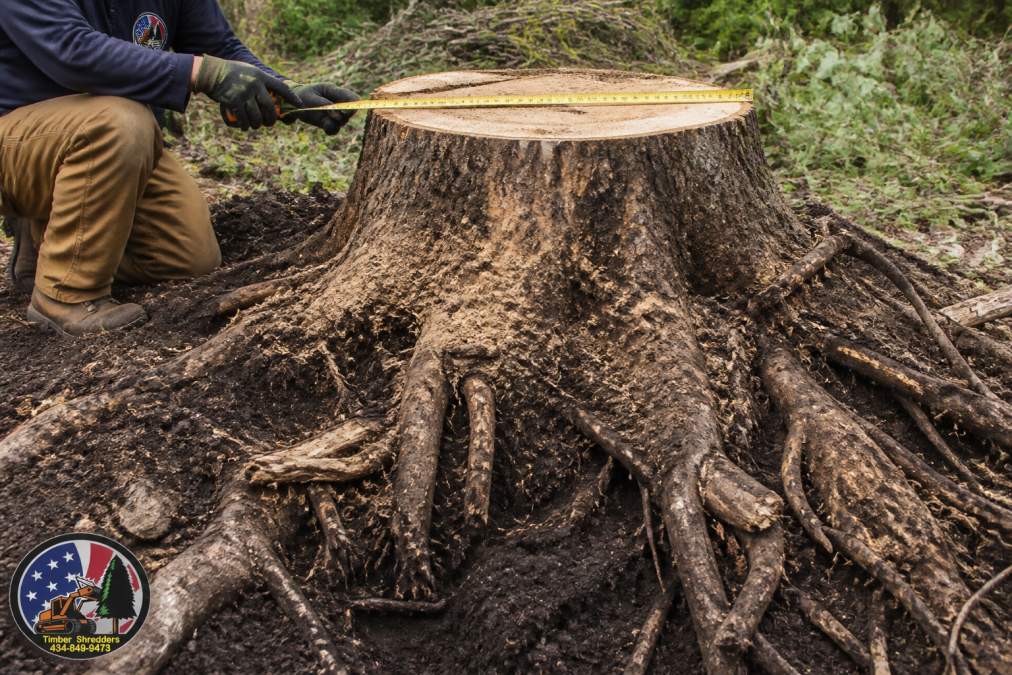
A stump‘s diameter is one of the most straightforward pricing variables. Larger stumps require more grinding time and deeper work into the soil. A 12-inch diameter stump takes roughly twice as long to grind as a 6-inch stump, and the equipment stress increases proportionally (peer-reviewed research).
What most property owners don’t realize is that diameter doesn’t tell the whole story. A 24-inch oak stump with a massive root system extending 3 feet deep costs more than grinding because you’re dealing with root removal complexity. The grinding depth matters as much as the surface diameter. Deep root systems require the grinder to work lower into the soil, which takes longer and creates more debris to manage.
Softwood stumps (pine, fir, spruce) grind faster because the wood is softer and roots tend to be shallower (usda.gov). Hardwood stumps (oak, maple, hickory) have denser wood and deeper, more stubborn root systems. This is where stump grinding per acre pricing starts to diverge: an acre of mature oak stumps will cost more than an acre of pine stumps, even if the diameters are identical.
Hardwood vs. Softwood Pricing Differences
Hardwood stumps command higher removal costs for a straightforward reason: they’re harder to grind and their root systems run deeper. Oak, hickory, and maple stumps are common in Central Virginia, and they’re significantly denser than softwoods.
Grinding through hardwood takes longer. The equipment works harder, fuel consumption increases, and the grinding wheel wears faster. These operational costs get passed to you. A professional service factors in equipment wear when pricing hardwood removal.
Softwood stumps (pine, spruce, fir) grind quickly and their shallower root systems mean less digging and debris removal. If your property is predominantly softwood, your per-acre cost will be lower than a property with equivalent density but hardwood species.
The practical difference: if you’re clearing an acre with mixed species, ask your contractor to break down pricing by hardwood versus softwood stumps. Some properties have 70% softwood and 30% hardwood, that composition directly affects your total cost.
Site Access and Lot Clearing Challenges
A property that’s easy to access costs less to clear than one that’s difficult. If a professional can drive equipment directly to stumps without obstacles, grinding time per stump drops. If rocks, existing structures, or dense brush block access, the crew spends time clearing paths, working around obstacles, or using smaller equipment that operates slower.
Site preparation sometimes costs more than the grinding itself. Rocky terrain slows equipment and increases maintenance costs. Dense brush requires clearing before grinding can begin. Wet soil that’s impassable after rain delays work and extends project timelines.
Lot clearing challenges also include proximity to structures. Grinding near a house, fence, or utility line requires careful equipment positioning and sometimes hand-work to protect nearby infrastructure. A wide-open acre with stumps scattered freely costs less per acre than a property where stumps are clustered near buildings.
Land Clearing Cost Per Acre: Breaking Down the Numbers
When you’re pricing land clearing, not just stump removal, you’re budgeting for multiple components. Stump grinding is one piece. Debris removal, hauling, site grading, and soil management are separate line items that add up quickly.
Tree Density and Debris Removal Impact
Tree density is the primary driver of per-acre cost. An acre with 50 stumps costs dramatically more than an acre with 10 stumps, even if all stumps are the same size (peer-reviewed research). Density determines how long equipment needs to stay on-site and how much debris you’re managing.
Debris removal is where many property owners get surprised. Grinding produces wood chips and debris that has to go somewhere. Some contractors leave chips on-site for mulch. Others haul everything away. If you need a clean property afterward, hauling adds significant cost, typically priced by the truckload.
The math works like this: more stumps per acre means more grinding time, more debris generated, and more hauling trips. A densely wooded acre that’s being cleared for pasture or construction requires full debris removal, which can double or triple your total cost compared to grinding alone.
Hauling and Disposal Fees
Hauling costs depend on debris volume and disposal location. If your property is near a wood waste facility, disposal is cheap. If you’re in a remote area, hauling distances increase and costs climb.
Some contractors charge by the load; others factor hauling into their per-acre rate. Either way, understand what’s included. A property with heavy debris volume can generate 10+ truckloads of chips and wood waste. At typical disposal rates, that’s a substantial cost.
Wood chips can sometimes be retained on-site as mulch for erosion control or soil amendment. This reduces hauling costs but requires planning. Timber Shredders LLC assesses each property to determine whether on-site chip retention makes sense or whether full removal is necessary.
Forestry Mulching vs. Stump Grinding: Cost Comparison
Forestry mulching and stump grinding are different processes with different cost structures. Understanding the distinction helps you choose the right solution for your land clearing needs.
Stump grinding targets individual stumps. A grinder pulverizes the stump and upper root system into chips, leaving deeper roots in the ground. It’s precise, fast, and cost-effective for properties where you want to preserve the land and replant or seed afterward.
Forestry mulching is a broader land clearing approach. A mulching head attachment grinds trees, stumps, brush, and debris into uniform mulch in a single pass. It’s used for clearing overgrown land, reducing wildfire risk, and preparing sites for construction or pasture.
Forestry mulching costs more per acre than stump grinding alone because it handles more material and covers larger areas. However, it eliminates separate debris removal and hauling steps. For heavily overgrown properties, mulching can be more cost-effective overall because you’re consolidating multiple processes into one operation.
The choice depends on your goals. If you’re removing stumps from an otherwise maintained property, grinding is efficient. If you’re clearing dense brush and multiple stumps together, forestry mulching delivers faster results and better soil health outcomes.
Equipment Rental vs. Professional Service: Which Saves Money
Property owners sometimes consider renting a stump grinder and doing the work themselves. The math looks appealing until you factor in actual costs and risks.
Renting a walk-behind stump grinder costs roughly $75-150 per day. A skid steer with a grinding attachment rents for $200-400 per day. An acre of stumps typically requires 2-4 days of grinding work, depending on density and stump size. Rental alone puts you at $150-1,600 before fuel, transportation, and your labor.
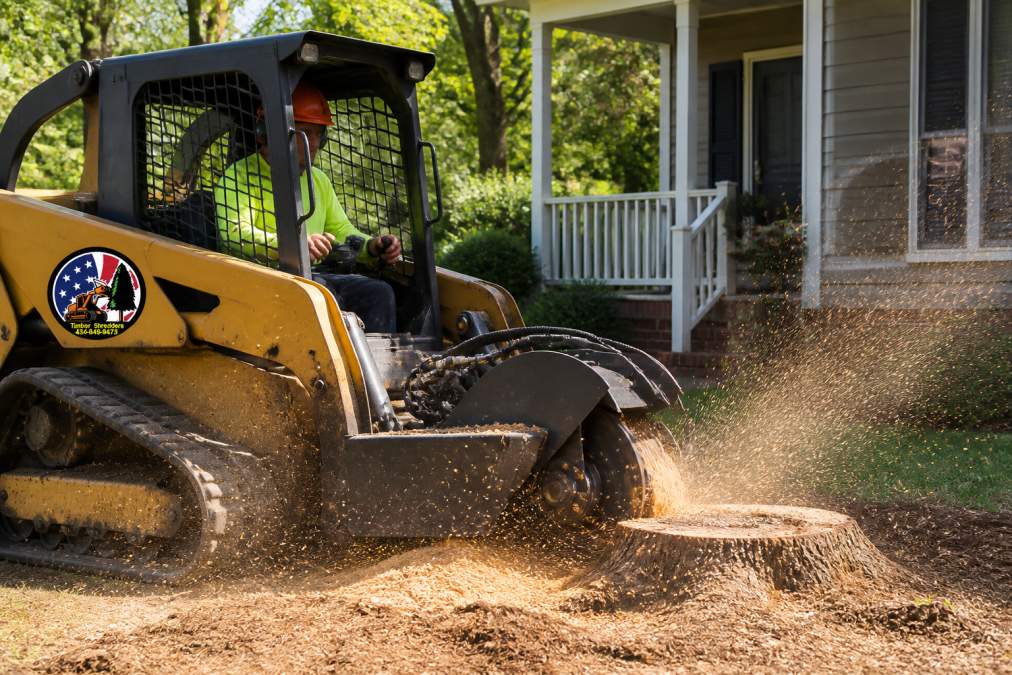
But rental math doesn’t account for learning curve. A professional operator grinds efficiently because they’ve done hundreds of stumps. You’ll work slower, take more breaks, and risk damaging equipment or your property. Professional equipment operators understand how to position equipment, manage debris, and avoid obstacles, skills that take experience.
Professional services include site assessment, equipment operation, debris management, and cleanup. You’re paying for expertise and efficiency. A professional crew completes in one or two days what might take you a week of rental time.
The real cost comparison: DIY equipment rental plus your time versus a professional service quote. Most property owners find that professional service costs less when you value your time and factor in equipment damage risk.
Post-Grinding Soil Management and Site Preparation
What happens after grinding determines whether your land is truly ready for its next use. Grinding removes the stump, but soil management and site preparation are separate considerations.
After grinding, the soil where the stump was has a depression and loose, disturbed earth. If you’re planning to reseed for pasture or plant trees, you need to address this. Grading and soil amendment improve drainage and create a stable base for new growth.
Wood chips left on-site act as mulch and soil amendment. They improve water retention and add organic matter as they decompose. However, chips can harbor pests or inhibit certain plant growth if left too thick. Site preparation includes determining chip depth, spreading, and integration with existing soil.
For construction sites, post-grinding grading is essential. The ground needs to be level and stable for building. Timber Shredders LLC handles site preparation as part of the broader land clearing process, ensuring your property is ready for whatever comes next.
Hidden Costs and How to Avoid Surprises
Stump grinding quotes sometimes expand once work begins. Rocks, unexpected root depth, or soil conditions discovered during grinding can add costs. Knowing what to ask about prevents surprises.
Ask your contractor whether the quote includes debris removal and hauling, or if those are separate. Confirm whether the per-acre estimate accounts for the actual stump density on your property. A contractor who hasn’t visited your site might underestimate the work involved.
Fuel surcharges are common during periods of high fuel costs. Some contractors build fuel into their base rate; others add it separately. Clarify this upfront. Minimum charges apply to small projects, if you’re grinding just a few stumps, expect a minimum service fee rather than true per-stump pricing.
Site conditions can change costs. If the contractor discovers rocks, clay, or water during grinding, the work becomes more difficult. Discuss what happens if unexpected conditions are found. A reputable contractor will communicate changes before they become expensive surprises.
Get a written estimate that specifies what’s included: stump grinding, debris removal, hauling, site grading, or soil amendment. The more detailed the estimate, the fewer surprises you’ll face.
| Cost Component | What It Includes | Typical Variables |
|---|---|---|
| Stump Grinding | Removing stump and upper roots | Diameter, depth, hardwood vs. softwood |
| Debris Removal | Hauling chips and wood waste | Volume, disposal distance, site access |
| Site Grading | Leveling and preparing ground | Soil condition, equipment access |
| Soil Amendment | Adding mulch or compost | Depth, material type, spreading labor |
| Minimum Charge | Base service fee | Property size, access difficulty |
Clearing land is a significant property investment, and understanding stump grinding per acre costs helps you budget accurately. The work involves more than just grinding, site access, debris management, soil preparation, and post-project cleanup all factor into the total cost.
Timber Shredders LLC provides professional land management solutions throughout Central Virginia, handling everything from individual stump removal to full-acre land clearing with forestry mulching. We assess your property, identify the most cost-effective approach, and deliver a clear estimate before work begins. Get a FREE Quote and see how professional land clearing can restore your property’s usability and improve soil health for whatever comes next.
Frequently Asked Questions
Q: What factors have the biggest impact on stump grinding per acre costs?
A: Stump diameter, tree density, hardwood vs. softwood species, site access, and debris removal all drive pricing. Properties with large-diameter stumps, dense vegetation, or difficult equipment access cost more. Professional arborists assess these variables to provide accurate estimates. Request a comprehensive property evaluation to understand which factors apply to your land.
Q: How does land clearing cost per acre compare to individual stump grinding?
A: Land clearing per acre accounts for multiple stumps, brush removal, grading, and site preparation, making it a different pricing model than single-stump removal. Per-acre pricing works best for properties with consistent tree density across the entire area. For scattered stumps on otherwise clear land, individual stump pricing may be more economical. The appropriate pricing model depends on the scale and nature of the clearing required.
Q: Does forestry mulching cost more than traditional stump grinding?
A: Forestry mulching often costs less per acre than stump grinding plus separate hauling and debris removal because it eliminates multiple service visits and disposal fees. However, forestry mulching works best on properties where you can leave wood chips as mulch for soil amendment. If your property requires clean removal and grading, traditional stump grinding may be more appropriate. The total cost depends on your site’s final use and soil management goals.
Q: What hidden costs should I expect when budgeting for stump removal?
A: Common hidden costs include fuel surcharges, minimum charges for small projects, rock or debris encountered during grinding, grading and soil amendment after removal, and hauling fees if debris isn’t left on-site. Request a detailed estimate that specifies what’s included and what triggers additional charges. Ask about minimum project fees and whether fuel surcharges apply. Clear communication upfront prevents budget surprises and ensures you understand the complete scope before work begins.
This article was written using GrandRanker