Table of Contents
- Why Landowners Are Choosing Alternatives to Traditional Land Clearing
- Forestry Mulching Benefits and How It Differs From Bulldozing
- Prescribed Burning for Vegetation Management and Fuel Reduction
- Targeted Grazing: Livestock-Based Vegetation Control
- Cost of Land Clearing Per Acre: Comparing Your Options
- Equipment Rental vs. Professional Hiring for Land Clearing
- Regulatory Requirements and Permitting for Land Clearing Methods
- Post-Clearing Maintenance and Soil Health Recovery
Last Updated: August 27, 2026
Why Landowners Are Choosing Alternatives to Traditional Land Clearing
For decades, bulldozers and heavy machinery dominated land clearing. Landowners pushed vegetation aside, stacked debris into burn piles, and hoped erosion wouldn’t follow. The results were often predictable: compacted soil, lost topsoil, and years of recovery.
Today’s property owners have better options. Alternatives to traditional land clearing methods address what bulldozers can’t: preserving soil health, reducing environmental impact, and delivering faster results for specific property types. At Timber Shredders LLC, we’ve helped Central Virginia landowners reclaim their properties using methods that work with the land instead of against it.
The shift isn’t just about being eco-conscious. Many landowners find that these alternatives cost less over time, require fewer follow-up repairs, and leave their land in better condition for whatever comes next, whether that’s pasture establishment, building site preparation, or simply restoring visibility and access.
This guide covers the main alternatives to traditional land clearing methods: what each does, when to use it, and how it compares in cost and outcome. Whether you’re dealing with overgrown brush, invasive species, or wildfire risk, understanding your options changes the entire project.
Forestry Mulching Benefits and How It Differs From Bulldozing
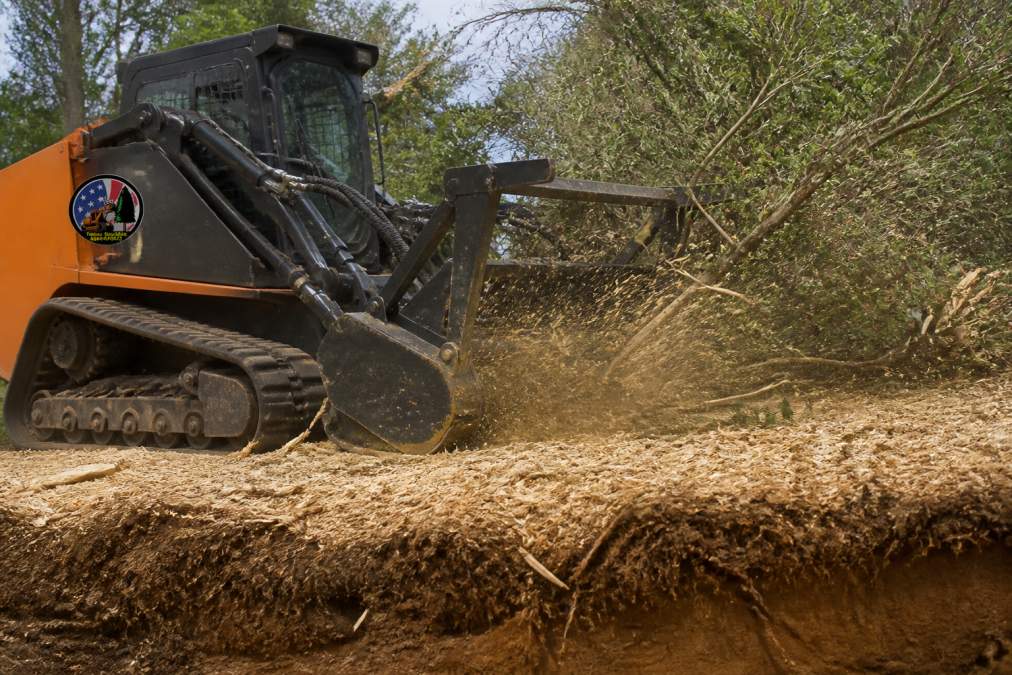
Forestry mulching is the process of grinding trees, brush, and vegetation into nutrient-rich mulch on-site using specialized equipment. Unlike bulldozing, which pushes everything into piles for removal or burning, a forestry mulcher cuts, grinds, and spreads material back onto the ground in a single pass.
The equipment is a single machine, typically a tracked excavator or skid steer with an attached mulching head. It operates without the heavy footprint of traditional dozers. The mulch layer it creates sits directly on the soil, protecting it from erosion and retaining moisture that supports regrowth.
Here’s where forestry mulching differs most from traditional clearing:
- Soil preservation: Bulldozers compact soil and remove topsoil. Forestry mulchers leave the soil intact and add organic material back to it.
- Debris handling: Traditional methods create piles requiring hauling or burning. Forestry mulching eliminates debris on-site, reducing costs and air quality concerns.
- Speed: A forestry mulcher can clear an acre of dense brush in a day (peer-reviewed research). Bulldozing, followed by debris removal and burning, takes significantly longer.
- Regrowth: The mulch layer suppresses weeds and feeds the soil, supporting healthier vegetation afterward.
A common concern landowners raise is whether forestry mulching tears up topsoil like a bulldozer would. The answer depends on execution. Professional operators with proper equipment won’t. Inexperienced operators or underpowered machines can. This is why equipment quality and operator experience matter more than the method itself.
Forestry mulching works best for properties with brush, small to medium trees, and overgrown areas where you want to restore accessibility without heavy soil disturbance. It’s less effective for sites requiring complete stump removal or dealing with extremely large trees that need felling first.
Prescribed Burning for Vegetation Management and Fuel Reduction
Prescribed burning, also called controlled burning, is the planned application of fire under specific weather conditions to reduce hazardous fuels, restore ecosystem health, and manage vegetation. It’s not random burning, it’s a carefully controlled process managed by trained professionals who monitor weather, fuel moisture, and burn conditions throughout.
The primary benefit is fuel reduction. Dead wood, dense underbrush, and accumulated leaf litter create tinderboxes on many properties. Prescribed burns clear this material, significantly reducing wildfire risk. The fire also kills invasive species, releases nutrients back into the soil, and promotes the growth of native plants adapted to fire.
For properties in fire-prone areas, prescribed burning can be more cost-effective than mechanical clearing for large-scale fuel reduction. The ecological benefits are substantial, fire-dependent ecosystems actually become healthier after controlled burns.
The trade-offs are real. Prescribed burning requires strict adherence to weather windows and burn plans. Smoke impacts air quality during the burn and for days after. The process demands highly trained personnel and coordination with local fire departments. It’s also not suitable for properties adjacent to structures or in areas where smoke impacts are unacceptable.
Prescribed burning works best for large properties in rural areas, particularly those with fire-adapted native vegetation and adequate distance from residential neighbors. It’s less practical for small suburban lots or properties where smoke would affect neighbors.
Targeted Grazing: Livestock-Based Vegetation Control
Targeted grazing uses goats, sheep, or other livestock to selectively consume vegetation and manage invasive species. The animals are brought to a property, fenced in a specific area, and allowed to graze for a defined period. Their natural feeding behavior clears underbrush, reduces fuel loads, and suppresses invasive plants.
The appeal is straightforward: no machinery, no chemicals, no heavy equipment compacting soil. Goats are particularly effective because they’ll eat vegetation that cattle and sheep won’t, including woody plants and thorny brush. Their hoof action also helps break up compacted soil and accelerates decomposition of dead material.
Targeted grazing works well for difficult-to-access terrain where machinery is impractical, steep hillsides, rocky areas, and properties with numerous obstacles. It’s also effective for landowners who want chemical-free vegetation management and are willing to wait for results.
The limitations are significant. Targeted grazing typically requires multiple seasons to achieve desired results. Effectiveness depends on vegetation type and density, some invasive species recover quickly after grazing. Logistics are complex: transporting and containing animals, managing water and shelter, and coordinating with livestock operators. Weather delays are common, particularly during wet seasons.
Targeted grazing is best suited for large rural properties with time flexibility and an interest in sustainable land management. It’s less practical for properties where quick results are needed or where livestock management logistics aren’t feasible.
Cost of Land Clearing Per Acre: Comparing Your Options
Cost varies dramatically based on the method, vegetation density, site accessibility, and equipment requirements. Understanding the true cost of each approach requires looking beyond the initial quote.
Forestry mulching typically costs more upfront than traditional bulldozing for small properties but becomes competitive at scale. The advantage emerges in what you don’t pay for afterward: no debris removal costs, no burning permits or monitoring, and no soil remediation. Properties cleared with forestry mulching often require less follow-up work.
Prescribed burning is often the lowest-cost option for large rural properties, particularly when multiple acres need treatment. However, the costs are highly variable and depend on fire department coordination, burn plan requirements, and weather windows. Delays can extend timelines significantly.
Targeted grazing costs depend on livestock availability, season, and property size. Grazing services typically charge per acre per month or per head of livestock per day. Results take longer, so total cost includes extended timelines.
Equipment rental for forestry mulchers provides a middle option if you have operator experience or can hire an operator separately. Rental costs vary by location and equipment type but can be substantially less than hiring a full service if you’re comfortable managing the logistics.
The real cost comparison requires considering what happens after clearing. Soil that’s compacted and depleted requires amendment and remediation. Land that’s properly cleared and mulched supports regrowth immediately. A property cleared with forestry mulching often costs less over three to five years than one cleared with traditional methods, even if the initial quote is higher.
Equipment Rental vs. Professional Hiring for Land Clearing
Choosing between renting equipment and hiring professionals depends on your expertise, timeline, and risk tolerance.
Renting forestry mulching equipment appeals to landowners with operator experience or those willing to hire a skilled operator separately. Rental costs are typically lower than professional service pricing. You control the timeline and can work at your own pace. The drawback is significant: you’re responsible for equipment operation, site assessment, debris management, and any damage to your property or neighboring properties. Equipment can get stuck in mud, break down mid-project, or cause unexpected damage if operated incorrectly.
Professional hiring means you pay more upfront but transfer risk to experienced operators. Professionals assess your property, identify obstacles, plan the work, operate the equipment, and handle cleanup. They carry insurance and have experience managing complications, rocks, stumps, unexpected terrain changes, or equipment failures. Projects typically complete faster because professionals work efficiently and can deploy multiple pieces of equipment if needed.
For most residential landowners, professional hiring is the better choice. The cost difference is often smaller than expected once you factor in equipment damage, operator learning curves, and project delays. Timber Shredders LLC handles the entire process from initial property assessment through project completion, which eliminates the logistics burden and ensures the work meets professional standards.
Equipment rental makes sense if you’re experienced with heavy equipment, have time flexibility, and are comfortable managing operational risks. It’s also viable for smaller properties where rental costs stay reasonable and project complexity is low.
Regulatory Requirements and Permitting for Land Clearing Methods
Permitting requirements vary significantly by location, vegetation type, and clearing method. Understanding what your property requires before starting work prevents costly delays and potential violations.
Most jurisdictions require permits for land clearing, particularly if the work affects drainage, removes trees above a certain diameter, or impacts protected species habitat. Some methods trigger stricter requirements than others. Prescribed burning typically requires coordination with local fire departments and often needs advance notice to neighbors. Forestry mulching usually requires fewer permits than traditional clearing but may need site plan approval if the property is in a sensitive area.
Erosion and sediment control requirements apply to most land clearing work. Many jurisdictions require erosion control measures during and after clearing to prevent sediment runoff into waterways. These measures add cost and timeline but are legally required in most areas.
Wetland and stream buffer protections apply if your property contains wetlands or streams (fws.gov). These areas often have no-disturbance zones where clearing is prohibited or heavily restricted. A property assessment before planning your clearing method is essential.
Check with your local soil and water conservation district and county planning department before committing to a specific method. Requirements vary enough that a method that works on one property might be prohibited on another. Professional land clearing services typically handle permitting coordination, which is another advantage of hiring experienced operators who understand local requirements.
Post-Clearing Maintenance and Soil Health Recovery
What happens after clearing determines whether your land recovers quickly or struggles for years. The clearing method you choose directly affects post-project maintenance needs.
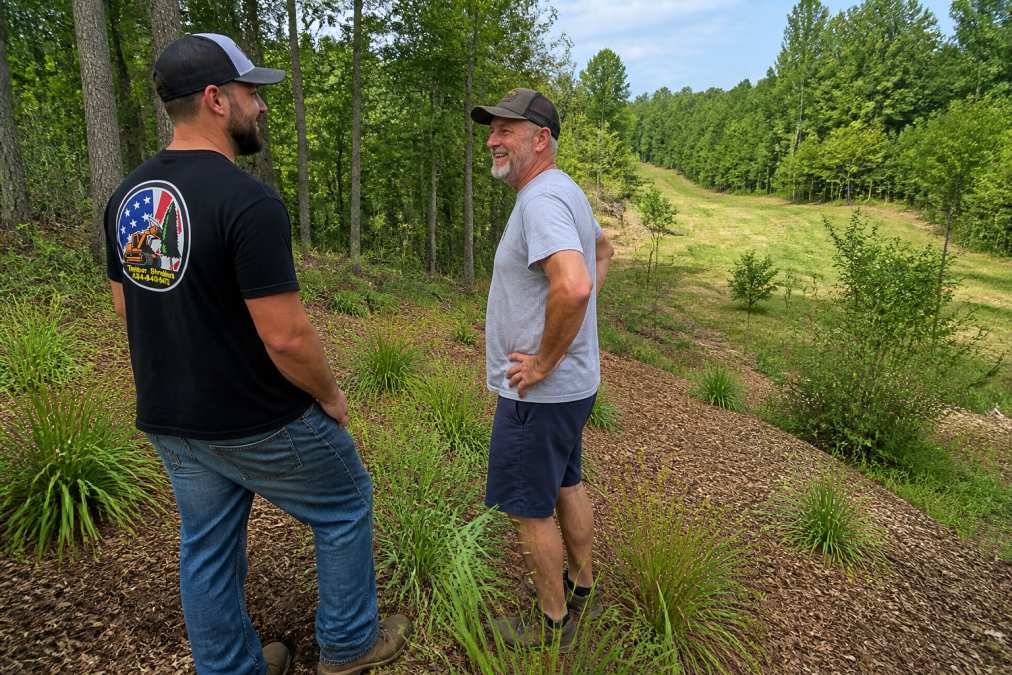
Properties cleared with forestry mulching require minimal post-clearing work. The mulch layer protects soil, retains moisture, and suppresses weeds. Vegetation typically regrows within weeks. If you’re preparing for pasture, the mulch-enriched soil supports healthy grass establishment. If you’re preparing a building site, the preserved soil structure makes construction easier.
Properties cleared with traditional bulldozing often need significant remediation. Compacted soil requires ripping or tilling to restore structure. Topsoil may need replacement if it was removed. Erosion control measures often need monitoring and maintenance. Regrowth is slower because the soil is depleted.
Soil testing after clearing reveals nutrient levels and pH, which guides any amendments needed. Many landowners skip this step and regret it later when vegetation grows poorly or erosion problems emerge. A simple soil test costs less than fifty dollars and prevents thousands in remediation.
Vegetation management continues after clearing. Invasive species often reappear, particularly if seeds remain in the soil. Grazing animals, herbicide application, or repeat mechanical clearing may be needed to maintain the cleared condition. The frequency depends on your goals, pasture requires ongoing management, while a building site only needs clearing once.
Choosing the right land clearing method depends on your property’s specific needs, timeline, and long-term goals. Forestry mulching preserves soil while clearing efficiently. Prescribed burning reduces wildfire risk on large rural properties. Targeted grazing offers chemical-free vegetation management for difficult terrain. Each alternative to traditional land clearing methods serves different situations.
The key is matching the method to your property and your objectives. Professional assessment identifies what your land needs and which approach delivers the best outcome. Timber Shredders LLC provides comprehensive property assessments and handles forestry mulching, land clearing, and site preparation throughout Central Virginia. Get a free quote to see how professional clearing can restore your property quickly while protecting soil health and improving long-term usability.
=== FAQ ANSWERS (audit these too, same rules) ===
[1] Q: How does forestry mulching preserve topsoil compared to traditional bulldozing?
A: Forestry mulching uses a single machine that grinds vegetation on-site without removing topsoil or creating deep ruts. Unlike bulldozers that scrape and compact soil, forestry mulching minimizes soil disturbance and leaves a protective mulch layer that prevents erosion and retains moisture. The ground-up organic material enriches the soil with nutrients rather than stripping it bare.
[2] Q: What is the typical cost of land clearing per acre for different methods?
A: Pricing for land clearing varies significantly based on the method, vegetation density, site accessibility, and equipment requirements. Forestry mulching costs typically range from $500 to $8,000+ per acre, depending on vegetation density. Prescribed burning can range from $20 to $150 per acre, with some state services offering rates as low as $25-$45 per acre. Targeted grazing services can cost between $800 and $1,800 per acre, with minimum project fees often around $1,000. Equipment rental for forestry mulchers can range from $1,270 to $1,750 per day for a skid steer package. Your actual cost depends on property size, brush thickness, accessibility, and which method suits your land best. Contact a professional for a site-specific estimate.
[3] Q: Can forestry mulching handle properties with thick brush, old stumps, and rocks?
A: Yes, forestry mulching equipment is designed to tackle mixed vegetation, stumps, and challenging terrain. Professional operators assess your property first to identify potential obstacles and confirm the equipment can access all areas safely. Rocks and unexpected underground obstacles may affect project scope, which is why a comprehensive property assessment upfront prevents surprises and hidden costs later.
[4] Q: What permits or regulations apply to land clearing in my area?
A: Regulations vary by county and locality. Most areas require permits for clearing near waterways, wetlands, or steep slopes to prevent erosion and protect water quality. Some jurisdictions restrict burning or require specific burn plans. Professional land management companies handle permitting and ensure compliance with local environmental regulations, so you avoid fines and project delays.
Frequently Asked Questions
How does forestry mulching preserve topsoil compared to traditional bulldozing?
Forestry mulching uses a single machine that grinds vegetation on-site without removing topsoil or creating deep ruts. Unlike bulldozers that scrape and compact soil, forestry mulching minimizes soil disturbance and leaves a protective mulch layer that prevents erosion and retains moisture. The ground-up organic material enriches the soil with nutrients rather than stripping it bare.
What is the typical cost of land clearing per acre for different methods?
Pricing for land clearing varies significantly based on the method, vegetation density, site accessibility, and equipment requirements. Forestry mulching costs typically range from $500 to $8,000+ per acre, depending on vegetation density. Prescribed burning can range from $20 to $150 per acre, with some state services offering rates as low as $25-$45 per acre. Targeted grazing services can cost between $800 and $1,800 per acre, with minimum project fees often around $1,000. Equipment rental for forestry mulchers can range from $1,270 to $1,750 per day for a skid steer package. Your actual cost depends on property size, brush thickness, accessibility, and which method suits your land best. Contact a professional for a site-specific estimate.
Can forestry mulching handle properties with thick brush, old stumps, and rocks?
Yes, forestry mulching equipment is designed to tackle mixed vegetation, stumps, and challenging terrain. Professional operators assess your property first to identify potential obstacles and confirm the equipment can access all areas safely. Rocks and unexpected underground obstacles may affect project scope, which is why a comprehensive property assessment upfront prevents surprises and hidden costs later.
What permits or regulations apply to land clearing in my area?
Regulations vary by county and locality. Most areas require permits for clearing near waterways, wetlands, or steep slopes to prevent erosion and protect water quality. Some jurisdictions restrict burning or require specific burn plans. Professional land management companies handle permitting and ensure compliance with local environmental regulations, so you avoid fines and project delays.
This article was written using GrandRanker