Table of Contents
- Mechanical Land Clearing Methods
- Forestry Mulching Benefits for Residential Properties
- Chemical Clearing and Herbicide Options
- Cost of Clearing Land Per Acre: What to Expect
- Residential Land Clearing Permits and Compliance
- Safety Protocols and Soil Health Restoration
- Conclusion
Last Updated: August 21, 2026
Mechanical Land Clearing Methods
When you’re facing an overgrown residential lot, the first question isn’t whether to clear it, it’s how. The mechanical approach to land clearing methods remains the most practical option for most homeowners, especially on properties with dense brush, stumps, and mixed vegetation. Unlike chemical or manual approaches, mechanical clearing delivers results in days rather than weeks, and it tackles the full spectrum of obstacles at once.
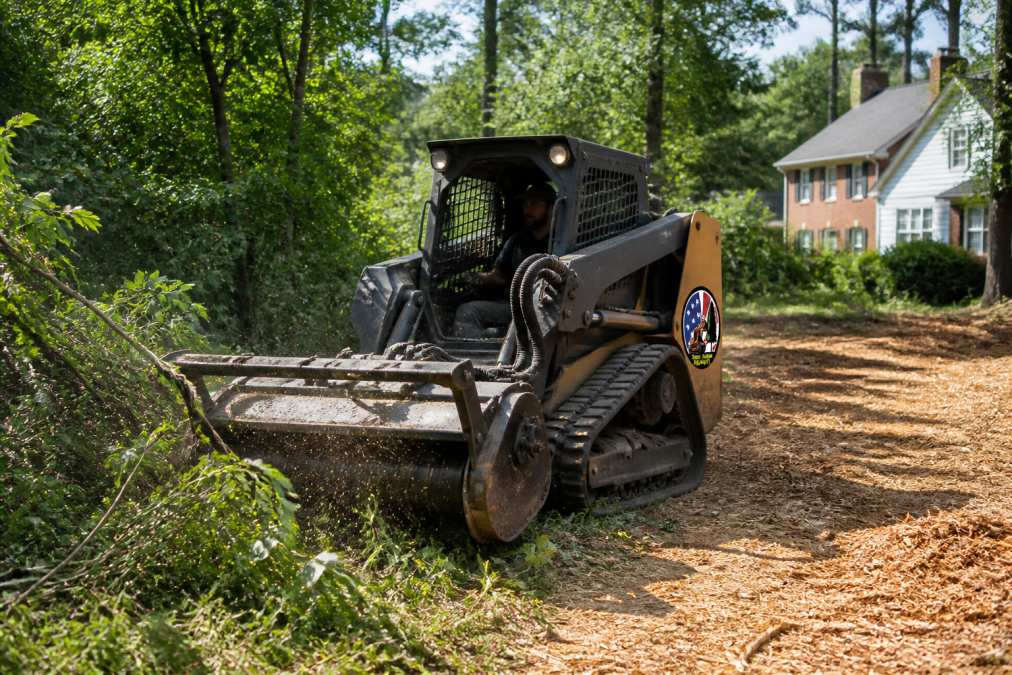
Mechanical land clearing methods fall into two primary categories: heavy equipment approaches that move material off-site, and in-place grinding that transforms vegetation into usable mulch. The distinction matters because it directly impacts soil health, debris management, and your property’s post-project condition.
Bulldozing and Pushover Techniques
Bulldozing represents the traditional workhorse of land clearing. A D6 or D8 dozer pushes trees, brush, and stumps into windrows or piles for later removal. It’s fast, it’s powerful, and it gets the job done on large acreage.
The downside is significant: dozers compact soil, destroy topsoil structure, and leave your property looking like a construction site. A common mistake homeowners make is assuming all heavy equipment operators follow the same practices. They don’t. Some will grade your lot to bare dirt, others will preserve topsoil. Before hiring, ask specifically about soil preservation and post-project grading plans.
Bulldozing works best when you need complete site preparation for construction, when you’re removing massive trees unsuitable for grinding, or when your property has extensive rock and root obstacles. For smaller residential lots where soil health matters and you plan to seed or plant afterward, bulldozing often causes more problems than it solves.
Cut and Grind Approaches
Cut and grind methods attack the problem differently. Operators use chainsaws or brush cutters to fell trees and cut brush, then use stump grinders or tracked equipment to process the remaining material. This approach gives you control, you can selectively clear specific areas while preserving mature trees you want to keep.
The equipment matters here. A handheld stump grinder works on individual stumps but becomes impractical for dense brush. Tracked grinders with hydraulic attachments handle larger volumes and rougher terrain. The time investment is higher than bulldozing, but the precision is superior.
A key advantage: you can stage the work. Clear the brush one week, grind stumps the next, handle grading last. This flexibility appeals to homeowners who want to manage costs or coordinate with other projects. The real benefit emerges in the weeks after: your soil remains largely undisturbed, and you retain the option to plant or seed immediately rather than waiting for soil recovery.
Forestry Mulching Benefits for Residential Properties
Forestry mulching represents a significant evolution in land clearing methods, and it addresses the soil health concern that haunts traditional approaches. A forestry mulcher is a tracked or wheeled machine with a rotating drum studded with teeth or chains. It grinds trees, brush, stumps, and roots into fine mulch in a single pass, leaving the material on-site as a protective layer.
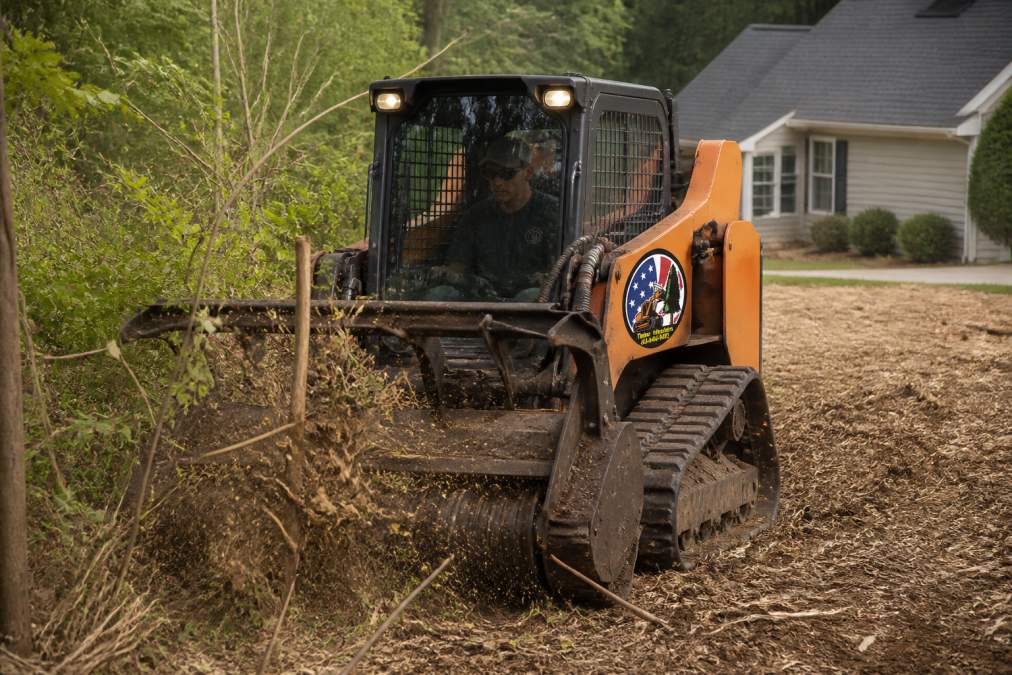
The benefits compound. First, erosion control: that mulch layer prevents soil from washing away during heavy rain, a critical issue on slopes. Second, soil amendment: the organic matter breaks down over months, adding nutrients and improving soil structure. Third, speed: a single operator covers an acre in a day what might take a week with cut-and-grind methods.
For properties where you plan to establish pasture, restore native vegetation, or simply improve land usability without heavy soil disturbance, forestry mulching delivers results that mechanical pushover methods cannot match.
The limitation is real: extremely large trees with massive root systems sometimes resist grinding, and properties with high rock density can slow the process. Forestry mulching also requires skilled operators who understand how to work the equipment without creating ruts or compacting soil. A poor operator can negate the soil health benefits entirely. This is why operator experience and equipment quality matter more than the method itself.
Chemical Clearing and Herbicide Options
Chemical clearing approaches target unwanted vegetation without heavy equipment. Herbicides like glyphosate kill brush and small trees, allowing you to remove the dead material manually or let it decompose in place. For light brush management or selective clearing around structures, herbicides provide a low-impact option.
The reality is practical: herbicides work on vegetation that’s actively growing. They work slowly, expect 2-4 weeks for full effect. They require careful application to avoid damaging desirable plants, and they demand multiple treatments for dense growth. On a 3-acre lot with thick brush and mixed-size trees, herbicides alone rarely solve the problem; they’re a complement to mechanical clearing, not a replacement.
Chemical clearing makes sense for maintenance, keeping cleared areas from reverting to brush. It makes sense for selective weed control in pastures. It rarely makes sense as your primary clearing strategy for a heavily overgrown residential lot. The time investment and incomplete results frustrate most homeowners who try this approach alone.
Cost of Clearing Land Per Acre: What to Expect
Pricing for land clearing methods varies based on vegetation density, equipment required, and your location. A light brush clearing on open land costs less than dense hardwood removal with stumps and rocks. Site access matters too, equipment can work efficiently on flat, accessible properties but struggles on steep terrain or sites with limited entry points.
Rather than guessing at per-acre costs, the practical approach is getting a site-specific quote. Different properties present different challenges. A property with scattered trees costs far less than one with solid brush coverage. A property with good road access costs less than one requiring equipment to be brought in by trailer.
What you should know: transparent pricing comes with a detailed site assessment. A contractor who quotes you a price over the phone without seeing the property is either guessing or planning to surprise you with additional charges. Timber Shredders LLC provides comprehensive property assessments and clear project estimates before work begins, so you understand exactly what you’re paying for and why.
Residential Land Clearing Permits and Compliance
Before you clear a single tree, understand your local regulations. Most jurisdictions require permits for land clearing, especially if the work involves wetlands, stream buffers, protected vegetation, or significant soil disturbance. Failing to secure permits can result in fines, forced restoration, and project delays that cost far more than the permit itself.
Permit requirements vary significantly by locality, but the process follows a predictable pattern. Start by contacting your county or municipal building/planning department, this is your single most important step. Ask these specific questions:
Initial Inquiry Checklist:
- Does my property require a land clearing permit?
- Are there wetland or stream buffer restrictions on my lot?
- What erosion and sediment control measures are required?
- Do I need an environmental assessment or stormwater management plan?
- What is the typical approval timeline (most areas: 2-6 weeks)?
- Are there tree preservation ordinances that protect specific species or sizes?
- Do I need a grading permit if the work involves soil movement or site preparation?
- What documentation must I submit (site plans, contractor credentials, insurance)?
Many states require erosion and sediment control plans for projects disturbing more than 1 acre or involving slopes steeper than 2:1 (the EPA). Your contractor should be familiar with these requirements, but you are ultimately liable as the property owner. Request that any contractor you hire provide proof of:
- Current liability insurance (minimum $1 million recommended)
- Experience with local permitting in your specific county or municipality
- A written timeline showing when permits will be secured before work begins
- Confirmation that they understand local erosion control standards
Common Permit Pitfalls:
Assuming a contractor will handle all permitting is a mistake. Many contractors will begin work and let you deal with violations later. Verify in writing that permits are secured before equipment arrives on your property.
Underestimating timeline is another common error. Permit approval can take 4-8 weeks in some jurisdictions, especially if environmental review is required. Plan your project timeline around permit approval, not equipment availability.
Ignoring tree preservation ordinances is costly. Some municipalities protect trees above a certain diameter (often 6-12 inches) or specific species (oak, maple, native hardwoods). Removing protected trees without variance approval can trigger fines of $500-$5,000 per tree in some areas.
The Practical Step:
Make that 15-minute call to your local planning department before you hire a contractor or schedule equipment. A single conversation clarifies what you need, what timeline applies, and what documentation to expect. This single action prevents costly delays, keeps your project on schedule, and protects you from liability. Ask for the permit application and any local land clearing guidelines in writing, most municipalities provide these documents free online or by request.
Safety Protocols and Soil Health Restoration
Safety Protocols for Residential Land Clearing
Heavy equipment operation demands respect and training. This is not a DIY equipment rental situation for most residential properties. Inexperienced operators create serious hazards: they damage underground utilities, destabilize slopes, create ruts that cause erosion, and compromise soil health through poor technique. If you are considering renting equipment and operating it yourself, understand the real risks before you begin.
Critical Safety Checklist for DIY Equipment Operation:
If you plan to operate chainsaws, brush cutters, or small tracked equipment yourself:
- Utility Locating: Call 811 (the national "Call Before You Dig" service) at least 3 business days before any work (call811.com). This marks underground gas, electric, water, and telecommunications lines. Hitting a buried utility can cause electrocution, gas leaks, or service interruption to your neighborhood.
- Personal Protective Equipment: Wear a hard hat, safety glasses, hearing protection (85+ decibels from equipment), steel-toed boots, and cut-resistant chaps when operating chainsaws. Chainsaw injuries are severe and common among untrained operators.
- Equipment Training: If you rent a stump grinder or small tracked equipment, require the rental company to provide hands-on training before you take possession. Do not rely on YouTube videos or verbal instructions from the rental clerk.
- Slope and Stability: Never operate heavy equipment on slopes steeper than 2:1 (50% grade) without professional guidance (osha.gov). Equipment can tip, and operators can lose control. Residential lots with significant elevation change should be cleared by professionals.
- Fuel and Maintenance: Never refuel equipment while the engine is running or hot. Store fuel in approved containers away from ignition sources. Check equipment before each use for leaks, loose parts, or damage.
- Bystander Distance: Maintain a minimum 50-foot perimeter around active equipment operation. Debris can be ejected at high speed. Never allow children or pets in the work area.
- Weather Conditions: Do not operate equipment in heavy rain, high winds, or low visibility. Wet soil reduces traction and increases the risk of equipment becoming stuck or tipping.
When to Hire a Professional:
If your property has:
- Trees larger than 12 inches in diameter
- Dense brush coverage over more than 1/4 acre
- Slopes steeper than 15 degrees
- Proximity to structures, utilities, or property lines within 20 feet
- Wet or clay-heavy soil
…hire a licensed, insured contractor. The cost of professional clearing is far less than the cost of a serious injury, utility damage, or environmental violation.
Soil Health Restoration After Clearing
The clearing method you choose directly determines your soil recovery timeline and post-project usability. This decision should be made before work begins, not after.
Soil Recovery by Clearing Method:
Bulldozing/Pushover: Dozers compact soil and destroy topsoil structure. Recovery timeline: 6-12 months before soil is stable enough for seeding or planting. The soil needs time to settle and regain structure. Many homeowners must add soil amendments (compost, peat moss) before planting. Cost impact: additional $500-$2,000 for soil amendment and extended timeline.
Cut and Grind: Selective cutting and stump grinding preserve soil structure better than bulldozing. Recovery timeline: 4-8 weeks before seeding or planting. Soil disturbance is moderate, and the land is usable sooner. This method is ideal if you plan landscaping or pasture establishment within 2-3 months.
Forestry Mulching: The mulch layer protects soil, prevents erosion, and adds organic matter as it decomposes. Recovery timeline: 2-4 weeks before seeding or planting into the mulch. This is the fastest path to functional land. The mulch suppresses weeds naturally for 6-12 months, reducing herbicide needs. Soil health actually improves over time as the mulch breaks down.
Post-Clearing Soil Management:
After clearing, allow the land to rest briefly before major disturbance. If you’ve mulched, you can seed into the mulch within 2-4 weeks. If you’ve bulldozed, wait 4-6 weeks for soil to settle before testing.
Consider a soil test before seeding or planting. A basic soil test ($25-$50) measures pH, nutrient levels (nitrogen, phosphorus, potassium), and organic matter content. This informs whether you need amendments and what species will thrive on your property. Your local cooperative extension office provides soil testing services and interpretation.
If your goal is functional pasture, native vegetation restoration, or landscaping, the clearing method directly impacts your success rate and timeline. Forestry mulching accelerates recovery and improves long-term soil health. Bulldozing requires patience and often additional investment in soil amendment. Choose your method based on your post-clearing goals, not just on speed or lowest cost.
=== FAQ ANSWERS (audit these too, same rules) ===
[1] Q: What is the most efficient land clearing method for a residential lot?
A: Forestry mulching is often the most efficient approach for residential properties. It cuts, grinds, and clears trees, brush, and stumps on-site in a single pass, leaving a protective mulch layer. This eliminates hauling and burning debris while improving soil health. For smaller areas or selective clearing, mechanical methods like cut and grind work well. The best choice depends on your lot size, vegetation density, and soil conditions.
[2] Q: How much does residential land clearing cost per acre?
A: Land clearing costs vary based on vegetation density, equipment access, and local labor rates. Forestry mulching typically ranges from moderate to premium pricing depending on brush thickness and acreage. Mechanical clearing with bulldozers may cost differently than mulching. Contact local professionals for site-specific quotes, as pricing depends on your property’s unique conditions, accessibility, and any unexpected obstacles like rocks or deep-rooted stumps.
[3] Q: What permits do I need for residential land clearing?
A: Permit requirements vary by location and depend on the scope of clearing, proximity to wetlands, and local zoning regulations. Most municipalities require permits for significant vegetation removal, grading, or site preparation. Contact your local county or city planning department to determine specific requirements for your property. Some areas have environmental compliance rules for erosion control and stormwater management. Professional land clearing companies typically handle permit research and compliance.
[4] Q: Does forestry mulching really improve soil health, or is that marketing?
A: Forestry mulching does improve soil health by leaving a protective mulch layer on-site. This mulch prevents erosion, retains moisture, and gradually breaks down to return nutrients to the soil. Unlike bulldozing, which removes topsoil and disrupts soil structure, mulching preserves the land’s fertility. The mulch layer also suppresses regrowth and reduces the need for ongoing maintenance. Your property will be usable for pasture, landscaping, or future development with healthier soil underneath.
Frequently Asked Questions
What is the most efficient land clearing method for a residential lot?
Forestry mulching is often the most efficient approach for residential properties. It cuts, grinds, and clears trees, brush, and stumps on-site in a single pass, leaving a protective mulch layer. This eliminates hauling and burning debris while improving soil health. For smaller areas or selective clearing, mechanical methods like cut and grind work well. The best choice depends on your lot size, vegetation density, and soil conditions.
How much does residential land clearing cost per acre?
Land clearing costs vary based on vegetation density, equipment access, and local labor rates. Forestry mulching typically ranges from moderate to premium pricing depending on brush thickness and acreage. Mechanical clearing with bulldozers may cost differently than mulching. Contact local professionals for site-specific quotes, as pricing depends on your property's unique conditions, accessibility, and any unexpected obstacles like rocks or deep-rooted stumps.
What permits do I need for residential land clearing?
Permit requirements vary by location and depend on the scope of clearing, proximity to wetlands, and local zoning regulations. Most municipalities require permits for significant vegetation removal, grading, or site preparation. Contact your local county or city planning department to determine specific requirements for your property. Some areas have environmental compliance rules for erosion control and stormwater management. Professional land clearing companies typically handle permit research and compliance.
Does forestry mulching really improve soil health, or is that marketing?
Forestry mulching does improve soil health by leaving a protective mulch layer on-site. This mulch prevents erosion, retains moisture, and gradually breaks down to return nutrients to the soil. Unlike bulldozing, which removes topsoil and disrupts soil structure, mulching preserves the land's fertility. The mulch layer also suppresses regrowth and reduces the need for ongoing maintenance. Your property will be usable for pasture, landscaping, or future development with healthier soil underneath.
This article was written using GrandRanker