Table of Contents
- What Land Management Solutions Actually Do for Rural Properties
- Forestry Mulching Benefits and Why It Outperforms Traditional Clearing
- Land Clearing Cost Per Acre and How to Budget Realistically
- Digital Mapping and Property Tracking Tools for Landowners
- Rural Property Maintenance Tips to Protect Your Investment
- Why Professional Land Management Beats DIY Approaches
- Getting Started: How to Choose the Right Solution for Your Property
Last Updated: August 22, 2026
What Land Management Solutions Actually Do for Rural Properties
Land management solutions are comprehensive systems and services that help rural property owners reclaim, maintain, and optimize their land for specific uses, pasture expansion, site preparation, wildfire risk reduction, or restoring access and visibility. At Timber Shredders LLC, we’ve worked with Central Virginia landowners who initially thought their overgrown properties were unsalvageable. The right combination of professional equipment, clear planning, and experienced operators transforms unusable land into productive space.
What separates effective land management from DIY attempts is understanding what your property needs and matching that need to the right solution. A property choked with brush requires a different approach than one with scattered stumps or poor drainage.
The best land management solutions address three core challenges simultaneously: they remove obstacles (vegetation, stumps, debris), improve usability (access, visibility, drainage), and preserve or enhance soil health for future use.
Forestry Mulching Benefits and Why It Outperforms Traditional Clearing
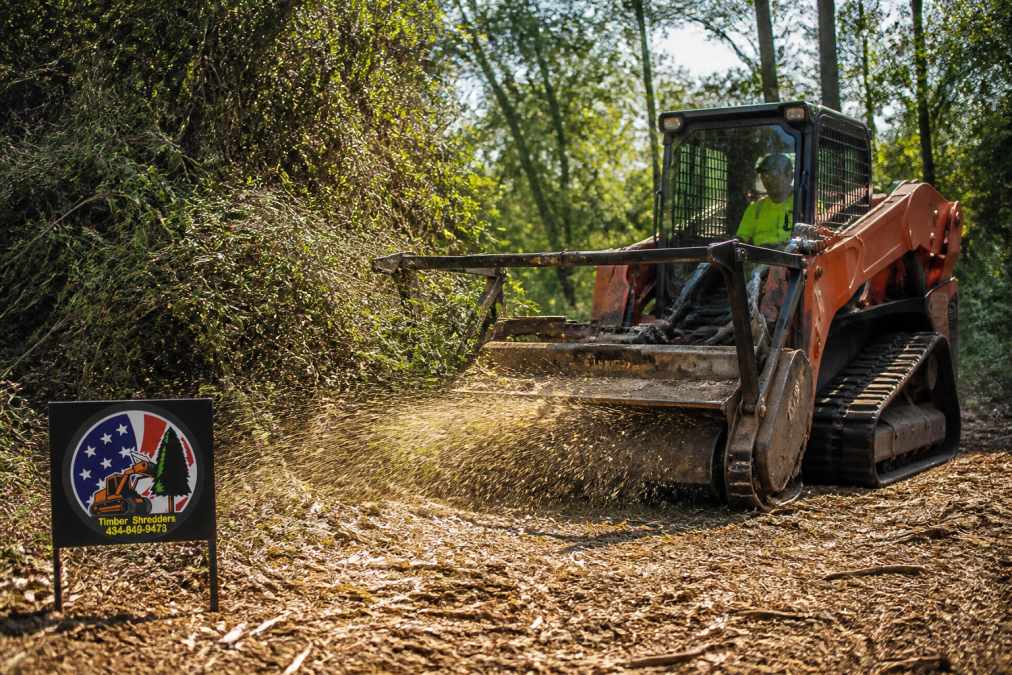
Forestry mulching is a single-pass land clearing method that grinds vegetation, brush, and small trees into mulch on-site, eliminating the need for hauling debris or extensive cleanup. Unlike traditional bulldozer clearing, which strips topsoil and leaves massive piles of slash to manage, forestry mulching processes everything in place and leaves the land ready for immediate use.
A forestry mulching operation can clear an acre of dense brush in a single day, something that would take weeks with traditional methods (peer-reviewed research). The equipment handles mixed terrain, thick brush, small trees, rocks, and stumps, without requiring multiple passes or equipment changes.
Soil health is where forestry mulching shows its real advantage. Traditional clearing methods either compact soil or remove the organic layer entirely. Forestry mulching leaves processed material on-site as mulch, which improves soil structure over time (usda.gov). The mulch layer retains moisture, moderates temperature, and feeds beneficial microorganisms. Within a season or two, landowners report richer, more workable soil than before clearing.
Safety and visibility improvements happen immediately. Overgrown properties hide hazards, old fencing, erosion gullies, property lines, and fire fuel. Clearing restores sightlines across your land, identifies problems, and dramatically reduces wildfire risk, especially important for properties near wooded areas or in fire-prone regions.
Forestry mulching requires specialized equipment and experienced operators, which costs more upfront than traditional methods. However, when you factor in time saved, elimination of debris removal, and soil health benefits, the total cost of ownership can be lower. Timber Shredders LLC provides detailed estimates accounting for site-specific factors like vegetation density and terrain.
Land Clearing Cost Per Acre and How to Budget Realistically
Land clearing costs vary based on what you’re clearing, vegetation density, and debris handling. Understanding cost drivers helps you avoid the low-bid trap, where suspiciously low quotes lead to surprise charges when contractors encounter rocks, stumps, or harder soil.
Vegetation density matters most. A property with scattered brush costs far less than one with mature timber, dense undergrowth, and embedded rocks. Professional assessment identifies what’s actually on your land and accounts for hidden obstacles that DIY estimates miss.
Debris handling is where costs diverge sharply. Traditional bulldozing requires hauling debris off-site or paying for burn permits and controlled burning. Forestry mulching eliminates this cost entirely because material stays on-site as mulch, one of the biggest hidden savings that low-bid estimates don’t capture.
Access and terrain add complexity. Properties with existing roads and flat terrain clear faster than those requiring equipment to navigate steep slopes, water crossings, or poor soil stability. Rocky terrain slows progress because equipment must work around or process boulders.
The critical mistake is comparing quotes without understanding what’s included. One contractor might quote lower but exclude debris removal or site restoration; another might quote higher but include everything. Timber Shredders LLC provides transparent estimates spelling out exactly what’s included, what triggers additional costs, and the timeline.
Budget for contingencies. Even with professional assessment, unexpected conditions sometimes emerge, buried metal, deeper stumps, or challenging soil. A realistic budget includes a buffer for these discoveries, keeping the project moving instead of stalling.
Digital Mapping and Property Tracking Tools for Landowners
Digital mapping tools give you a bird’s-eye view of your property and help you plan land management projects before equipment arrives. Tools like onX Hunt and HuntStand provide satellite imagery, topographic maps, and property boundary data to identify problem areas, plan access routes, and track changes over time.
onX Hunt’s Area Shape Tool lets you measure specific property sections, useful for calculating clearing costs or planning pasture expansion. Satellite and topographic basemaps show vegetation density, slope, drainage patterns, and existing infrastructure.
HuntStand offers similar mapping with monthly satellite imagery updates, letting you track seasonal changes. The 3D mapping feature helps visualize terrain and identify access challenges before committing to a clearing plan.
For agricultural properties, FJDynamics Farm Management System and FarmRaise add financial and operational tracking. These tools help document completed work, track costs, and plan future improvements.
Mapping tools don’t replace on-site assessment. A satellite image shows what’s there but can’t reveal soil conditions, drainage problems, or passability. Professional land management combines digital mapping with field inspection. Timber Shredders LLC starts every project with comprehensive property assessment, the map provides helpful context, but ground truth drives the plan.
Rural Property Maintenance Tips to Protect Your Investment
Once your land is cleared and usable, maintenance determines whether it stays that way or reverts to overgrowth.
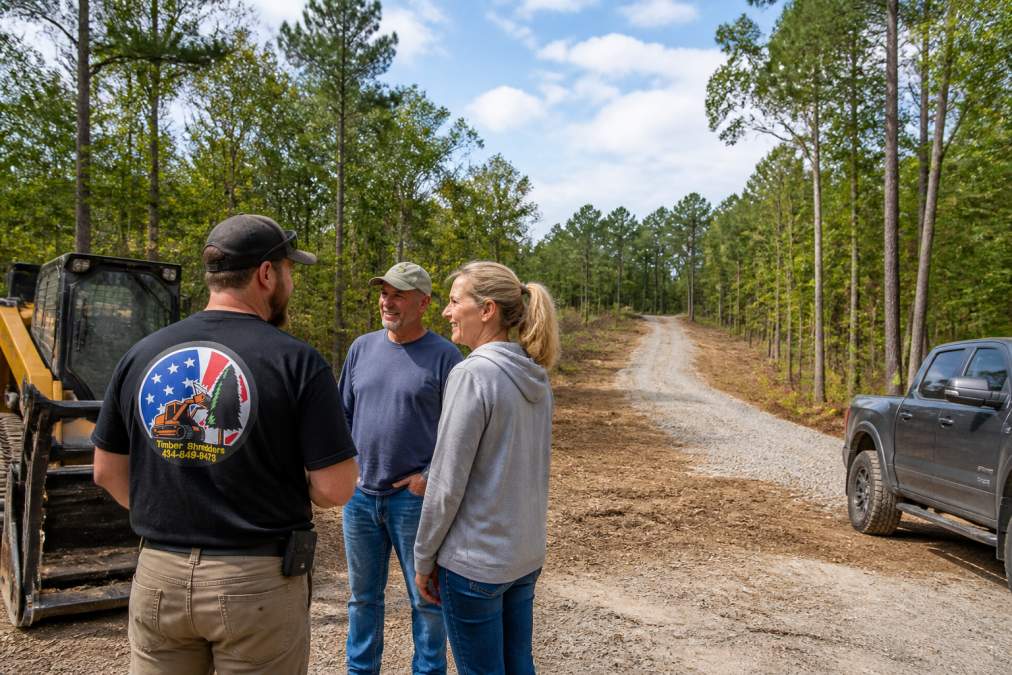
Driveway maintenance is foundational. A gravel driveway that’s graded and compacted properly drains water instead of collecting it. Grade your driveway at least twice yearly, spring and fall, to redirect water and smooth traffic damage. Timber Shredders LLC handles driveway installation with proper grading and base preparation, extending surface life and reducing maintenance frequency.
Vegetation management prevents regrowth. After clearing, monitor the perimeter. Small trees and brush will begin growing back at edges. Spot-treat these early before they become dense again. A property cleared in spring typically needs touch-up work by late summer in high-growth areas, far cheaper than letting it revert (peer-reviewed research).
Drainage and erosion control protect soil health. Cleared land is more vulnerable to erosion without vegetation to hold soil. Direct water flow away from high-traffic areas and consider installing swales or drainage paths in pooling areas. This is especially important on slopes where water runoff carves gullies quickly.
Boundary maintenance keeps your property defined. Fencing, property markers, and cleared sight lines prevent encroachment and confusion. After clearing, walk the boundary and repair or reinstall fencing if needed.
Soil testing provides a baseline for what your land can support. A simple soil test (like the SOILKIT Soil Testing Kit, analyzing pH, nitrogen, phosphorus, and potassium) reveals what your soil needs for pasture, crops, or habitat improvement. Testing every few years tracks whether land is improving or degrading, guiding maintenance priorities.
Why Professional Land Management Beats DIY Approaches
The appeal of DIY land clearing is obvious: avoid contractor costs and maintain control. The reality is that DIY clearing almost always costs more, takes longer, and delivers worse results while carrying real risks.
Equipment rental is expensive and limited. Renting a bulldozer or excavator costs several hundred dollars daily, and most rental companies require proof of experience. You’re also paying for delivery and pickup. A professional operator brings maintained, insured equipment operated by someone who handles difficult terrain and obstacles safely.
Debris removal becomes a nightmare. Clearing vegetation leaves massive piles of brush, logs, and slash. You either haul it away (expensive and time-consuming), burn it (requires permits and carries fire risk), or leave it, defeating the purpose. Professional forestry mulching eliminates this problem entirely.
Soil damage is permanent short-term. Inexperienced clearing often compacts soil or removes the topsoil layer, leaving degraded land that takes years to recover. Professional operators understand soil conditions and adjust their approach to minimize compaction. Forestry mulching actually improves soil over time.
Timeline overruns are common. What looks like a weekend project stretches into weeks due to unexpected obstacles, buried rock, deeper stumps, or harder terrain. Professional assessment identifies these challenges upfront, so timelines are realistic.
Safety is a real concern. Operating heavy equipment without training, working around unstable terrain, and handling debris carry injury risk. Professional operators are trained, insured, and experienced with hazard recognition.
The hidden cost of DIY is opportunity cost. Time spent renting equipment, learning to operate it, and managing the project is time not spent on other priorities. For most landowners, professional clearing is faster and cheaper when calculating total time plus money.
Timber Shredders LLC brings professional equipment, experienced operators, and a clear process that eliminates surprises. The property assessment identifies what’s on your land, the timeline is realistic, and the result is genuinely usable, improved land.
Getting Started: How to Choose the Right Solution for Your Property
Choosing the right land management approach starts with assessing what your property needs and what you’re trying to achieve.
Define your goal first. Are you clearing for pasture expansion, creating access and visibility, preparing a building site, reducing wildfire risk, or improving overall usability? Different goals require different approaches. Clarity guides which solutions matter most.
Assess what’s actually on your land. Walk your property and note vegetation density, terrain challenges, existing infrastructure, and access points. Take photos and note areas of concern.
Get a professional assessment from someone with local experience. Timber Shredders LLC provides comprehensive property assessment identifying obstacles, evaluating terrain, and recommending a tailored approach. This assessment is the foundation for accurate estimates and realistic timelines, revealing hidden challenges that DIY estimates miss.
Compare solutions based on total cost and timeline, not just upfront quotes. A lower-cost option that takes twice as long or leaves debris to manage isn’t actually cheaper. Factor in debris handling, soil preservation, timeline, and long-term maintenance when evaluating options.
Ask about the process and what happens after. A good contractor explains exactly what they’re doing, why, and what the property will look like when finished. They also provide post-clearing maintenance guidance. Timber Shredders LLC includes clear project planning, transparent communication throughout the work, and recommendations for keeping your land in good condition afterward.
Start with a limited scope if uncertain. Clear one section first, see how results look, and use that experience to plan larger work. This reduces risk and lets you evaluate contractor quality before committing to bigger projects.
Clearing overgrown land is one of the most impactful improvements a rural property owner can make, but only if done right. Timber Shredders LLC specializes in professional land management combining forestry mulching, land clearing, and driveway installation to deliver lasting results. With comprehensive property assessment, transparent project planning, and experienced operators handling professional equipment, we help landowners reclaim their property quickly and protect soil health for future use. Get a free quote and see how professional land management can transform your property.
=== FAQ ANSWERS (audit these too, same rules) ===
[1] Q: How does forestry mulching improve soil health compared to traditional land clearing?
A: Forestry mulching processes vegetation on-site into fine mulch that returns organic matter directly to the soil. Unlike bulldozing, which removes topsoil and compacts the remaining earth, mulching preserves soil structure and adds nutrients. The mulch layer protects against erosion, retains moisture, and supports microbial activity essential for pasture growth and long-term land productivity. This approach leaves land ready for immediate use rather than requiring months of soil recovery.
[2] Q: What factors affect land clearing cost per acre?
A: Land clearing cost per acre depends on vegetation density, terrain difficulty, presence of stumps and rocks, equipment access, and debris disposal method. Dense brush with large trees costs more than light overgrowth. Steep terrain or poor access increases labor time. On-site mulching (where debris is processed into usable material) typically costs less than hauling debris away. Get a comprehensive property assessment and quote rather than relying on per-acre estimates, since site-specific conditions create significant price variation.
[3] Q: What should I look for in a land management solution for a property with mixed brush, stumps, and rocks?
A: You need equipment and operators experienced with dense, mixed terrain. Look for companies that handle stumps and rocks without leaving debris piles behind. Forestry mulching equipment can process all three simultaneously, turning them into usable mulch. Professional land management solutions should include a detailed property assessment upfront, clear project estimates, and experience with properties similar to yours. Verify they complete cleanup and leave your property ready for immediate use.
[4] Q: Is professional land management worth the investment for residential rural properties?
A: Professional land management is worth the investment if you need reliable access, improved safety, or land preparation for pasture, construction, or long-term use. DIY clearing often leaves debris, compacts soil, or damages topsoil, requiring expensive repairs later. Professional equipment completes projects faster, preserves soil health, and produces usable results. For properties over 1 acre or with significant vegetation, professional services typically save time, money, and frustration compared to renting equipment or hiring inexperienced operators.
Frequently Asked Questions
How does forestry mulching improve soil health compared to traditional land clearing?
Forestry mulching processes vegetation on-site into fine mulch that returns organic matter directly to the soil. Unlike bulldozing, which removes topsoil and compacts the remaining earth, mulching preserves soil structure and adds nutrients. The mulch layer protects against erosion, retains moisture, and supports microbial activity essential for pasture growth and long-term land productivity. This approach leaves land ready for immediate use rather than requiring months of soil recovery.
What factors affect land clearing cost per acre?
Land clearing cost per acre depends on vegetation density, terrain difficulty, presence of stumps and rocks, equipment access, and debris disposal method. Dense brush with large trees costs more than light overgrowth. Steep terrain or poor access increases labor time. On-site mulching (where debris is processed into usable material) typically costs less than hauling debris away. Get a comprehensive property assessment and quote rather than relying on per-acre estimates, since site-specific conditions create significant price variation.
What should I look for in a land management solution for a property with mixed brush, stumps, and rocks?
You need equipment and operators experienced with dense, mixed terrain. Look for companies that handle stumps and rocks without leaving debris piles behind. Forestry mulching equipment can process all three simultaneously, turning them into usable mulch. Professional land management solutions should include a detailed property assessment upfront, clear project estimates, and experience with properties similar to yours. Verify they complete cleanup and leave your property ready for immediate use.
Is professional land management worth the investment for residential rural properties?
Professional land management is worth the investment if you need reliable access, improved safety, or land preparation for pasture, construction, or long-term use. DIY clearing often leaves debris, compacts soil, or damages topsoil, requiring expensive repairs later. Professional equipment completes projects faster, preserves soil health, and produces usable results. For properties over 1 acre or with significant vegetation, professional services typically save time, money, and frustration compared to renting equipment or hiring inexperienced operators.
This article was written using GrandRanker