Table of Contents
- Why Alternatives to Burning Brush Matter
- Forestry Mulching Benefits for Property Owners
- Brush Chipping and Wood Chip Processing
- Composting and Natural Decomposition
- Biochar Production as an Alternative
- Cost of Professional Land Clearing Options
- Equipment Requirements and Safety Considerations
- Choosing the Right Method for Your Property
Last Updated: August 17, 2026
Why Alternatives to Burning Brush Matter
Open burning was once the default solution for clearing brush and woody debris. It’s fast and requires minimal equipment, but that calculation ignores real expenses: air quality violations, property damage risk, liability concerns, and the loss of soil nutrients that could benefit your land instead.
Burning removes organic matter entirely, converting potential soil amendment into smoke and ash that drifts away. For property owners in Central Virginia managing residential acreage, rural farmland, or development sites, this represents a significant missed opportunity.
The alternatives to burning brush have evolved dramatically over the past decade. Understanding these options helps you make a decision aligned with your property’s specific needs, whether that’s reclaiming land quickly, improving soil fertility, reducing fire risk, or some combination of all three.
At Timber Shredders LLC, we work with property owners across Central Virginia who need to clear brush and restore usable land. The most effective approach depends on your acreage, vegetation density, timeline, and what you want the land to become afterward.
Forestry Mulching Benefits for Property Owners
Forestry mulching is a single-pass land clearing method that grinds trees, shrubs, and brush into nutrient-rich mulch directly on the ground. Unlike burning, which removes everything, or traditional clearing, which hauls debris away, mulching leaves organic matter in place where it improves soil structure and water retention.
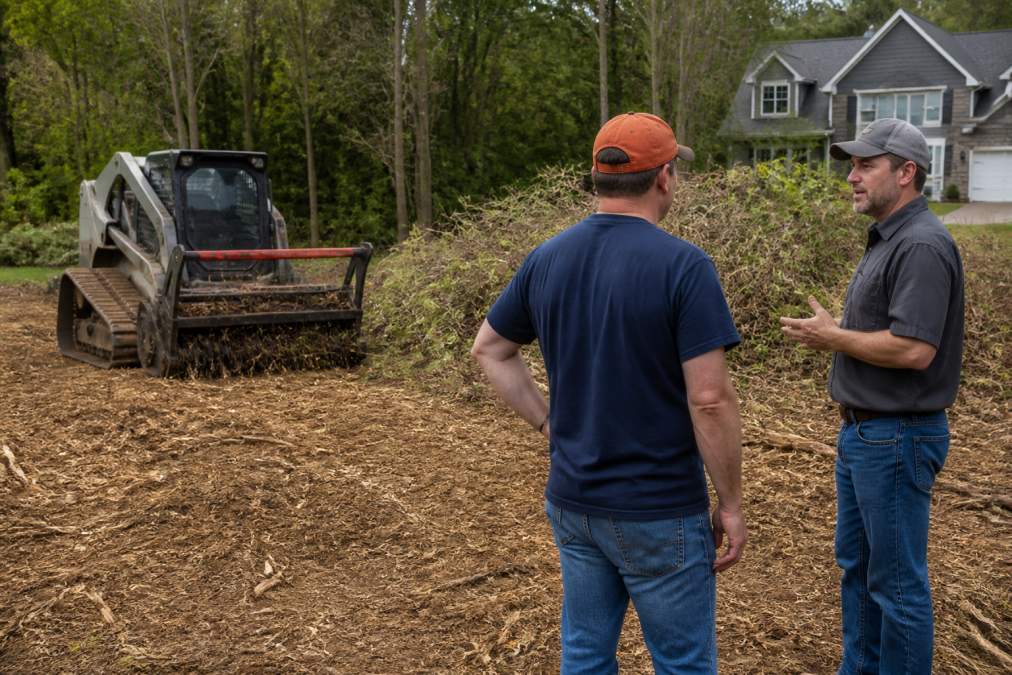
The process feeds vegetation through a rotating drum that reduces material to roughly half an inch in size, creating ground cover that suppresses weeds, moderates soil temperature, and begins breaking down immediately. Within 6-12 months, much of that mulch layer integrates into topsoil, adding organic matter and improving soil structure.
How Forestry Mulching Works
Forestry mulching equipment is typically a tracked machine with a hydraulic grinding head. The operator controls feed rate and grinding intensity, which matters because different vegetation requires different pressure. The machine moves slowly across the property, typically clearing 1-3 acres per day depending on vegetation density and terrain.
The ground contact is surprisingly light; tracks distribute weight across a large surface area, causing significantly less soil compaction than traditional bulldozers or excavators. The mulch layer that remains acts as erosion control, reducing water runoff and holding soil in place during heavy rain, especially valuable on sloped properties where traditional clearing creates gullies.
Soil Health and Fire Risk Reduction
The mulch produced serves multiple functions simultaneously. It suppresses competing vegetation, moderates soil moisture, and feeds the soil microbiome as it decomposes, improving nutrient cycling and water-holding capacity.
For property owners concerned about wildfire risk, forestry mulching removes the dense fuel load that makes brush fires dangerous. By grinding woody material into small pieces and spreading it across the ground, you eliminate the continuous fuel bed that allows fire to spread rapidly. The mulch layer is too moist to carry fire effectively, especially in the first few months after application.
Hardwood mulch tends to be pH-neutral and adds carbon to soil. As it breaks down, it feeds beneficial microorganisms and fungi that improve soil structure. Land that’s been mulched often produces better pasture growth or supports healthier tree establishment than land that’s been burned or bulldozed.
Forestry mulching benefits property owners who need cleared land that’s immediately usable and will improve over time. The approach works best on properties with moderate to heavy brush, saplings up to 6-8 inches in diameter, and terrain accessible to tracked equipment.
Brush Chipping and Wood Chip Processing
Brush chipping is a different approach: you remove vegetation first, then process it into chips. This requires two steps instead of one, but gives you control over what happens to the material afterward. You can use chips for landscaping, compost, or animal bedding, stockpile them for later use, or have them hauled away.
DIY Chipping vs. Professional Services
For moderate amounts of brush, renting a towable brush chipper makes economic sense. A Vermeer BC1000 or similar 10-inch capacity chipper rents for roughly $260-$512 per day. The DIY approach works if brush is already cut and staged, though it’s labor-intensive and requires continuous feeding.
Professional chipping services bring equipment to your property, process material on-site, and remove or stockpile chips. This eliminates manual feeding work and produces consistent chip size. Professional chipping typically ranges from $500-$2,000 for residential properties, depending on volume and accessibility.
The advantage of chipping over mulching is flexibility, you can use chips immediately for landscaping, let them cure for months, or have them removed entirely. The disadvantage is that it’s a two-step process requiring vegetation to be cut first before chipping can begin.
Composting and Natural Decomposition
Composting brush and woody debris is a legitimate alternative if you have time and space. The process is simple: pile material, let microorganisms and fungi break it down over 12-24 months, and eventually you have finished compost rich in organic matter.
The challenge with composting brush is that large woody pieces decompose slowly. Chipping material first accelerates decomposition significantly; wood chips compost in 12-18 months with minimal management.
For property owners with ongoing brush generation, composting makes sense as a long-term soil-building strategy. The compost pile should be located away from structures and property lines, ideally in a spot with sun and good drainage. Turning the pile speeds decomposition but isn’t required.
Composting works best when combined with other methods. You might use forestry mulching to clear dense brush, then compost smaller branches and seasonal pruning.
Biochar Production as an Alternative
Biochar is charcoal made from wood waste through controlled, low-oxygen burning. Unlike open burning, which releases smoke and loses nutrients, biochar production captures carbon and creates a stable soil amendment that persists in soil for centuries.
Hand-built biochar piles are a DIY option for small-scale production. You stack woody material in a specific configuration, ignite it carefully, and manage airflow to create incomplete combustion. Commercial biochar systems like the Air Burners CharBoss use air curtain technology to burn woody debris more completely and with less smoke than traditional piles.
Biochar’s benefit is carbon sequestration. The charcoal created doesn’t decompose like regular organic matter; it persists in soil for decades or longer. If your property goals include climate-positive land management, biochar production is worth considering.
The limitation is that biochar production still involves burning. It’s much cleaner than open burning and produces a valuable product, but regulatory restrictions on burning in your area may limit whether this is an option.
Cost of Professional Land Clearing Options
Professional land clearing costs vary widely depending on what needs to be cleared, equipment requirements, and whether debris is removed or processed on-site.
What Affects Pricing and Timeline
The primary cost driver is vegetation density and type. An acre of light brush clears faster and cheaper than an acre of dense hardwood saplings mixed with vines and rocks. Equipment accessibility matters too; if clearing equipment can drive directly to the work area, costs are lower. Steep, wet, or limited-access properties cost more.
Debris handling is the second major cost factor. If material stays on-site as mulch, you’re paying for grinding. If it’s hauled away, you’re paying for removal. If it’s chipped and stockpiled for your use, you’re paying for processing and storage space.
A professional crew with forestry mulching equipment can typically clear 1-3 acres per day. A 5-acre property might take 2-3 days of equipment time. Most residential and small rural clearing projects complete within 1-2 weeks from start to finish.
Professional land clearing in Central Virginia generally costs between $1,500-$6,500 per acre depending on vegetation type and debris handling. Light brush clearing on accessible land might be $1,500 per acre; dense hardwood with stump removal and debris hauling might be $6,500 per acre. Getting a detailed site assessment and written estimate from a professional is the only way to know actual costs for your specific property.
Timber Shredders LLC provides comprehensive property assessments that identify these variables before work begins, preventing surprise costs.
Equipment Requirements and Safety Considerations
Different clearing methods require different equipment, and equipment choice affects both cost and safety outcomes.
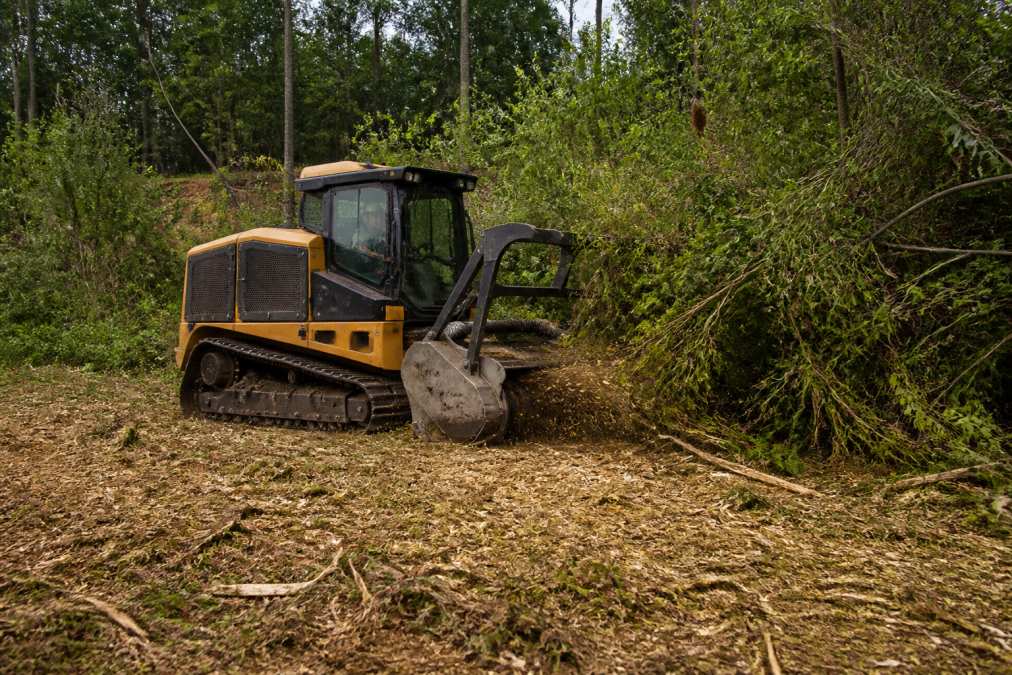
Forestry mulching requires a tracked machine with a hydraulic grinding head, typically 50-100 horsepower. This specialized equipment costs $150,000-$400,000 new. Renting isn’t practical for one-time projects, which is why professional service is standard.
Brush chippers range from small portable units ($3,000-$8,000 purchase price) to trailer-mounted commercial chippers ($15,000-$50,000). Rental is available for smaller units, making DIY chipping feasible for homeowners. Larger professional chippers require specialized operation and training.
Brush chippers are dangerous if operated incorrectly; material can jam, kickback, or cause operator injury. Professional operators have training and experience managing these risks. Forestry mulching equipment is heavy and powerful; inexperienced operators can damage property or cause equipment damage, which is why professional operation is standard.
For any land clearing method involving equipment, site safety is critical. You need to identify underground utilities before work begins, clear the work area of people and pets, and ensure equipment can operate safely on your terrain. Professional land clearing companies handle these assessments as part of their standard process.
Choosing the Right Method for Your Property
The best alternative to burning brush depends on four factors: your timeline, acreage, soil goals, and budget.
If you need cleared land within days and have heavy brush or saplings, forestry mulching is fastest. The equipment clears and processes material in one pass, leaving land immediately usable with a soil amendment layer. This works best for residential properties, development sites, and pasture expansion.
If you have moderate volumes of brush and want to control the output, keeping chips for landscaping or composting, chipping is better. DIY chipping makes sense for small properties; professional chipping is more cost-effective for larger volumes.
If you’re not in a hurry and want to build soil over time, composting is viable as a long-term strategy. If you want to produce a soil amendment while managing large volumes of woody debris, biochar is worth exploring.
The worst choice is open burning, which offers no benefit beyond removal and creates multiple liabilities: air quality violations, fire risk, nutrient loss, and neighbor relations. Regulatory agencies in most areas now restrict or prohibit burning.
For property owners in Central Virginia with specific clearing needs, Timber Shredders LLC can assess your land and recommend the approach that delivers fastest results with the best long-term soil health outcome. A free property assessment identifies vegetation type, acreage, accessibility, and obstacles that determine which method makes sense for your situation. Get a clear estimate and timeline before committing to any clearing project.
Open burning was the default because it required nothing except a match. The alternatives require more planning and professional expertise, but they deliver something burning never could: land that’s cleared, usable, and improved rather than stripped of nutrients and left vulnerable to erosion. For serious property owners in Central Virginia, that’s worth the investment. Contact Timber Shredders LLC for a free assessment and quote, we’ll help you choose the method that makes sense for your specific property and goals.
Frequently Asked Questions
Is it illegal to burn a brush pile?
Open burning regulations vary by locality and season. Many jurisdictions require permits or restrict burning during high fire danger periods. Check with your local fire marshal or county extension office before burning any brush pile. Alternatives to burning brush eliminate this compliance concern entirely and protect air quality in your area.
What are the environmental benefits of forestry mulching over burning?
Forestry mulching returns nutrients directly to the soil, improving fertility and water retention without air pollution. Burning releases carbon and particulates into the atmosphere and can damage topsoil. Mulching reduces wildfire risk by eliminating fuel sources while creating a protective ground layer that prevents erosion and supports beneficial soil organisms.
How much does professional land clearing cost compared to DIY alternatives?
Cost of professional land clearing depends on property size, vegetation density, and equipment access. Forestry mulching typically ranges from $1,200 to $3,500 per acre. DIY chipping rentals cost $260 to $512 per day but require manual labor. Professional services eliminate equipment rental, labor, and cleanup expenses while completing projects faster and more thoroughly.
Can I compost brush and woody debris from my property?
Yes. Chipped brush decomposes into nutrient-rich compost that improves soil structure and water retention. Larger woody pieces take years to break down, so chipping first accelerates the process. Composting on-site eliminates hauling costs and creates free soil amendment for gardens, pastures, or landscaping.
This article was written using GrandRanker