Table of Contents
- National Average Cost and Cost Per Square Foot
- Types of Driveway Gravel and How They Affect Price
- Key Factors That Affect Gravel Driveway Installation Cost
- Material vs. Labor Costs Breakdown
- DIY vs. Professional Gravel Driveway Installation
- Gravel Driveway Maintenance Tips and Long-Term Costs
- Conclusion
Last Updated: August 7, 2026
National Average Cost and Cost Per Square Foot
Gravel driveway installation costs vary based on project scope, material selection, and site conditions. Most residential projects fall into a moderate budget category, with final pricing dependent on driveway size, gravel type, and regional labor availability.
Gravel driveway cost per square foot varies considerably based on material choice and site preparation complexity. Regional labor rates, material delivery distances, and existing site conditions all influence the final figure.
At Timber Shredders LLC, we assess each property individually to provide accurate estimates. Site conditions, existing topography, soil composition, and drainage patterns significantly affect both material quantities and labor hours required. A property with poor drainage or unstable soil may require additional sub-base preparation, increasing overall costs.
Gravel driveway installation cost depends primarily on square footage, material type, site preparation complexity, and regional labor rates. Getting a site assessment from a professional contractor ensures you understand all cost factors before committing to the project.
Types of Driveway Gravel and How They Affect Price
Selecting the right material combination is critical for driveway performance and longevity. Different gravel types serve specific functions, and mixing them properly creates a stable, long-lasting surface.
Crushed Stone and Base Layer Options
Crushed stone forms the foundation of a properly constructed gravel driveway. This angular aggregate compacts tightly, creating a stable base layer that supports vehicle weight and resists shifting. The angular shape allows stones to interlock, distributing load across a wider area than rounded materials.
The base layer typically requires 4-6 inches of crushed stone, depending on soil conditions and expected traffic. Crushed stone comes in various sizes, with larger stones (2-3 inches) for lower layers and smaller crushed stone (0.5-1 inch) filling gaps and compacting more tightly.
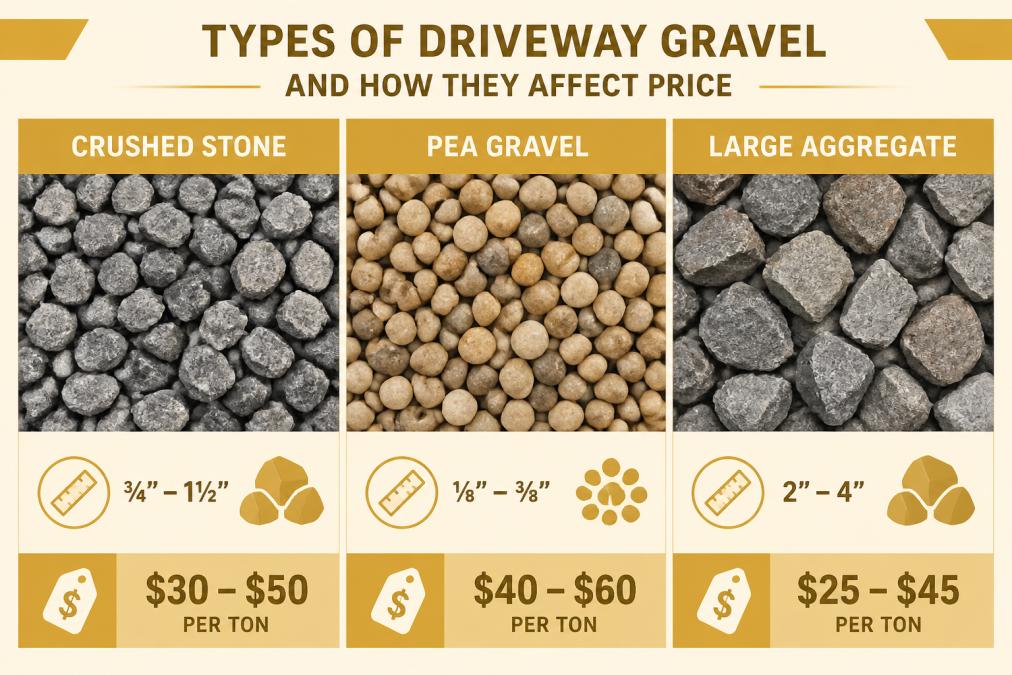
Many contractors use limestone or granite crushed stone for the base layer. These materials offer excellent compaction and load-bearing capacity. Crushed stone cost typically reflects local quarry proximity; regions near stone sources pay less than areas requiring long-distance delivery.
Proper compaction of the base layer prevents future settling and rutting. Professional equipment ensures the base achieves adequate density. Without proper compaction, vehicles create depressions over time, and water pools in low spots, accelerating deterioration.
Pea Gravel and Top Dressing Choices
Pea gravel serves as the top dressing layer, providing a finished appearance and comfortable walking surface. Unlike crushed stone’s angular shape, pea gravel consists of smooth, rounded stones typically 0.5-0.75 inches in diameter.
The top dressing layer usually requires 2-3 inches of pea gravel to provide adequate coverage and visual appeal. Lighter-colored pea gravel (tan, white, or cream) costs more than darker varieties but creates a more polished appearance.
Pea gravel alone cannot serve as a base layer; it won’t compact effectively and offers poor load-bearing capacity. However, it’s essential for the finished surface. Without proper top dressing, your driveway appears unfinished and deteriorates more rapidly.
The most cost-effective approach uses inexpensive crushed stone for the base layer and reserves pea gravel for the visible top surface. This strategy balances durability with appearance without overspending on premium materials where they provide no functional benefit.
Key Factors That Affect Gravel Driveway Installation Cost
Multiple variables influence the final price of gravel driveway installation. Understanding these factors helps you anticipate costs and make informed decisions.
Site Preparation, Grading, and Excavation
Before any gravel is laid, the site requires preparation. Grading establishes proper drainage by creating a slight crown or slope that directs water away from the driveway surface and foundation areas. Poor grading causes water to pool, accelerating material breakdown.
Excavation depth depends on existing soil conditions. Properties with compacted clay or stable substrate may need minimal excavation. Soft soil, old debris, or poor drainage requires deeper removal and replacement with proper sub-base material.
Many driveways require a geotextile fabric layer between the soil and crushed stone base. This permeable material prevents soil from mixing with gravel, maintains layer separation, and improves drainage. Geotextile installation adds modest cost but significantly extends driveway lifespan.
Existing vegetation, rocks, and debris must be cleared before grading begins. Timber Shredders LLC specializes in this preparation phase, using professional equipment to clear obstacles efficiently and create a proper foundation.
The slope or grade of your property affects preparation complexity. Steep terrain requires more careful grading to prevent erosion. Flat properties with poor natural drainage may need additional measures like French drains or culvert installation.
Material Delivery and Equipment Rental
Material delivery costs depend on distance from suppliers and total volume required. A typical residential driveway requires multiple truckloads of crushed stone and pea gravel. Central Virginia properties benefit from proximity to quarries, reducing delivery expenses.
Equipment rental represents a significant cost factor. Professional-grade compaction equipment ensures proper base layer density. Renting this equipment for DIY projects often approaches or exceeds professional installation pricing when you factor in equipment time and operator inexperience.
A skid steer loader provides versatility for grading, moving materials, and compaction. Professional operators with owned equipment typically deliver better value than equipment rental plus amateur operation.
Material delivery timing affects costs. Scheduling delivery during off-peak seasons may reduce per-unit delivery fees.
Labor Rates and Regional Variations
Labor costs vary significantly by region and contractor experience level. Experienced operators command higher rates but deliver better results and faster completion.
Professional contractors typically charge by the hour or provide fixed-price estimates based on square footage and site conditions. The time required for proper installation shouldn’t be rushed. Adequate compaction, proper layer sequencing, and drainage establishment require careful work.
Material vs. Labor Costs Breakdown
Understanding the cost split between materials and labor helps you evaluate contractor estimates and make value-based decisions.
Materials typically constitute 40-60% of total project cost, depending on driveway size and material selections. Larger projects benefit from material cost economies; per-square-foot material costs decrease with volume.
Labor costs represent 40-60% of the total, with variation based on site complexity and contractor efficiency. Properties requiring extensive site preparation or challenging terrain demand more labor hours.
A basic crushed stone and pea gravel combination minimizes material costs while delivering solid performance. Contractor overhead, equipment, and expertise factor into labor pricing. Mid-range pricing from established contractors typically delivers the best value, balancing cost with quality and longevity.
Extremely low estimates should raise concerns. Contractors quoting significantly below market rates may cut corners on base layer compaction, skip geotextile fabric, or use inadequate material depths. These shortcuts create problems within months, rutting, washboard ripples, and accelerated material displacement, requiring [expensive repairs](/how-to-repair-gravel-driveway-damage/).
DIY vs. Professional Gravel Driveway Installation
Many homeowners consider DIY installation to reduce costs. Understanding the trade-offs between DIY and professional work informs the right choice for your situation.
DIY Installation Challenges
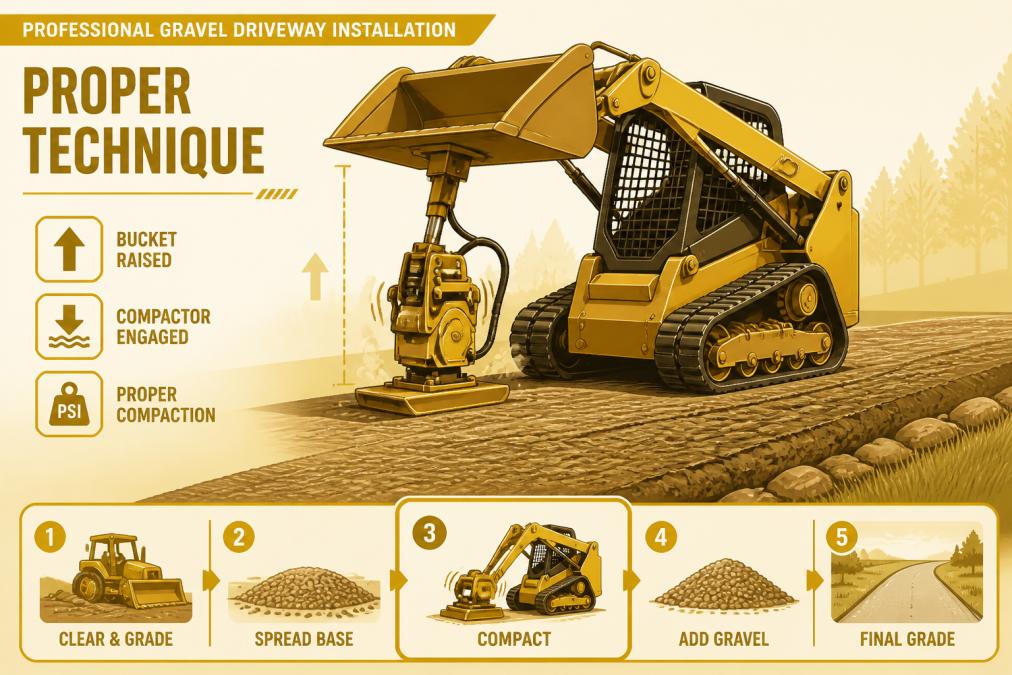
DIY gravel driveway installation requires significant equipment investment or rental. Equipment rental for the necessary duration, typically 3-5 days for a residential driveway, approaches professional installation pricing.
Proper compaction demands technique and experience. Inadequate compaction causes base layer failure within months. Site assessment requires professional judgment to determine proper drainage slope, identify soil conditions, and plan layer depths. Mistakes in this phase compromise the entire driveway.
Material calculation errors lead to insufficient quantities mid-project, requiring additional delivery orders at premium pricing. The physical labor is demanding, requiring sustained effort over several days.
Professional Installation Advantages
Professional contractors complete projects efficiently using owned equipment and practiced technique. They assess site conditions accurately, plan proper material quantities, and execute compaction correctly. Their experience prevents costly mistakes.
Professional work includes proper site preparation, drainage planning, and layer sequencing. Geotextile fabric installation, appropriate base layer depth, and top dressing application are handled correctly. Contractors carry liability insurance, protecting you from injury or property damage claims.
Timeline efficiency matters. Professionals complete projects in days rather than weeks of part-time effort. Your driveway becomes functional quickly.
Gravel Driveway Maintenance Tips and Long-Term Costs
Proper maintenance extends gravel driveway lifespan and prevents expensive repairs. Understanding maintenance requirements helps you budget for long-term ownership costs.
Annual Maintenance Schedule and Raking
Regular raking redistributes material and addresses washboard ripples. Raking every 6-12 months prevents material from compacting unevenly and maintains surface smoothness. Spring is an ideal maintenance time, after winter weather has displaced material.
Weeds grow through gravel, particularly in shaded areas. Hand-pulling or applying herbicides prevents vegetation from disrupting the surface. Pothole filling requires adding fresh material to low spots. Water drainage maintenance ensures proper function by clearing ditches and checking that water flows away from the driveway.
Lifecycle Cost Analysis and Replacement Frequency
The top dressing layer (pea gravel) typically requires replenishment every 2-3 years, depending on traffic and maintenance. The base layer (crushed stone) lasts longer if properly maintained, functioning for 5-7 years before significant degradation.
Complete driveway reconstruction becomes necessary every 5-7 years for heavily used driveways, or 8-10 years for light-traffic residential applications. Long-term cost analysis shows that gravel driveways cost less to install than paved alternatives but require ongoing maintenance investment.
| Driveway Type | Initial Cost | Annual Maintenance | Replacement Cycle | 10-Year Total Cost |
|---|---|---|---|---|
| Gravel | Low | Moderate (raking, top dressing) | 5-7 years | Moderate-High |
| Asphalt | Moderate | Low-Moderate (seal coating) | 15-20 years | Moderate |
| Concrete | High | Low (occasional repairs) | 25-30 years | Moderate-Low |
Understanding these long-term costs helps you make informed decisions about driveway selection. Gravel works well for properties where upfront cost matters and you’re willing to maintain the surface regularly.
Choosing the right gravel driveway approach requires balancing initial cost, long-term maintenance, and your property’s specific conditions. Professional installation ensures proper foundation, drainage, and compaction that maximize driveway lifespan. Timber Shredders LLC provides comprehensive site assessment, professional installation using proper equipment and techniques, and clear project planning that prevents costly surprises. The Virginia Cooperative Extension offers guidance on proper drainage and soil preparation for rural properties. Getting a professional site assessment and detailed estimate helps you understand all cost factors and make decisions aligned with your budget and timeline. Contact Timber Shredders LLC for a free quote and property evaluation to begin your driveway project with confidence.
Frequently Asked Questions
How much does a typical gravel driveway installation cost?
Gravel driveway installation costs depend on driveway size, site conditions, material type, and labor rates in your region. A 1,000-foot driveway typically costs more than smaller projects due to material volume and equipment needs. Costs vary significantly based on whether the site requires extensive grading, whether geotextile fabric or erosion control measures are needed, and local labor rates. Request a site assessment and quote from a professional contractor for an accurate estimate tailored to your property.
What factors most influence gravel driveway cost per square foot?
The primary cost drivers are material type (crushed stone, pea gravel, or aggregate mix), depth of gravel layers required, site preparation complexity, and whether the site needs sub-base installation or drainage solutions. Properties requiring significant excavation, grading, or compaction cost more per square foot. Regional labor rates, material delivery distance, and the condition of the existing soil also affect pricing. Climate-specific requirements, such as thicker base layers in freeze-thaw regions, can increase costs substantially.
Is a gravel driveway cheaper than concrete or asphalt?
Gravel driveways typically have lower upfront installation costs than concrete or asphalt. However, gravel requires ongoing maintenance, raking, regrading, and periodic material replacement every 3-5 years. Over a 10-year lifecycle, total costs may approach or exceed asphalt in some cases, depending on maintenance frequency and material quality. Gravel offers flexibility and lower initial investment, making it ideal for temporary access roads or properties where budget is the primary concern. Professional installation ensures proper drainage and load-bearing capacity, extending the driveway’s lifespan.
How often does a gravel driveway need maintenance?
Gravel driveways require raking and regrading at least twice annually, typically spring and fall, to maintain proper surface and drainage. After heavy rain or traffic, check for erosion, ruts, or washout and address them promptly. Inspect the sub-base and geotextile fabric annually for damage. Plan to add fresh top dressing every 2-3 years and complete base layer replacement every 5-7 years, depending on traffic volume and climate. Regular maintenance prevents erosion, maintains load-bearing capacity, and keeps the driveway usable year-round.
This article was written using GrandRanker