
A fence covered in vines is more than a visual problem. It becomes difficult to inspect posts, find broken strands, or reach a gate. For property owners in Madison Heights, clearing along an fence should create a workable maintenance corridor while protecting the fence itself. The best approach depends on whether the boundary is active, abandoned, shared, or waiting for replacement.
Find the fence before clearing
Begin with a careful walk from one known corner to the next. Look for wire buried under leaves, loose strands wrapped around saplings, and metal attached to old trees. Share every known obstacle with the contractor. A mulching head and concealed wire are a poor combination. Where visibility is limited, exposing sections by another method may be necessary before equipment approaches.
Confirm what the line represents
An old fence is not always the legal property boundary. Locate survey information and resolve uncertainty before vegetation is removed near neighboring land. Agree on which side can be accessed and where material may remain. If the fence serves livestock or pets, plan temporary containment before opening gaps. Those preparations keep clearing work from creating a separate problem.
Match corridor width to the task
A narrow inspection strip may suit a fence that only needs occasional repairs. A fence beside a field may need enough room for mowing, post replacement, and equipment access. Think about the equipment you will actually use afterward rather than requesting a wide opening without a purpose. Include gate swing, latch access, and turning space in the measurements.
Protect useful screening
Madison Heights properties can combine a residential frontage with wooded ground behind the house. Along those edges, some vegetation may provide privacy. Mark selected trees or shrubs before work starts, where a fence separates outdoor living spaces. Creating intermittent access pockets can sometimes provide repair access without opening the boundary. The desired appearance should be part of the scope.
Separate clearing from fence repair
Forestry mulching can reduce suitable brush around a fence corridor, but it does not straighten posts or restore stretched wire. Damaged fence sections may need to come out first. Large stumps, embedded metal, and trees growing through the fence require individual decisions. Ask the contractor to identify those exceptions during the visit so they are not mistaken for included work.
Make future inspections easy
Once the corridor is open, record weak posts and sections needing repair. Establish a mowing or trimming schedule before woody regrowth becomes thick again. Keep the route visible at corners and gates. Check after storms for branches resting on wire. A little attention protects the value of the clearing and makes the next repair much easier to reach.
Request a practical local scope
Send Timber Shredders photographs looking along the fence in both directions, plus close views of hidden wire and gate openings. State the length, the corridor width, and whether the fence must remain functional throughout the work. That information supports a Madison Heights estimate built around access, preservation, and a maintainable finished edge.
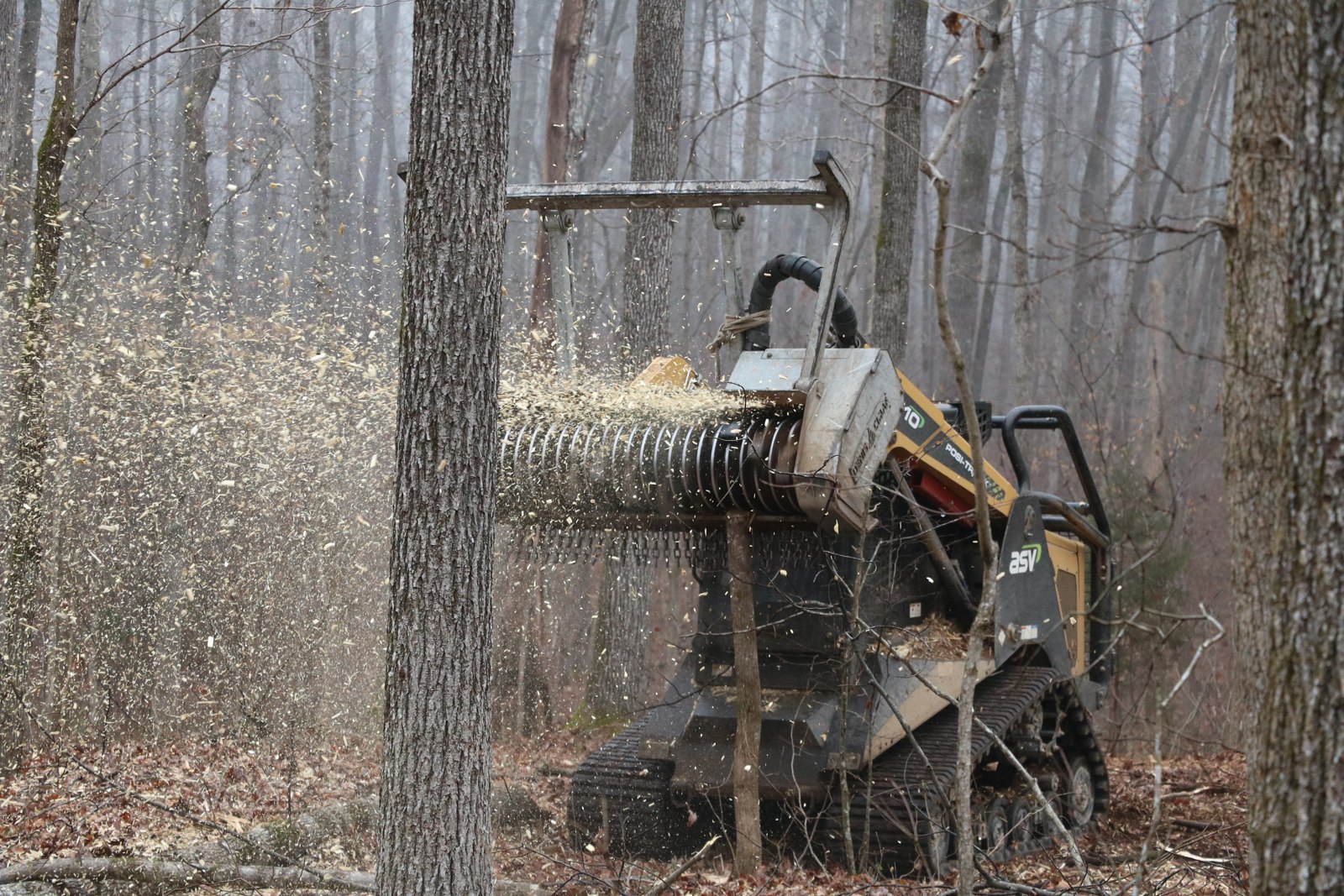
Equipment example photograph: Deniscimafinc, CC BY-SA 4.0. Resized for web. Photo depicts equipment in another setting, not a Timber Shredders project in Madison Heights.
