An overgrown backyard in Lynchburg can hide usable space just beyond the lawn. Vines cover old borders, saplings fill the corners, and a steep section becomes difficult to reach. Clearing that area successfully starts with deciding what the yard should do afterward. A walking path, play area, garden approach, and shaded sitting space each need a different finish.
Start with the usable space
Walk the yard from the house outward and mark the areas you actually want to use. Keep the first phase small enough to maintain. Identify favorite trees, established shrubs, drainage routes, and any screen that provides privacy. Removing every stem can expose neighboring buildings or leave a yard feeling less comfortable. Selective clearing gives the new space a deliberate boundary.
Plan access before the machine arrives
City properties can present tight gates, narrow side yards, retaining walls, and limited room to turn. Measure the route from the street to the work area, including overhead branches. Tell the contractor about buried drainage lines, irrigation, invisible pet fencing, and old landscape features. Decide where equipment can travel without crossing a fragile wall edge or an unsuitable driveway section.
Treat slopes as separate work areas
Lynchburg’s hills make an on-site assessment especially useful. A bank that looks modest from the porch may be difficult to approach from below. Equipment choice, soil moisture, and the direction of travel all affect the plan. Discuss steep or soft areas separately. Some sections may require another method, a smaller scope, or postponement until ground conditions improve.
Choose the finish you need
Forestry mulching can process brush and suitable small woody growth into material left on the surface. It does not automatically produce a smooth lawn, remove every stump below grade, or prepare a foundation. If your goal is grass, explain that before work begins. Root removal, grading, soil preparation, and seeding may be separate steps. For woodland edges, a natural mulched finish may be enough.
Keep the improvement manageable
After clearing, inspect the area regularly for new growth and hidden debris. Set a maintenance route that you can reach safely with your own equipment. Avoid placing a new sitting area directly beneath visibly damaged limbs; those need their own assessment. Photograph the finished boundary so future maintenance follows the same line instead of gradually expanding into retained vegetation.
Before scheduling, discuss how the household will use the property during the work. Keep children, pets, and visitors outside the contractor’s designated work area. Move outdoor furniture and portable items from the access route. These preparations let the operator focus on the agreed clearing area.
Get a focused backyard estimate
For a Lynchburg brush-clearing estimate, send Timber Shredders photos from the house, the access gate, and the far edge of the growth. Include your intended use and the approximate size. Ask for a written scope that identifies vegetation to retain, the expected surface condition, and any additional preparation. A clear plan helps turn an inaccessible backyard into space you can use and keep looking cared for.
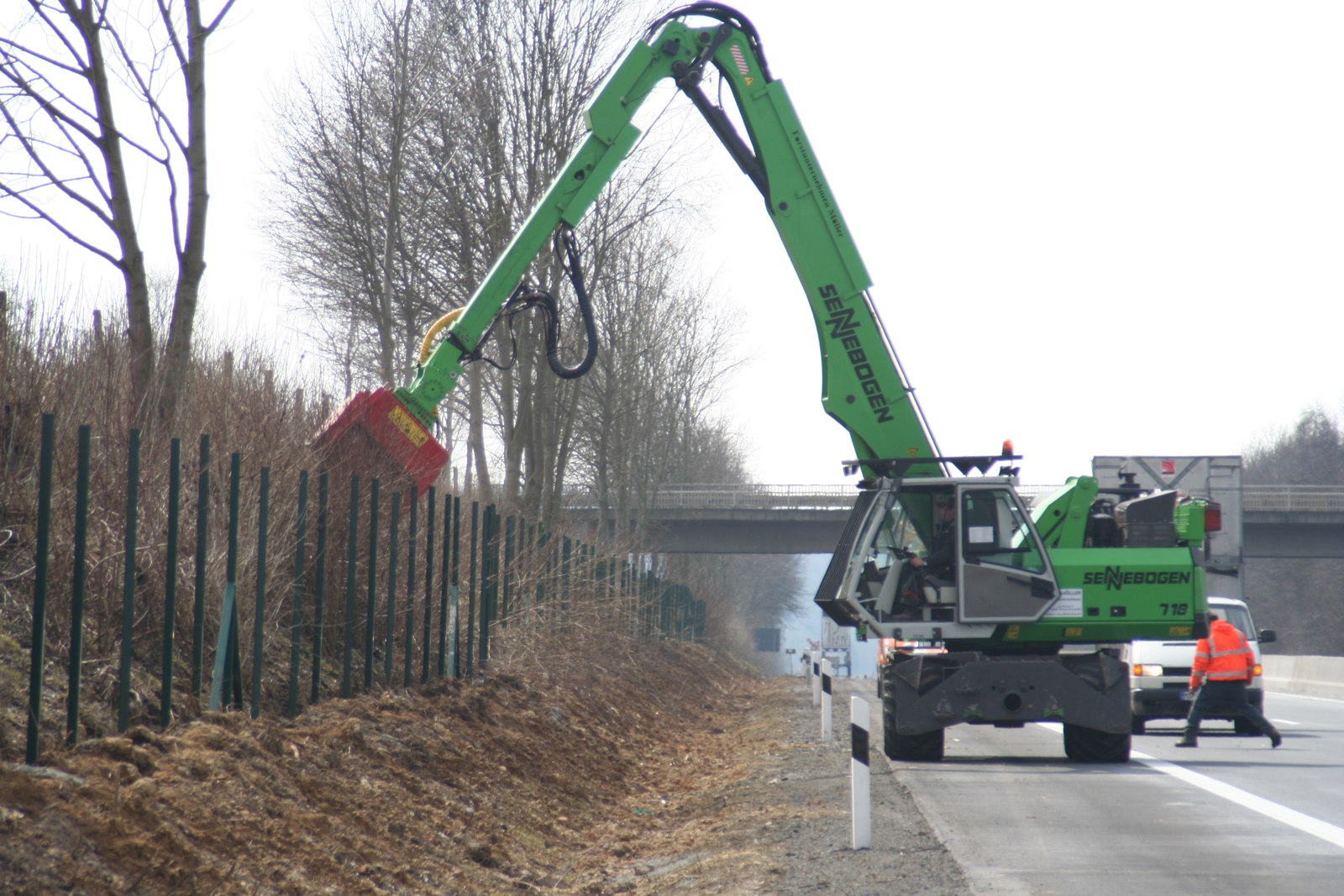
Equipment example photograph: ForestryMulchers, CC BY-SA 3.0. Resized for web. Photo depicts equipment in another setting, not a Timber Shredders project in Lynchburg.
