Table of Contents
- What Is Land Grading?
- What Is Excavation?
- Key Differences Between Grading and Excavation
- The Importance of Proper Drainage Grading
- When Is Excavation Required for a Driveway?
- Understanding Residential Site Preparation Costs
- When Do You Need Both Services?
- Frequently Asked Questions
Last Updated: September 4, 2026
Before a single foundation is poured or a driveway is laid, the ground beneath a residential property must be shaped and moved. Two distinct processes handle this work, and confusing them leads to budget overruns and drainage failures. Land grading vs excavation for residential properties comes down to a simple distinction: grading reshapes the surface to direct water and create level bases, while excavation removes earth to create depth for structures and utilities. At Timber Shredders LLC, we guide Central Virginia landowners through this exact decision, ensuring the right equipment and approach are applied before construction begins. Below, we break down what each service involves, when you need one or both, and how to plan for the costs.
What Is Land Grading?
Land grading is the process of reshaping the ground surface to achieve a specific slope, level, or contour. The primary goal is drainage control: water must flow away from foundations, driveways, and low-lying areas rather than pooling against them.
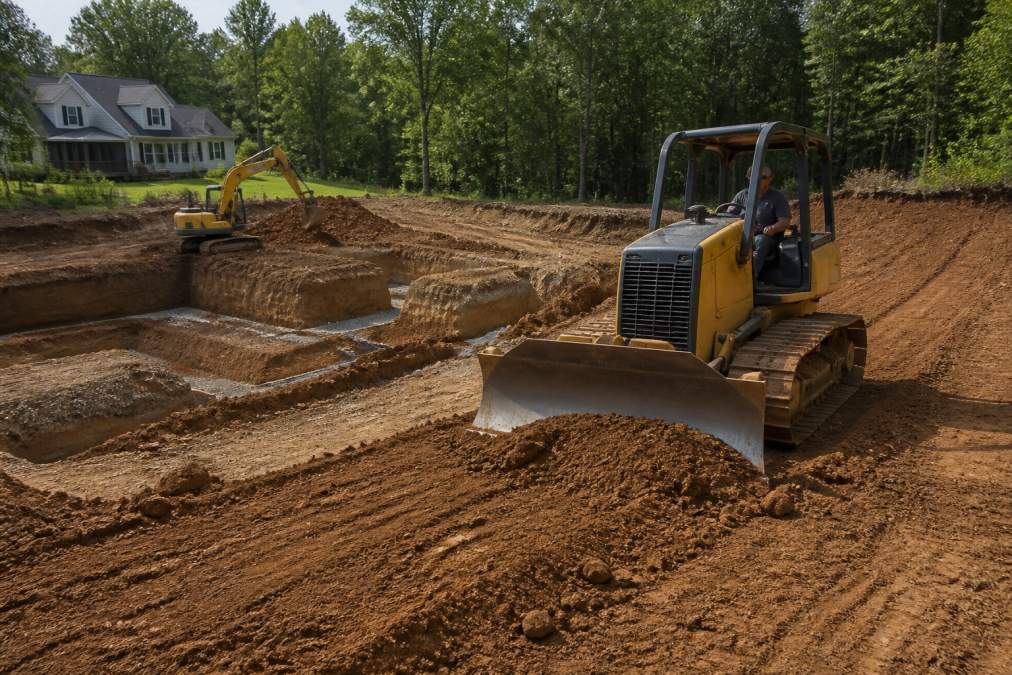
Grading work typically involves redistributing existing topsoil rather than hauling material off site. A grader or dozer blade cuts high spots and fills low spots to match a grading plan. The finished grade provides a stable, compacted base suitable for landscaping, lawns, or as a subgrade for pavement and structures.
For residential properties, grading corrects issues like uneven yards, poor water runoff, and settling soil. A common mistake is assuming all grading is the same. Rough grading establishes the general slope after excavation, while fine grading prepares the surface to within a fraction of an inch for final surfaces like concrete or sod. Skipping fine grading leads to uneven patios and ponding water within the first season.
What Is Excavation?
Excavation is the removal of earth, rock, or other material from a site to create a void. This work uses heavier machinery, typically excavators, to dig below the existing ground surface.
Residential excavation serves several purposes: digging trenches for utility installation, creating basements and crawl spaces, and preparing footings for foundations. It also includes land clearing when trees, stumps, and debris must be removed before any shaping can begin. The removed material, known as spoil, is either hauled away or stockpiled for later use as backfill.
Excavation is defined by depth and volume. A grading project might move six inches of topsoil across a yard, while an excavation project could remove several feet of soil to reach frost depth for a foundation. This distinction matters for equipment selection and cost, since deeper cuts require larger machines and more careful shoring.
Key Differences Between Grading and Excavation
The clearest way to separate these services is by their relationship to the existing ground surface. Grading works horizontally across the surface, adjusting slope and contour. Excavation works vertically, removing material to create depth.
| Factor | Land Grading | Excavation |
|---|---|---|
| Primary action | Reshape and level surface | Remove earth to create depth |
| Typical depth | 0-12 inches of topsoil | Several feet or more |
| Main equipment | Grader, dozer, skid steer | Excavator, backhoe |
| Core purpose | Drainage and level base | Foundations, trenches, basements |
| Material handling | Redistributes on site | Removes or stockpiles spoil |
The equipment difference is a strong signal of which service you need. A skid steer with a box blade can handle most residential grading. Excavation on any meaningful scale requires a tracked excavator with the reach and digging force to break through compacted soil and rock.
The Importance of Proper Drainage Grading
Poor drainage grading is the most common cause of residential foundation problems. Water that pools against a foundation seeps into the soil, creates hydrostatic pressure, and eventually finds its way through cracks in the concrete. The fix is far more expensive than the grading that prevents it.
Proper grading directs water runoff away from the structure at a minimum slope of roughly 5 percent for the first ten feet, meaning the ground drops about 6 inches over that distance (the FDA). This creates a positive grade that carries surface water toward swales, drains, or municipal storm systems.
Erosion control goes hand in hand with drainage grading. Bare, freshly graded soil washes away in the first heavy rain unless it is stabilized with seed, mulch, or erosion blankets. A grading contractor who finishes the job without addressing erosion is setting the property up for sediment runoff and re-grading costs within months. For properties with significant slope, a grading plan should account for terracing or retaining walls to manage water velocity before it becomes a problem.
When Is Excavation Required for a Driveway?
Excavation for a residential driveway becomes necessary when the existing ground cannot support the weight of vehicles or when the driveway must cross significant changes in elevation.
The first scenario is soil condition. Soft, organic topsoil compresses under vehicle weight, causing the driveway surface to crack and settle. Proper installation excavates down to a stable subgrade, removes the unsuitable material, and replaces it with compacted aggregate base. This cut-and-fill approach prevents the driveway from becoming a series of potholes within a few winters.
The second scenario is slope. A driveway running up or down a hillside requires cut and fill to create a usable grade. The uphill side is cut into the slope, and the downhill side is built up with compacted fill. Without this excavation work, the driveway exceeds safe slope limits and becomes impassable in wet weather. Trenching across the driveway for utility lines or drainage culverts also falls under excavation, since it requires digging below grade to install the pipe before backfilling and re-compacting.
Understanding Residential Site Preparation Costs
Residential site preparation costs vary widely because every property presents different conditions, but understanding the pricing structure and typical cost drivers helps homeowners budget realistically and compare contractor bids.
Costs are typically quoted using one or more of these models:
Hourly rates: Equipment operators charge depending on machine type and regional labor costs. A grading project on a half-acre lot might take 8-16 hours, while excavation for a foundation can run 20-40+ hours depending on soil conditions and depth.
Per-cubic-yard pricing: Excavation is often priced per cubic yard removed, with the wide range reflecting soil type (loose topsoil is cheaper to move than compacted clay or rock). A typical basement excavation removes 200-500 cubic yards.
Per-square-foot grading: Fine grading for driveways or building pads may be quoted per square foot, depending on slope complexity and finish precision required.
The main cost drivers break down as follows:
1. Soil conditions: Rocky soil, heavy clay, or contaminated fill dramatically increases costs. Excavators move loose topsoil at roughly double the speed of compacted clay. If rock is encountered, blasting or specialized rock-breaking equipment may be required. A soil test before bidding can prevent surprises.
2. Site access and clearing: Dense brush, trees, and stumps require specialized equipment. Forestry mulchers cost to operate. A heavily wooded half-acre lot may require 4-8 hours of clearing before grading can begin.
3. Volume of material: Larger excavations cost more in absolute terms but may have lower per-unit costs due to equipment efficiency. A 500-cubic-yard excavation is cheaper per yard than a 50-cubic-yard one because the equipment is already mobilized.
4. Slope and drainage: Steep sites require more careful grading, erosion control measures (silt fencing, erosion blankets, sediment traps), and sometimes retaining walls. Erosion control can add 10-20 percent to grading costs on slopes exceeding 15 percent grade.
5. Hauling and disposal: If spoil cannot be reused on site, trucking costs per cubic yard for local disposal, or more for longer distances. A 300-cubic-yard excavation hauled off-site can be a significant cost. Reusing fill on site eliminates this cost but requires suitable material and adequate space.
6. Permitting and inspections: Some jurisdictions require grading permits and soil compaction testing. Unexpected inspection failures due to improper compaction can delay projects and add costs.
A professional site assessment is the only reliable way to estimate a project accurately. Look for a contractor who performs a soil test, walks the property with a transit or laser level to assess slope, photographs site conditions, and provides a written scope of work before quoting. Bids that come in 30-50 percent below others without a documented site visit are red flags, they often result in change orders once unexpected conditions are discovered.
When Do You Need Both Services?
Most residential construction projects require both grading and excavation, often in sequence. The order matters: excavation comes first to create the deep voids, then grading shapes the remaining surface. Understanding when both are required, and what regulatory approvals apply, prevents costly delays and rework.
Typical project sequences:
A foundation project illustrates the standard workflow. Excavation digs the basement or crawl space and trenches for footings and utilities. After the foundation is poured and backfilled, grading takes over to shape the soil around the structure, establish positive drainage away from the walls, and prepare the yard for final landscaping. Driveway installation follows the same pattern: excavation removes topsoil and unsuitable material to reach stable subgrade, then grading levels the base before aggregate is placed and compacted.
Attempting to skip excavation and simply grade over soft soil guarantees failure within the first season, as the driveway or foundation will settle unevenly and crack.
Permitting and regulatory requirements:
Whether a grading or excavation project requires a permit depends on local zoning codes and the scope of work. Most jurisdictions require a grading permit if the project involves:
- Excavation or fill exceeding 50-100 cubic yards (thresholds vary by municipality)
- Grading on slopes steeper than 25 percent
- Work within 50 feet of a wetland or stream
- Disturbance of more than 1 acre of land
- Installation of erosion control measures
Common permit requirements include:
Grading plans: A licensed engineer or surveyor must prepare a site plan showing existing contours, proposed grades, drainage patterns, and erosion control measures. Plans typically cost depending on lot size and complexity.
Soil testing and compaction reports: Many jurisdictions require a soil engineer to test fill material and verify compaction to 90-95 percent of maximum dry density (astm.org). Testing costs per sample and is often required at multiple depths.
Erosion and sediment control (ESC) plans: If the project disturbs more than 1 acre or is near water bodies, an ESC plan detailing silt fencing, sediment traps, and stabilization measures is mandatory. Failure to maintain ESC measures can result in fines.
Stormwater management: Grading projects that alter drainage patterns may trigger stormwater permit requirements under the EPA’s Construction General Permit (CGP). Projects disturbing 1 or more acres typically require a Notice of Intent (NOI) filing and a Stormwater Pollution Prevention Plan (SWPPP) (the EPA).
Building inspections: Most jurisdictions require inspections at key stages: after excavation (to verify depth and subgrade conditions), after backfill and compaction (to confirm proper density), and after final grading (to confirm positive drainage and erosion control). Inspection fees range per visit.
Contacting your local authority having jurisdiction (AHJ):
Before hiring a contractor, contact your county or municipal building department to determine which permits apply. Provide the project scope (foundation, driveway, grading only, etc.) and lot size. The AHJ can clarify thresholds, required plan submittals, and inspection schedules. Many jurisdictions post permit checklists online, saving time and preventing incomplete applications.
A professional contractor should be familiar with local requirements and include permitting costs and timelines in their bid. If a contractor dismisses permitting as unnecessary for your project, seek a second opinion, unpermitted work can create liability issues when selling the property and may require costly remediation if discovered during a title inspection or future development.
Clear communication prevents costly surprises:
Ask your contractor in writing whether unexpected rocks, stumps, or poor soil conditions are included in the quoted scope or billed separately as change orders. Confirm the project timeline in writing, accounting for permit approval (typically 1-4 weeks) and inspection scheduling. Verify that the crew will handle debris removal, erosion control maintenance, and final cleanup. A professional team completes the job with the site left ready for the next phase, not scattered with spoil piles or exposed soil.
Frequently Asked Questions
Is land grading considered excavation?
No. Land grading reshapes the existing surface to control water runoff and improve drainage, while excavation removes soil and rock to create depth for foundations, utilities, or structural work. Grading works with the top layer of soil; excavation goes deeper. Many residential projects use both services, but they serve different purposes in site preparation.
How do I know if my property needs excavation services?
You likely need excavation if you’re building a foundation, installing a septic system, running utility lines, or creating significant changes in elevation. If your project requires digging below the surface or removing large volumes of soil and rock, excavation is required. A professional site survey can determine whether your specific property needs excavation based on soil conditions and your project goals.
What factors affect residential site preparation costs?
Costs depend on property size, soil conditions, slope complexity, equipment needed, and whether unexpected rocks or hard-pan soil is encountered. Grading typically costs less than excavation because it works with existing topography. Drainage requirements, access for equipment, and site cleanup also influence pricing. Get a detailed estimate that accounts for site-specific conditions rather than assuming a flat rate per square foot.
Can I use topsoil to grade away from my house?
Yes, topsoil can be used for grading if it’s properly compacted to create a stable slope. However, the slope must direct water away from your foundation at a minimum 5% grade (½ inch drop per foot of distance). Topsoil alone may not provide sufficient stability for heavy use areas; subgrade preparation and compaction are often necessary for long-term durability and proper drainage control.
This article was written using GrandRanker