Table of Contents
- What Forestry Mulching Does for Residential Properties
- Forestry Mulching vs Traditional Land Clearing
- Benefit 1: Prevents Soil Erosion and Protects Topsoil
- Benefit 2: Enriches Soil Health and Nutrient Cycling
- Benefit 3: Reduces Fire Hazard and Creates Defensible Space
- How Long Does Forestry Mulching Take on Residential Land
- Four More Critical Benefits: Curb Appeal, Moisture Retention, Regrowth Control, and Property Access
- Benefit 8: Cost-Effective Compared to Hauling and Disposal
Last Updated: August 28, 2026
What Forestry Mulching Does for Residential Properties
Forestry mulching is a single-machine land clearing process that grinds trees, brush, and vegetation into nutrient-rich mulch on-site, eliminating hauling and debris removal. At Timber Shredders LLC, we’ve worked with Central Virginia homeowners who discovered this approach solves erosion, soil depletion, invasive regrowth, and property access issues that traditional clearing methods cannot.
The benefits aren’t theoretical. Instead of exposing bare soil to erosion and leaving compacted ground, forestry mulching leaves a protective organic layer that improves soil structure, suppresses weeds, and retains moisture for months. A single operator with a forestry mulcher can clear dense brush, fell small to medium trees, and process stumps in one pass. The mulch stays on your property as a soil amendment rather than becoming a disposal problem.
Forestry Mulching vs Traditional Land Clearing
Traditional land clearing relies on multiple machines and steps: a bulldozer pushes material into piles, a chipper processes some of it, hauling trucks remove the rest. The soil gets compacted and topsoil erodes.
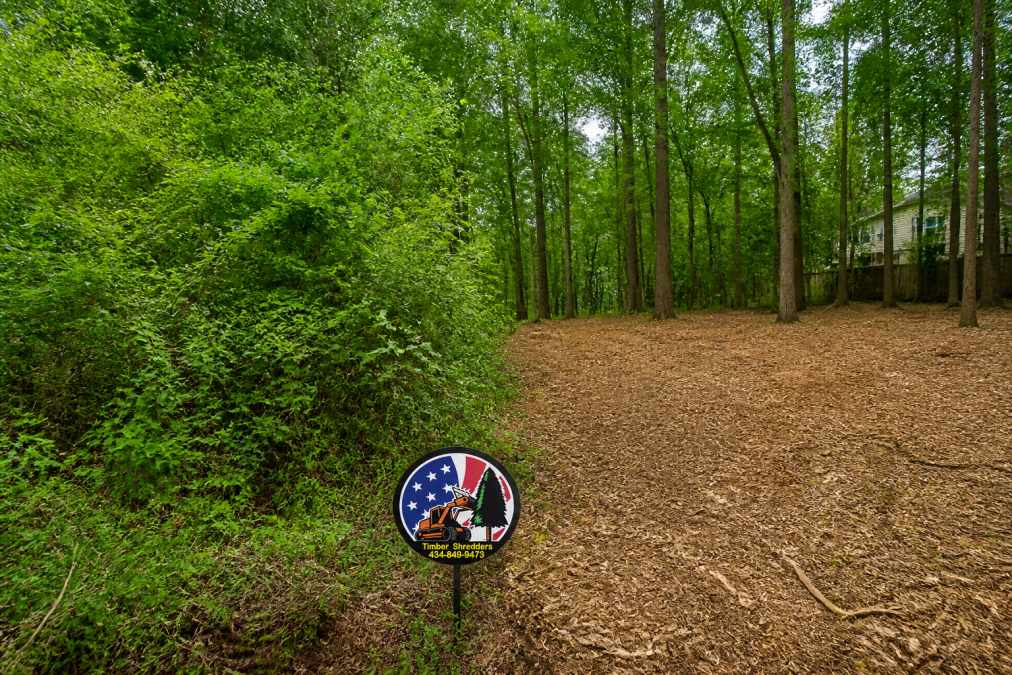
Forestry mulching compresses these steps into one. The mulcher grinds everything in place, leaving a property covered with a protective organic layer rather than exposed dirt. This single difference cascades into measurable improvements in soil health, erosion control, and land usability.
The cost structure differs too. Traditional clearing charges for equipment hours, hauling fees, and disposal costs. Forestry mulching typically charges by the acre or hour for the single machine doing all the work. According to Virginia Cooperative Extension guidance on land management, properties treated with on-site mulching show significantly better soil recovery than those cleared and left bare.
Traditional clearing leaves your property vulnerable: bare soil washes away in heavy rain, and invasive species colonize exposed ground faster than desirable plants. Forestry mulching leaves your property protected and primed for whatever comes next.
Benefit 1: Prevents Soil Erosion and Protects Topsoil
Soil erosion is the silent cost of traditional land clearing. Expose bare soil to rain and runoff, and you lose the nutrient-rich topsoil that took decades to develop.
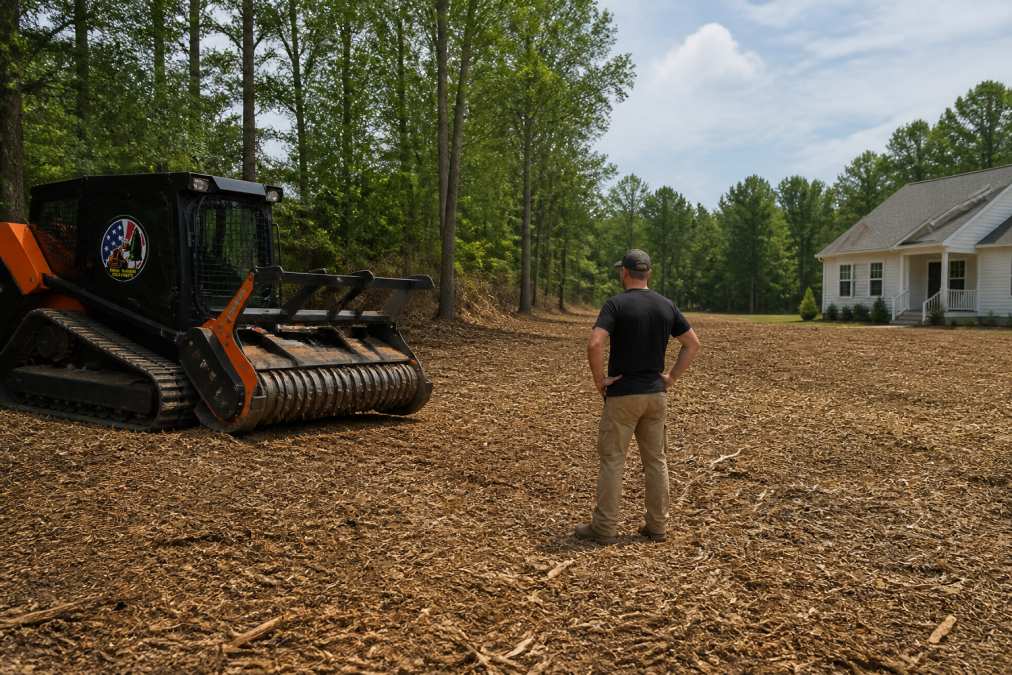
Forestry mulching prevents this by leaving a protective organic layer on the ground. The mulch acts as a barrier between rain and soil, absorbing impact and slowing runoff. This matters enormously on sloped properties where water moves fast. The mulch layer holds soil in place while it decomposes, adding organic matter back into the ground rather than washing it away. Properties treated with forestry mulching show better recovery for pasture, landscaping, or construction afterward.
Benefit 2: Enriches Soil Health and Nutrient Cycling
Dead organic matter decomposes into nutrients your soil needs. Forestry mulching accelerates nutrient cycling by processing vegetation into a form that decomposes efficiently.
As the mulch breaks down, it releases nitrogen, phosphorus, and potassium back into the soil. Microorganisms colonize the organic layer, improving soil structure and water-holding capacity. Earthworms arrive and root systems penetrate deeper. The soil beneath the mulch becomes richer and more biologically active than before clearing.
Properties cleared with forestry mulching often support better pasture growth, healthier tree establishment, or more vigorous landscaping than those cleared by other methods. The soil hasn’t been depleted, it’s been improved.
Benefit 3: Reduces Fire Hazard and Creates Defensible Space
Dense brush and dead trees are fuel. Removing them reduces wildfire risk and creates defensible space, the cleared area around structures where a fire’s intensity drops before reaching your home.
Forestry mulching clears the undergrowth and smaller trees that carry fire from ground to crown, removes dead wood that ignites easily, and leaves a mulch layer that’s too moist and dense to burn readily. According to National Interagency Fire Center guidance on defensible space, properties with cleared vegetation and reduced fuel loads show measurably lower fire risk. Central Virginia properties in high-risk zones benefit enormously from this clearing.
How Long Does Forestry Mulching Take on Residential Land
Duration depends on property size, vegetation density, and terrain difficulty. A quarter-acre of light brush might take 2-4 hours; a heavily wooded 2-acre parcel with dense undergrowth could take 12-20 hours spread across multiple days.
Most residential projects complete within 1-3 days. Timber Shredders LLC provides a comprehensive property assessment before quoting, which means you get an accurate timeline before work begins.
Four More Critical Benefits: Curb Appeal, Moisture Retention, Regrowth Control, and Property Access
Benefit 4: Boosts Curb Appeal and Property Value
A cleared, well-maintained property looks larger, more accessible, and more valuable. The mulch layer adds visual definition, improves sightlines, and makes the property feel open rather than overgrown. If you’re planning to sell, this matters. If you’re reclaiming your own land, the psychological benefit is real.
Benefit 5: Retains Soil Moisture and Reduces Watering Needs
Mulch is an insulator that keeps soil cooler in summer and retains moisture that would otherwise evaporate. Properties with a mulch layer need less supplemental watering for new plantings, pasture, or landscaping. Better moisture retention means deeper root systems and more resilient plants.
Benefit 6: Suppresses Invasive Regrowth and Weed Pressure
Bare soil is an invitation to invasive species. Forestry mulching prevents this by creating a physical barrier that makes germination harder and blocks light that many seeds need. The suppression buys you time, instead of fighting invasive regrowth immediately after clearing, you get months of reduced pressure, allowing desirable vegetation to establish.
Benefit 7: Restores Access and Visibility Across Your Property
Overgrown brush blocks sight lines and makes properties inaccessible. Forestry mulching removes this barrier entirely. A cleared property with improved visibility is safer, you can spot hazards, fallen trees, erosion, and wildlife activity before they become emergencies.
Benefit 8: Cost-Effective Compared to Hauling and Disposal
Traditional clearing involves multiple cost layers: equipment rental, operator time, grinding, hauling, and disposal fees. Forestry mulching consolidates these into a single operation. The mulch stays on your property, eliminating disposal costs entirely. For properties over an acre, this efficiency becomes a significant cost advantage.
Pricing depends on property size, vegetation density, and terrain complexity. Contact Timber Shredders LLC for a free assessment and accurate quote based on your specific property conditions.
Pros and Cons of Forestry Mulching
Pros:
- Single-pass operation clears and mulches simultaneously
- Mulch layer improves soil health and prevents erosion
- Eliminates hauling and disposal costs
- Reduces fire hazard and creates defensible space
- Suppresses invasive regrowth for months
- Improves property access and visibility
- Faster completion than traditional multi-step clearing
- Professional equipment minimizes soil compaction
Cons:
- Not suitable for salvaging valuable timber (material is ground, not felled for lumber)
- Works best in dry to moderate soil conditions; wet ground can cause equipment to sink
- Dense rock or boulder-filled properties may require manual removal before mulching
- Mulch layer requires monitoring to prevent regrowth as it decomposes
- Service area limitations (Timber Shredders LLC serves Central Virginia)
- Results depend on operator skill; poor operation leaves uneven coverage
What Happens After Forestry Mulching: Post-Project Maintenance
Forestry mulching doesn’t end when the equipment leaves. The mulch layer is a living system that decomposes, settles, and integrates into your soil over 12 months.
Weeks 1-2: Initial Settling and Moisture Stabilization
The fresh material is loose and fluffy. Rain and foot traffic cause it to settle and compact, normal and expected. The layer will drop 20-30% in height as air pockets collapse and decomposition begins (peer-reviewed research). Wait until week 3 or 4 to plant trees, shrubs, or establish pasture to avoid destabilizing root systems as the mulch compacts beneath them.
Monitor for water pooling in low spots. If standing water persists for more than 48 hours after rain, rake the area level to prevent anaerobic decomposition and odor.
Weeks 3-8: Active Decomposition and Weed Germination
Once the mulch settles, decomposition accelerates. The layer darkens as it ages and begins integrating with native soil. Invasive species and wind-blown seeds may sprout on the mulch surface. Pull seedlings by hand while they’re small. Do not use herbicides on fresh mulch; they may inhibit beneficial decomposition.
If you’re planning to seed native grasses or wildflowers, wait until week 6 or later, after the mulch has darkened and settled fully.
Months 2-4: Mulch Integration and Regrowth Pressure
By month two, the mulch layer has integrated partially with the soil beneath. The top 1-2 inches may be noticeably darker and more soil-like. Invasive regrowth pressure increases. Continue pulling invasive seedlings, or apply a pre-emergent herbicide labeled for mulched areas.
Months 2-3 are ideal for installing landscape plants, trees, or shrubs. The mulch has settled enough to provide stable planting depth, and organic matter is actively enriching the soil.
Months 4-8: Stabilization and Soil Enrichment
By month four, the mulch layer has largely integrated into the upper soil profile. Decomposition slows as the most easily degradable material breaks down. The layer now provides ongoing moisture retention and weed suppression without requiring active maintenance.
Regrowth pressure typically peaks around month three and declines as the mulch layer becomes more established. If you haven’t planted desired vegetation by now, consider doing so. Monitor for erosion on sloped properties; rake channels level and add supplemental mulch if needed.
Months 8-12: Long-Term Integration and Readiness for Next Steps
By month eight, the mulch layer has largely become soil. What’s visible is a dark, organic-rich surface layer that looks like natural forest floor. This is the point at which your property is ready for most next steps: construction, pasture establishment, permanent landscaping, or maintenance as a cleared, accessible property.
Continue monitoring for invasive regrowth, but pressure should be minimal. Most properties need only occasional pulling of scattered seedlings.
Common Maintenance Mistakes to Avoid
- Planting too early: Waiting 3-4 weeks after mulching prevents settling-related root destabilization.
- Ignoring water pooling: Low spots that hold water can create anaerobic zones and odor. Rake them level.
- Over-mulching: Adding supplemental mulch before month 4 risks creating a layer too thick for proper decomposition.
- Using post-emergent herbicides on dense regrowth: Pre-emergent herbicides are more effective and less disruptive to soil biology.
- Expecting zero regrowth: Some regrowth is normal and manageable. The mulch layer suppresses it significantly but doesn’t eliminate it entirely.
Most residential properties require minimal maintenance during this 12-month window. By month 12, your property has transitioned from cleared ground to enriched, stable soil ready for whatever use you’ve planned.
Frequently Asked Questions
Q: How does forestry mulching prevent soil erosion better than traditional land clearing?
A: Forestry mulching grinds vegetation into organic material that stays on-site as a protective mulch layer. This layer acts as a barrier against water runoff, holds soil in place during heavy rain, and reduces compaction compared to heavy machinery that removes vegetation entirely. The mulch also improves soil structure, making it more resistant to erosion over time as decomposition enriches the topsoil.
Q: What is the typical timeline for forestry mulching on a residential property?
A: How long forestry mulching takes depends on property size, vegetation density, terrain, and equipment availability. Small residential properties (under 1 acre) typically take 1-3 days. Larger properties with thick brush or mixed stumps may require 3-5 days or more. Your land management professional can assess your specific property and provide an accurate timeline during the initial consultation.
Q: Does forestry mulching really improve soil health, or is that marketing?
A: Forestry mulching does improve soil health through organic material decomposition. The mulch layer increases nutrient cycling, enhances moisture retention, and promotes beneficial microbial activity. Over time, this creates a healthier growing environment for pasture, landscaping, or future construction. The improvement is measurable through soil compaction reduction and increased organic matter, making cleared land more usable for agricultural or residential purposes.
Q: How does forestry mulching compare to traditional land clearing methods?
A: Forestry mulching vs traditional land clearing differs significantly in approach and outcomes. Traditional methods often involve heavy machinery that removes vegetation and topsoil, requiring hauling and disposal of debris, creating bare ground prone to erosion. Forestry mulching grinds material on-site, preserves topsoil, eliminates hauling costs, and leaves a nutrient-rich mulch layer that prevents erosion and suppresses regrowth. The result is faster completion, lower environmental impact, and healthier soil.
This article was written using GrandRanker