
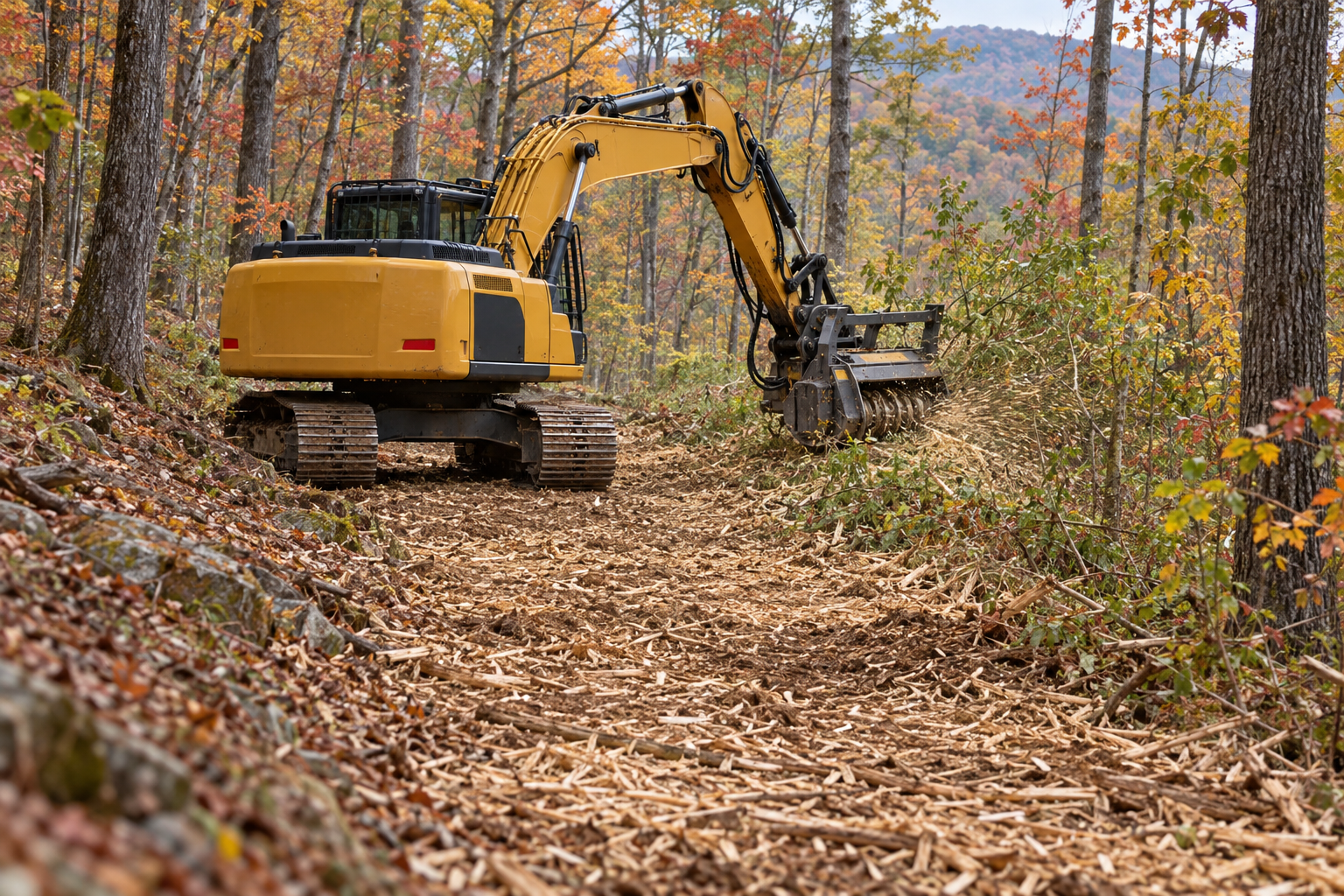
Brush closes across the route, small trees crowd the gaps, and the way through the woods is hard to follow. Then the mulcher starts opening a corridor. Stems come down, tangled growth is processed, and a visible path takes shape between the trees. Timber Shredders LLC offers forestry mulching around South Boston to open woodland trails, property access lanes, and overgrown connections between places the owner wants to reach.
The first passes establish the opening. The operator works into the vegetation from a usable starting point, keeping enough room to move and see the next section. Brush that once reached across the route becomes shredded material on the ground. As the machine advances, the trail starts to read as one continuous line rather than a series of narrow gaps in the undergrowth.
An excavator with a hydraulic mulching head offers another way to work the trail edges. The boom carries the cutting head into suitable brush while the tracked machine works from an accessible position. Around bends and uneven margins, that reach helps place the attachment where the vegetation needs attention. The right setup depends on the terrain and access.
Trees that belong in the finished woodland remain part of the setting. The cutting head works through unwanted smaller growth around them, opening sightlines beneath the canopy. A route can bend with the available ground and pass through existing openings without cutting a straight scar across the whole property. The aim is useful access with a wooded character, especially where shade and screening are part of the appeal.
Dense stretches change the pace. A patch of intertwined saplings takes different passes from loose briars or scattered stems. The machine works through the heavier sections in stages, then comes back across suitable material to reduce coarse pieces. That finishing work helps connect the newly opened sections and makes the route easier to see from one bend to the next.
The ground reveals its own details as the brush comes away. A shallow depression, an old fence, loose rock, or a fallen limb may be hidden at first. The operator adjusts the work around those conditions rather than treating every stretch identically. Where the route needs drainage, stump extraction, or a constructed vehicle surface, those tasks become a separate part of the access work.
At turns and meeting points, a little more opening can make a large difference. The machine works back growth that crowds the inside of a bend or hides the entrance to a side trail. Longer sightlines make the connection easier to recognize. Keeping the cleared width consistent with the intended use also gives the owner a practical edge to follow during later maintenance.
The change is visible looking back along the corridor: a wooded route with space between its edges and a clear connection through the property. Suitable brush and small trees are processed where they stand, leaving mulch along the opening. Walking access, hunting trails, and routes for property maintenance each call for a width and finish that match their purpose.
Timber Shredders LLC provides South Boston-area forestry mulching, brush clearing, and land clearing. Send a property location, a sketch showing where the trail should connect, and photos of the growth. Request a free estimate and put an overgrown route back within reach.