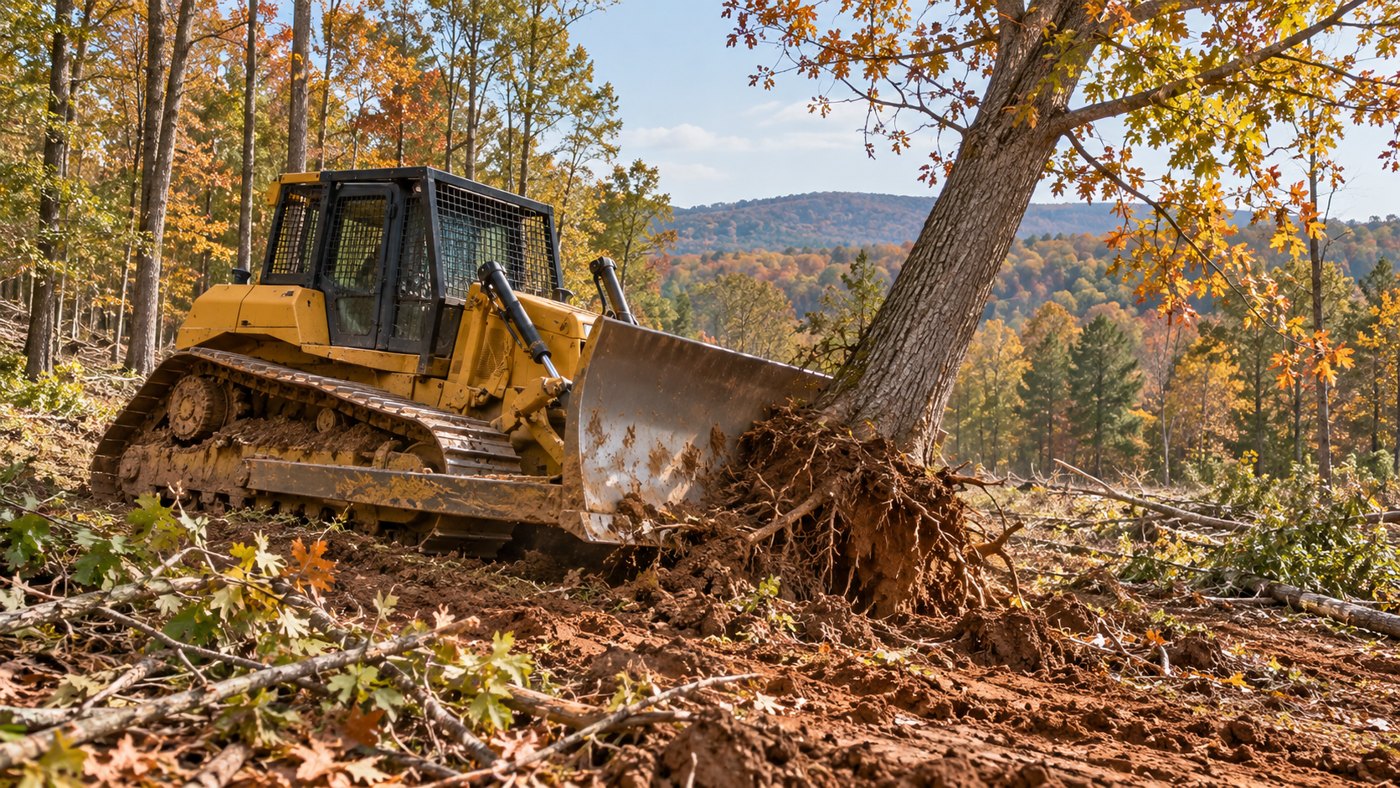
This Farmville-area project called for more than cutting bushes. The owner needed unwanted trees removed from a defined section of land so the ground could move toward its next use. We brought in the dozer for mechanical land clearing, pushing selected trees and opening the area within the agreed work limits.
A clearing job that needed heavier equipment
Forestry mulching is useful for reducing suitable brush and smaller woody growth, but this property’s objective involved taking trees out of the clearing area. The work required a different approach. We identified the intended opening and retained trees before beginning so the heavier clearing stayed focused on the designated ground.
Working room was part of the plan. The machine needed space to approach the unwanted trees and move cleared material without blocking the next section. Establishing that sequence helped us develop the opening steadily instead of filling the working area with material that had to be moved repeatedly.
Pushing trees and handling the roots
On the trees suited to that method, the dozer pushed them over and brought roots up with the tree. That is a different result from shredding standing vegetation while leaving the root system in place. The work exposed the ground beneath the growth and made the clearing area more recognizable as the project progressed.
Tree size, root structure, slope, and ground conditions affect how mechanical clearing is approached. We worked through the selected area with those site conditions in mind. Pushing trees is heavy equipment work, and the method has to fit the tree and the room available around it.
Keeping the clearing organized
As trees came down, we moved material out of the immediate working line and kept the opening connected. Handling the debris was part of making the cleared space useful. A job is not finished simply because the trees are no longer standing; the remaining material and disturbed ground still need attention.
The work left a defined opening that the owner could assess for the next stage. Where roots come out, depressions and uneven ground can remain. Those conditions are different from the finish of a mulching job and should be considered when planning later grading, seeding, access, or construction-related preparation.
A clearer starting point for future use
The main change on this Farmville property was the removal of trees from the designated area. The owner gained a clearer view of the available space and its terrain. Retained wooded sections still defined the outside of the project, while the opening established a practical starting point for later improvements.
Full land clearing and finished site preparation should be scoped separately when the project requires both. Removing trees does not establish a building pad, certify soil conditions, or complete drainage work. Discussing the intended final use helps determine what needs to happen after the heavy clearing is complete.
Timber Shredders provides land clearing around Farmville and Prince Edward County. If your project needs trees pushed, brush removed, or ground opened with heavy equipment, request a free quote so we can assess the property and define the work.