
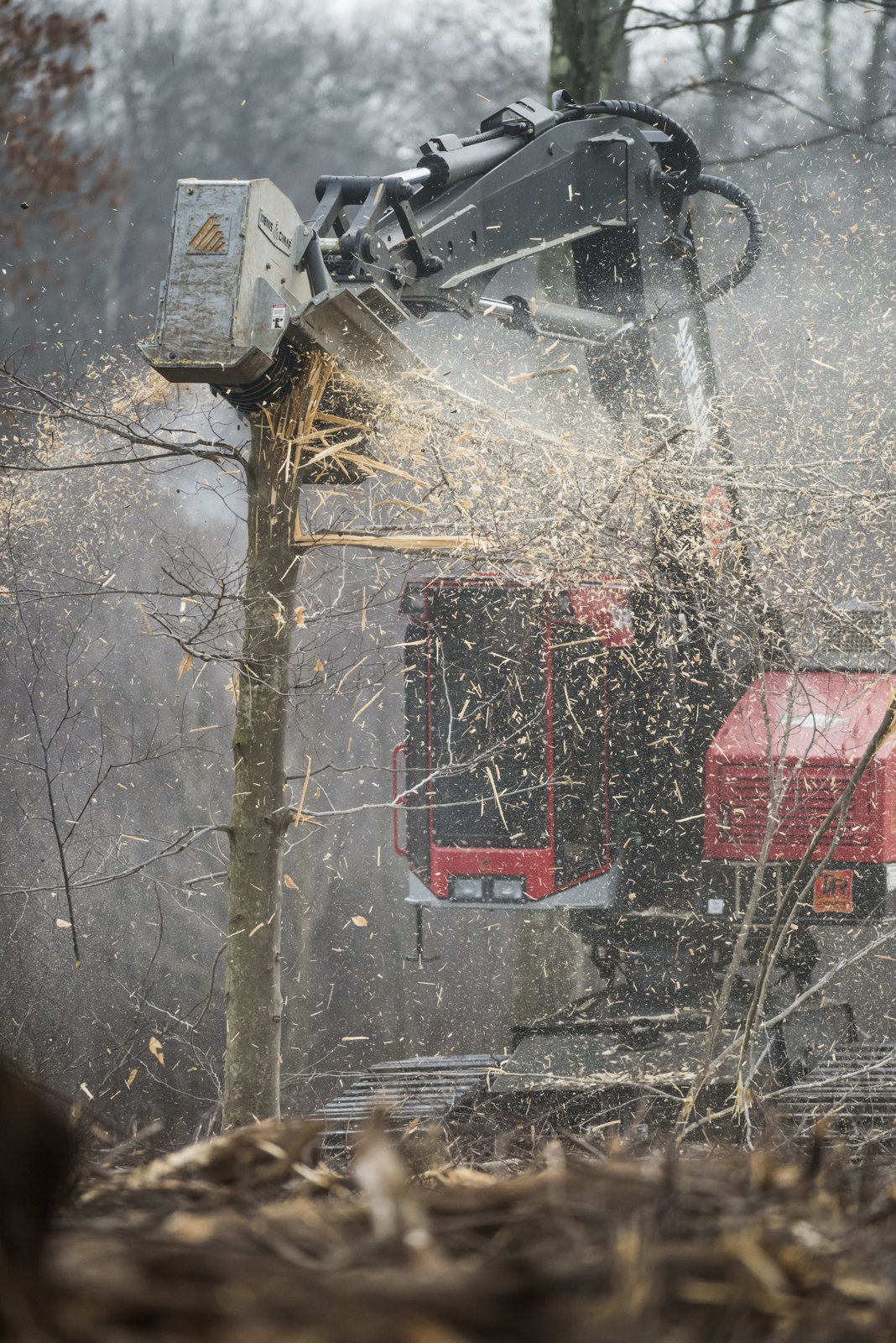
A woodland trail near Amherst can connect a home to a sitting spot, an open field, or a stand of trees. The route matters more than the total distance. A trail that follows the ground comfortably will usually be more enjoyable than a straight opening that becomes steep, muddy, or difficult to maintain. Start by choosing a destination worth walking to.
Walk several possible routes
Before marking trees, explore the property on foot and compare alternatives. Look for openings between trunks, firm ground, and gentle changes in elevation. Observe where water collects after rain. A longer route may avoid a wet hollow or an awkward climb. Sketch the alternatives and decide where the trail should begin, turn, and finish.
Choose walking width deliberately
A walking trail does not need the same opening as an equipment lane. Discuss who will use it, whether people should pass comfortably, and how maintenance tools will reach the route. Allow for shoulders and overhanging vegetation without unnecessarily widening the cleared area. If you expect vehicle access later, say so now; that changes the design and the surface expectations.
Keep the woodland character
The wooded setting is part of the reason to build a trail. Mark trees you want to retain and route around groups that give the property its character. Avoid treating every small opening as a reason to remove another tree. Selective brush clearing can reveal sightlines and improve access while leaving a shaded, natural experience along much of the route.
Understand the natural surface
Mulching suitable brush can leave a loose layer of woody material, and roots or cut stems may remain. That surface is different from a finished accessible walkway or compacted gravel path. Explain any mobility needs before the estimate. If you want a smoother walking surface, discuss additional preparation rather than assuming the first clearing pass will produce it.
Handle difficult sections individually
A drainage crossing, sharp slope, or low spot can determine whether the whole trail remains useful. Do not simply extend clearing ththose features because they fall on a drawn line. Review alternatives during the site visit. A reroute may be more practical than construction. Crossings and structural improvements need their own planning, scope, and appropriate review before work proceeds.
Build maintenance into the route
Leave enough access to remove fallen limbs and control regrowth without disturbing retained trees. Establish a inspection routine after storms and during the growing season. Watch for slippery surfaces, exposed roots, and branches hanging over the path. Keep a map of the approved route so future clearing does not create side trails or gradually widen the corridor.
Start with an Amherst trail walk
Tell Timber Shredders where you want the trail to lead, how you intend to use it, and which sections you have already walked. Photos of entry points and difficult terrain help prepare for an estimate. A deliberate route and defined finish can create a woodland trail that feels like part of the property rather than a strip cut through it.
Equipment example photograph: Deniscimafinc, CC BY-SA 4.0. Resized for web. Photo depicts equipment in another setting, not a Timber Shredders project in Amherst.
