Table of Contents
- Identifying Invasive Vine Species Before Removal
- What You’ll Need: Tools for Clearing Dense Brush and Vines
- Best Way to Clear Dense Vines: Manual Removal Steps
- How to Kill Invasive Vines Permanently with Herbicides
- Vine Removal from Trees: Protecting Your Forest Canopy
- Natural Ways to Kill Vines Without Chemicals
- Common Mistakes to Avoid When Clearing Dense Vines
- Soil Health Restoration After Vine Removal
Best Way to Clear Dense Vines: Step-by-Step Guide
Last Updated: July 25, 2026
Dense vine growth can transform a manageable property into an overgrown jungle within a single season. The best way to clear dense vines depends on the species, thickness, and whether you’re protecting surrounding vegetation or clearing an entire area. At Timber Shredders LLC, we’ve helped hundreds of Central Virginia property owners reclaim land choked by invasive vines. This guide walks you through every technique, from manual extraction to chemical control, so you can choose the approach that fits your situation.
Identifying Invasive Vine Species Before Removal
Before you touch a single vine, knowing what you’re dealing with changes everything. Different invasive species require different removal strategies, and some respond to herbicides while others demand mechanical extraction.
The most common invasive vines in the United States include Japanese honeysuckle, which twines tightly around trees; poison ivy, identifiable by its three-leaflet clusters; English ivy, with distinctive five-pointed leaves; and kudzu, which can grow up to a foot per day during peak season. Identification matters because some vines like kudzu regrow aggressively from root systems, while others like English ivy can be pulled manually if caught early. Poison ivy requires complete root removal and careful handling to avoid skin contact with all plant parts. Take photos of leaf shape, stem color, flowers, and berries, then cross-reference with university extension resources before beginning removal work.
Photograph your vines in different seasons. Spring flowers, summer leaf patterns, and fall berries all help with accurate identification.
What You’ll Need: Tools for Clearing Dense Brush and Vines
The right tools make the difference between manageable work and exhausting labor. Your toolkit depends on vine thickness, coverage area, and whether you’re removing from trees or open ground.
Manual Removal Tools
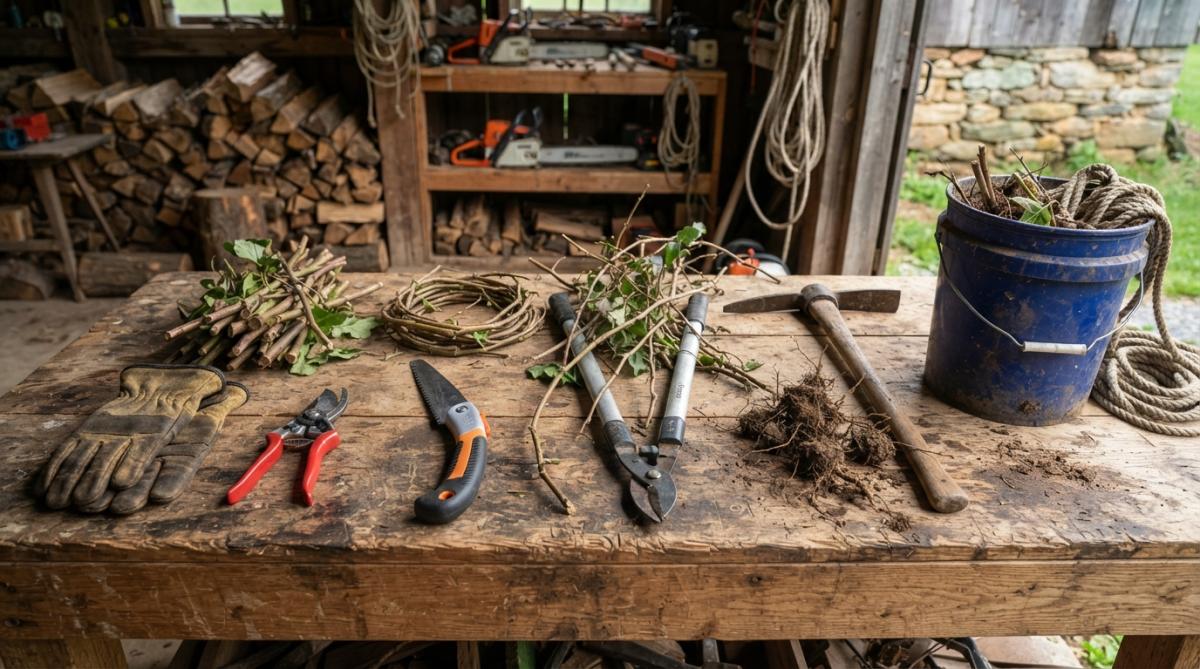
Fiskars PowerGear2 Lopper delivers three times the cutting power of standard loppers through patented gear technology. With fully hardened bypass-style steel blades, it cuts branches up to two inches thick, ideal for dense woody vines. At $36 to $59.99, it’s an affordable entry point for homeowners tackling moderate vine coverage.
Corona Long Reach Bypass Pruner extends your reach to 46-62 inches, allowing you to cut vines from ground level without climbing ladders. The Cut ‘n’ Hold feature clasps cut material until you release it, essential when removing thorny or poisonous vines. Pricing ranges from $28.25 to $74.99.
Weed Wrench (The Uprooter) uses leverage to extract invasive woody plants and vines by their roots without chemicals. Constructed of A36 mild steel, it handles stems up to 2.25 inches in diameter. For environmentally conscious landowners, it eliminates regrowth by removing the entire root system.
Manual extraction tools work best on younger vines with shallower root systems. Attempting to uproot a 10-year-old woody vine often results in broken tool handles and incomplete root removal. Know when to switch to herbicides or powered equipment.
Powered Equipment Options
Husqvarna 324L String Trimmer delivers commercial-grade performance with a 25cc, 4-stroke engine requiring no fuel mixing. The 18-inch cutting width handles dense grass and lighter vines efficiently. Pricing ranges from $258 to $539.99. String trimmers excel at clearing young vines but struggle with woody stems thicker than a pencil.
DR Field and Brush Mower (PRO XL30) represents the heavy-duty option for extensive vine coverage. The 20 HP engine and 30-inch cutting width tackle three-inch saplings and six-foot-high weeds in a single pass. At $3,499.99 to $4,199.99, it’s a significant investment but handles work that would take weeks with handheld tools.
Brush Grubber Shrub/Clump Grubber attaches to ATVs, UTVs, or lawn tractors and uses a triple-chain system to pull out unwanted shrubs and vines by the roots. Models handle clumps up to 21 inches in diameter. Pricing ranges from $64.99 to $163.57.
Safety Gear and Protective Equipment
Dense vine clearing exposes you to cuts, scratches, eye injuries, and chemical exposure. Eye protection rated ANSI Z87.1 protects against impact and chemical splashes. Heavy-duty gloves rated for thorn and chemical resistance prevent cuts and skin contact with irritating plants. Long sleeves and long pants create a barrier between your skin and irritating plant oils. Sturdy boots with ankle support protect feet from sharp vine stems and provide traction on uneven ground.
Best Way to Clear Dense Vines: Manual Removal Steps
Manual removal works best for scattered vines, young growth, or areas where you need precise control to protect surrounding plants.
Cutting Vines from Tree Trunks
Dense vines wrapped around tree trunks create a strangling effect that weakens and eventually kills the tree. Removing these vines requires care to avoid damaging bark.
Step 1: Make relief cuts at the point where the vine wraps most tightly. Use loppers to cut completely through the vine, then make additional cuts every 12-18 inches up the trunk. These relief cuts prevent the vine from contracting and further strangling the tree as it dries.
Step 2: Pull away loosened sections. As the vine dries over several days, the grip loosens. Grab sections of vine and pull them away from the trunk by hand or with a pry bar. Work gently to avoid scraping bark.
Step 3: Scrape remaining vine material. Use a paint scraper or wire brush to remove remaining vine stems and adhesive pads that stick to bark.
Step 4: Treat exposed wood. Allow wood to dry for several days before applying tree wound dressing, if recommended by your local extension office.
Never girdle a tree while removing vines. If you must cut the vine, make relief cuts that prevent the remaining vine from tightening as it dries.
Manual Extraction and Root System Removal
Pulling vines by hand or with mechanical tools removes the entire plant, preventing regrowth from root fragments. This approach works best on younger vines with shallower root systems.
Step 1: Loosen soil around the base. Use a shovel or mattock to break up soil in a 12-18 inch radius around where the vine enters the ground.
Step 2: Grasp the vine at soil level. For thick vines, use the Weed Wrench or Brush Grubber rather than relying on hand strength alone.
Step 3: Pull with steady pressure. Pull at a slight angle rather than straight up. Steady, sustained pressure works better than violent yanking.
Step 4: Remove remaining roots. After extracting the main vine, dig out visible root fragments. For deep-rooted species like kudzu, you may need to excavate 12-18 inches deep.
Step 5: Dispose of all plant material. Place vines in a sealed container or burn pile. Never compost invasive vines, as seeds and root fragments can survive composting.
How to Kill Invasive Vines Permanently with Herbicides
Chemical control offers a reliable method for killing vines that resist mechanical removal or cover too large an area for manual work. Herbicides work best when applied to actively growing vines during the growing season, typically late spring through early fall.
Cut-Stump Herbicide Application Method
The cut-stump method applies herbicide directly to freshly cut vine stems, where the plant absorbs it immediately through exposed tissue. This approach minimizes environmental impact.
Step 1: Cut the vine close to ground level. Make a clean, flat cut rather than a jagged one; smooth cuts expose more tissue for herbicide absorption.
Step 2: Apply herbicide immediately. Using a paintbrush or spray bottle, coat the exposed cut surface with herbicide within 15 minutes of cutting.
Step 3: Choose the right herbicide. Crossbow Specialty Herbicide contains 2,4-D and triclopyr, making it effective on woody plants and broadleaf weeds including many vine species. Pricing ranges from $29.37 for a quart to $85.46 for a gallon. Always read the label to confirm it’s approved for your target species.
Step 4: Repeat on regrowth. If shoots emerge from the root system over the following weeks, cut and treat them immediately.
Never apply herbicide to cut vines on windy days. Drift can damage desirable plants downwind. Wear protective gloves and avoid skin contact.
Stump Treatment for Regrowth Prevention
Some vines send up new shoots after cutting. Stump treatment prevents this regrowth by killing the remaining root system.
Step 1: Cut the vine and allow drying. Wait 2-4 weeks for the stump to dry. Dried stumps absorb herbicide more effectively than fresh cuts.
Step 2: Drill holes into the stump. Using a drill with a wood bit, create 4-6 holes around the stump, angled downward at 45 degrees. Holes should penetrate 3-4 inches into the wood.
Step 3: Fill holes with herbicide. Pour undiluted herbicide into each hole using a funnel or squeeze bottle.
Step 4: Seal the stump. Cover the stump with a plastic cap or duct tape to prevent rainfall from diluting the herbicide.
Step 5: Monitor for regrowth. Check the stump monthly. If shoots emerge, cut them immediately and repeat treatment.
Vine Removal from Trees: Protecting Your Forest Canopy
Trees supporting heavy vine growth suffer stress and eventual death if vines aren’t removed promptly. Vines damage trees by shading the canopy, adding weight that stresses branches, girdling trunks, and creating moisture retention that promotes fungal disease.
Step 1: Assess the tree’s health. Determine whether the tree is worth saving. Look for green leaves, living branches, and intact bark.
Step 2: Remove vines in stages. Don’t strip all vines from a tree in a single day. Sudden exposure to full sun can shock the tree. Remove vines over 2-4 weeks.
Step 3: Remove vines from the canopy first. Work from the top down, removing vines from branches before tackling the trunk.
Step 4: Cut vines from the trunk. Use the relief-cut method to remove trunk-wrapping vines.
Step 5: Treat the tree for disease. Monitor for fungal infections or pest issues after removing vines.
Trees that have supported heavy vine growth for years may have deformed or weakened branches. Consider having an arborist assess the tree’s structure after vine removal.
Natural Ways to Kill Vines Without Chemicals
Organic and chemical-free approaches appeal to landowners concerned about environmental impact. These methods require more labor but eliminate herbicide residue.
Manual Pulling and Digging Techniques
Hand removal works best on young vines with shallow root systems. Loosen soil thoroughly in an 18-24 inch radius around the vine’s entry point. Grasp the vine at soil level and pull at an angle. If the vine resists, dig deeper rather than pulling harder. After removing the main vine, dig out root fragments using a root saw or pruning saw. Fill the excavation with topsoil and compost to prevent erosion.
Eco-Friendly Alternatives to Glyphosate
Vinegar-based herbicides contain acetic acid, which burns down foliage but doesn’t always kill roots. Horticultural vinegar (20% acetic acid) works better than household vinegar, though effectiveness on woody vines is limited compared to synthetic herbicides.
Citrus oil extracts derived from orange peel contain d-limonene, a natural solvent that disrupts plant cell membranes. These products work on young, herbaceous vines but rarely kill established woody vines.
Manual removal combined with mulching prevents regrowth by blocking light. After pulling vines, cover the area with 4-6 inches of mulch. Reapply mulch annually until the area is fully vegetated.
Common Mistakes to Avoid When Clearing Dense Vines
Mistake 1: Incomplete root removal. Pulling vines without extracting roots guarantees regrowth within weeks. If you pull vines manually, you must also dig out roots or apply herbicide to the stump.
Mistake 2: Removing vines too quickly from trees. Stripping all vines from a tree in one day shocks the tree and can cause sunscald or branch failure. Remove vines gradually over 2-4 weeks.
Mistake 3: Timing herbicide application wrong. Herbicides work best on actively growing vines during the growing season. Spray in late spring through early fall.
Mistake 4: Ignoring identification. Different vines respond to different methods. Misidentifying your vine means choosing the wrong removal strategy.
Mistake 5: Disposing of vines improperly. Never compost invasive vines with viable seeds or root fragments. Burn piles or sealed disposal containers are the safe options.
Mistake 6: Neglecting safety gear. Working with thorny vines or poison ivy without proper protection leads to injuries and allergic reactions.
Mistake 7: Overestimating your equipment. A string trimmer won’t cut three-inch woody vines. Match your tools to the job.
Soil Health Restoration After Vine Removal
Removing dense vines leaves behind disturbed soil, exposed tree bark, and bare ground vulnerable to erosion. Restoring soil health and replanting native species transforms your property.
Assessing Soil Damage and Disturbance
Dense vine growth compacts soil and depletes nutrients. Examine soil structure by digging a small hole, healthy soil crumbles in your hand; compacted soil forms hard clumps. A simple soil test kit reveals pH, nitrogen, phosphorus, and potassium levels. Check for erosion damage where vines prevented soil stabilization. Measure how many hours of direct sun the cleared area receives, as light conditions change dramatically with vines removed.
Soil restoration isn’t optional if you want native plants to establish successfully. Two to three months of amendment and settling before planting significantly improves survival rates.
Native Plant Replacement Strategies
Replanting with native species prevents invasive vine regrowth while creating habitat value and reducing long-term maintenance. Choose plants for the site conditions you’ve assessed. Establish groundcover and understory layers to create a diverse planting structure that prevents invasive vines from reestablishing. If you want climbing plants on structures, choose native vines like trumpet vine or Virginia creeper. Space plants appropriately so dense planting fills in faster and suppresses invasive growth. Apply 4-6 inches of wood chip mulch around newly planted natives, avoiding mulch piles against tree trunks. New plantings need regular watering during dry periods and weeding of invasive seedlings for the first two growing seasons.
Clearing dense vines is challenging, but the reward is reclaimed property and restored soil health. Whether you choose manual removal, herbicide treatment, or a combination approach, success requires matching your method to the specific vine species and site conditions. For properties with extensive vine coverage, professional equipment and experienced operators make the difference. Timber Shredders LLC specializes in land clearing throughout Central Virginia, using forestry mulching and professional equipment to remove invasive vegetation while improving soil health. Get a FREE Quote from Timber Shredders LLC and let experienced professionals assess your property and recommend the most efficient removal strategy for your specific situation.
Frequently Asked Questions
What is the best way to clear dense vines without damaging nearby trees?
The safest approach combines careful cutting with selective removal of root systems. First, cut vines into manageable sections using loppers or a brush cutter, working from the top down. For vines attached to tree trunks, use a handsaw to sever them at ground level, then treat the cut stump immediately with herbicide to prevent regrowth. Avoid pulling vines suddenly, as this can damage bark. Remove only the invasive species while preserving native vegetation and tree health.
How long does it take to clear dense vines from a large property?
Timeline depends on area size, vine density, and methods used. Manual removal of a quarter-acre thicket typically takes 20-40 hours of labor. Powered equipment like brush cutters can reduce this significantly. Professional land clearing services assess your specific property conditions, including soil type, vine species, and accessibility, and provide detailed project timelines. Factors like debris disposal and soil restoration can extend the overall project duration by several weeks.
Can natural methods kill invasive vines permanently, or do I need glyphosate?
Manual extraction with complete root removal eliminates regrowth without chemicals, but requires consistent effort over time. Eco-friendly alternatives to glyphosate include vinegar-based sprays (limited effectiveness on woody stems) and mechanical tools like the Weed Wrench, which uses leverage to pull plants by the root. For perennial vines with deep root systems, combining manual removal with repeated cutting over a season works, though glyphosate-based herbicides applied via cut-stump method offer faster, more reliable permanent control with proper safety precautions.
What tools work best for cutting through thick, woody vines?
Fiskars PowerGear2 Loppers deliver 3x cutting power for vines up to 2 inches thick, while Corona Long Reach Bypass Pruners extend your reach to 62 inches for high branches. For larger thickets, a gas-powered brush cutter or the DR Field and Brush Mower handles saplings and woody stems efficiently. Manual tools like the Weed Wrench remove roots completely without cutting. For very dense infestations across multiple acres, professional equipment and experienced operators ensure thorough removal while protecting soil health.
This article was written using GrandRanker