Table of Contents
- Why Clearing Trees for Driveway Access Matters
- Planning and Preparation: Permits and Site Assessment
- Methods for Clearing Trees and Brush
- Heavy Equipment for Land Clearing: What You’ll Need
- DIY Land Clearing vs. Professional Services
- Land Clearing Cost Factors and Budget Planning
- Debris Disposal, Stump Removal, and Site Restoration
- Safety Considerations and Common Mistakes to Avoid
Clearing Trees for Driveway Access: A Step-by-Step Guide
Last Updated: July 18, 2026
Clearing trees for driveway access is a common land management project that often goes wrong due to poor planning. At Timber Shredders LLC, we’ve helped hundreds of property owners reclaim usable driveway space by removing overgrown trees, brush, and debris. The difference between success and costly disaster typically comes down to preparation, method selection, and realistic expectations.
This guide walks you through every stage of clearing trees for driveway access, from initial permits and property assessment through debris disposal and site maintenance. Whether you’re considering DIY clearing or hiring professionals, understanding these fundamentals will help you make informed decisions and avoid common pitfalls.
Why Clearing Trees for Driveway Access Matters
Overgrown trees and dense brush blocking driveway access create safety hazards by reducing visibility for vehicles entering or exiting your property. Beyond safety, blocked driveways limit property usability and negatively impact property value. Clearing trees also prevents root systems from damaging the driveway surface itself, tree roots crack asphalt and concrete, creating expensive repairs. The environmental impact depends on your approach: forestry mulching grinds trees into mulch that improves soil health and reduces erosion, while improper clearing leaves exposed soil vulnerable to washout.
Start your project assessment by measuring sight distance from your property to the road. Most jurisdictions require at least 100-150 feet of clear visibility for safe driveway access. Check local regulations before clearing, as some areas restrict tree removal near property lines or require permits for specific species.
Planning and Preparation: Permits and Site Assessment
Successful clearing projects begin with thorough planning. Understanding local regulations, identifying utility lines, and assessing your terrain are essential first steps.
Understanding Local Tree Removal Regulations
Tree removal regulations vary significantly by location. Some municipalities require permits for any tree removal, while others only regulate removal of trees above a certain diameter or protected species. Violating local ordinances can result in fines, project shutdowns, or requirements to replant trees at your expense.
Contact your local planning department or building inspector before clearing. Ask about tree removal permits, protected species regulations, easement restrictions, and height or setback requirements for sight distance. Protected species complicate clearing work significantly, some areas prohibit removal of native hardwoods or environmentally sensitive species. Keep copies of permits on-site during the project.
Surveying Property Boundaries and Assessing Terrain
Know exactly where your property boundary lines are before clearing begins. Hire a licensed surveyor to mark property lines if uncertain, the cost ($300-800) is minimal compared to disputes over clearing on someone else’s land.
Assess your terrain carefully. Sloped properties present erosion risks when vegetation is removed. Wet or clay-heavy soil can become impassable for heavy equipment. Rocky terrain damages equipment and slows work. Call your local utility locating service (811 in most U.S. regions) to have gas, electric, water, and sewer lines marked. This service is typically free and takes 2-3 business days. Document the site condition with photos before clearing begins.
Never assume property lines or utility locations. Always call for utility marking before heavy equipment arrives. Hitting a gas line or electrical conduit creates immediate hazard and expensive liability.
Methods for Clearing Trees and Brush
Different clearing methods suit different situations. Your choice depends on tree size, property slope, soil condition, debris management preferences, and budget.
Manual Clearing and Chainsaw Techniques
Manual clearing with chainsaws works well for small trees (under 12 inches diameter) and light brush on properties where heavy equipment access is limited. This method requires skill, proper safety equipment, and significant physical effort. If you lack chainsaw experience, hiring someone experienced is worth the cost. Manual clearing produces felled trees and brush piles that still require removal or disposal through chipping, waste service pickup, or burning (where permitted).
Mechanical Clearing with Heavy Equipment
Excavators and bulldozers handle larger trees and substantial brush removal efficiently. An excavator with a thumb attachment can fell trees, grab and move large logs, and feed material into a chipper. Bulldozers push material into piles for removal. Skid steers with brush-cutting attachments clear underbrush without heavy compaction. Heavy equipment operation on residential properties requires careful planning, but the advantage is speed, a professional crew can clear an overgrown driveway in one to three days.
Forestry Mulching for Efficient Vegetation Management
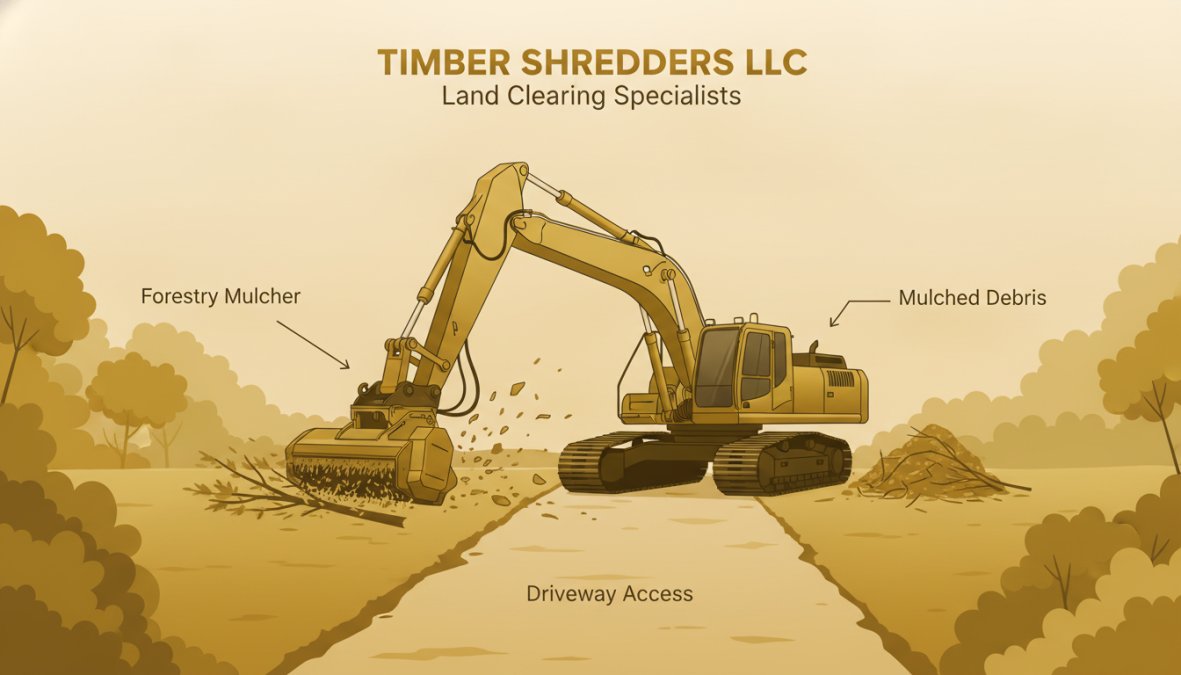
Forestry mulching grinds trees, brush, and stumps into mulch in a single pass. A mulching head attached to an excavator processes material on-site, eliminating hauling costs and debris piles. The resulting mulch remains on-site, improving soil health and reducing erosion. This method works exceptionally well for clearing trees for driveway access because it handles trees up to 12-16 inches diameter, clears brush completely, and grinds stumps below ground level in one operation. The primary limitation is equipment access, forestry mulching requires a clear path for the equipment to operate.
Heavy Equipment for Land Clearing: What You’ll Need
Understanding equipment options helps you evaluate contractor proposals and understand project timelines.
Excavators, Bulldozers, and Wood Chippers
Excavators are versatile machines with articulated arms and interchangeable attachments. With a standard bucket, they dig and move material. With a thumb attachment, they grab logs. With a mulching head, they grind trees and brush. Hourly operation typically costs $75-150.
Bulldozers excel at pushing large volumes of material and grading terrain. Hourly costs run $100-200+.
Wood chippers reduce felled trees and brush to manageable chips. Mounted chippers attached to excavators process material continuously.
Skid steers are compact, highly maneuverable machines suitable for properties with limited access. Hourly costs range $50-100.
Equipment selection depends on tree size, brush density, and site accessibility. Small properties with light clearing might use a skid steer and chipper. Larger projects typically require an excavator.
Safety Gear and Protective Equipment
Equipment operators require proper training and certification. Verify contractors carry liability insurance. For anyone working near clearing operations, personal protective equipment is essential: hard hats, safety glasses, hearing protection, steel-toed boots, and cut-resistant gloves. Establish clear work zones where only authorized personnel enter.
DIY Land Clearing vs. Professional Services
The decision between DIY clearing and hiring professionals depends on project scope, your skills and equipment access, timeline requirements, and budget.
When DIY Clearing Makes Sense
Small projects with light brush and trees under 6 inches diameter are appropriate for DIY work if you have chainsaw experience and proper safety equipment. DIY clearing makes financial sense when you already own necessary tools and have access to a trailer for hauling. The primary risk of DIY clearing is injury, chainsaw accidents, falling branches, and utility line contact cause serious injuries annually.
When to Hire Professional Contractors
Projects involving trees over 12 inches diameter, dense brush, heavy equipment operation, or complicated site conditions warrant professional work. Professionals have proper equipment, trained operators, insurance coverage, and experience managing unexpected issues. Professional contractors complete work faster and handle debris disposal and site cleanup. For small projects, DIY work might cost $500-1,000 in equipment rental. Professional work might cost $1,500-3,000.
Professional clearing typically costs more upfront but saves money long-term through speed, proper site restoration, and insurance protection. DIY work makes sense only for small projects where you already own tools and have genuine experience.
Land Clearing Cost Factors and Budget Planning
Clearing costs vary dramatically based on project specifics. Understanding cost drivers helps you evaluate quotes and build realistic budgets.
Variables That Impact Your Project Price
Tree size and quantity directly drive cost. Brush density influences clearing difficulty and time. Site accessibility affects equipment efficiency. Debris disposal method significantly impacts cost, leaving mulch on-site costs less than hauling material away. Soil and terrain conditions influence equipment choices. Utility line presence complicates work. Stump removal and grinding add significant cost.
Getting Accurate Cost Estimates
Request quotes from multiple contractors. Provide the same information to each: property size, tree count and approximate sizes, brush density, site accessibility, utility locations, and your preferred debris disposal method. Be specific about scope. Ask what’s included in their quote, does it cover site cleanup, debris disposal, stump grinding, and erosion control? Request references and verify insurance.
Debris Disposal, Stump Removal, and Site Restoration
How you handle debris and stumps after trees are felled significantly impacts the final appearance and usability of your driveway area.
Managing Felled Trees and Brush Piles
Once trees are felled, you face disposal decisions. Chipping material on-site produces mulch that benefits the property by suppressing weeds, retaining soil moisture, and gradually improving soil structure. Burning is an option in many rural areas, but check local regulations first. Commercial waste services haul material away but charge by volume or weight, a typical driveway clearing might generate 5-15 cubic yards of material, costing $200-800 to haul away.
Stump Grinding and Root System Removal
Stumps left in the ground create tripping hazards, sprout new growth, and complicate future driveway work. Stump grinding removes the visible stump and grinds roots 6-12 inches below ground level, eliminating regrowth. Stump grinding typically costs $100-300 per stump depending on size.
Long-Term Maintenance and Re-vegetation
After clearing and stump removal, the site requires attention to prevent erosion. Bare soil exposed by clearing is vulnerable to washout, particularly on sloped properties or during heavy rain. Erosion control involves stabilizing soil with mulch, seeding with native grasses, or installing erosion control blankets on steep slopes. Maintenance during the first year after clearing is critical, remove any sprouts from cut stumps promptly and monitor erosion after heavy rain.
Safety Considerations and Common Mistakes to Avoid
Clearing projects create hazards that cause injuries and property damage if not managed carefully.
Utility Lines, Easements, and Right-of-Way Issues
Hitting underground utilities during clearing creates immediate danger and expensive liability. Gas lines cause explosions and fires. Electrical lines cause electrocution and equipment damage. Before any equipment operates, call for utility marking. This service is free and takes 2-3 business days. Easements grant utilities or other parties rights to access your property for maintenance. Check your property deed and contact your local government to identify easements before clearing.
Underground utilities are serious hazards. Always call for utility marking before equipment arrives, and ensure operators know exactly where utilities are located. This step prevents catastrophic outcomes.
Erosion Control and Soil Disturbance Prevention
Removing vegetation destabilizes soil, particularly on slopes or in areas with clay soil. Heavy equipment compacts soil, reducing drainage and creating runoff paths. Prevent erosion by maintaining vegetative cover where possible, spreading mulch across exposed soil, seeding with grasses, and installing erosion control blankets on slopes. Stormwater management becomes important after clearing, exposed soil increases runoff velocity and volume. Swales or berms can direct water flow and allow infiltration.
Clearing trees for driveway access demands planning, proper equipment, and realistic expectations about costs and timeline. Whether you choose DIY work for small projects or hire professionals for comprehensive clearing, the fundamentals remain the same: assess your site carefully, understand local regulations, identify utilities, select appropriate methods, and plan for site restoration.
Timber Shredders LLC specializes in this work throughout Central Virginia. Our team handles property assessment, permitting coordination, equipment operation, debris management, and site restoration. We use forestry mulching to improve soil health while clearing and complete projects efficiently. Get a free quote and see how professional clearing can transform your property access.
Frequently Asked Questions
Do I need a permit to clear trees for driveway access?
Permit requirements vary by location and property type. Most residential areas require permits for removing trees above a certain diameter or in protected zones. Contact your local county or city planning department before clearing trees for driveway access. Some jurisdictions also regulate work near easements or right-of-way areas. Getting proper permits prevents costly fines and ensures your project complies with environmental regulations.
What's the difference between DIY land clearing and hiring professionals?
DIY land clearing works for small brush areas with minimal tree density, but requires significant time, equipment rental, and safety knowledge. Professional contractors bring heavy equipment like excavators and forestry mulchers, complete projects faster, handle debris disposal, and manage permits. For properties with dense vegetation, large stumps, or challenging terrain, professional services typically deliver better results and reduce injury risk compared to DIY approaches.
How much does land clearing cost for driveway access?
Land clearing costs depend on property size, vegetation density, tree species and trunk diameter, equipment needed, debris disposal method, and local labor rates. Small residential driveway projects range differently based on these factors. Get quotes from multiple contractors for accurate pricing. Request detailed estimates that specify what's included, stump removal, debris hauling, grading, and site restoration, to avoid unexpected costs during the project.
Will forestry mulching damage my soil like a bulldozer would?
Forestry mulching is gentler on topsoil than traditional bulldozing because it grinds vegetation in place and leaves mulch as ground cover, reducing erosion. However, heavy equipment does create soil disturbance. Professional operators minimize impact by working in appropriate soil conditions and managing drainage carefully. The resulting mulch actually improves soil health over time by adding organic matter, unlike bulldozing which removes material entirely and leaves bare, compacted earth.
This article was written using GrandRanker