Table of Contents
- What Is Driveway Grading and Why It Matters
- 1. Water Drainage and Runoff Management
- 2. Preventing Soil Erosion and Washout
- 3. Extending the Lifespan of Paving Materials
- 4. Eliminating Tripping Hazards and Vehicle Damage
- 5. Protecting Foundation Stability and Structural Integrity
- 6. Improving Curb Appeal and Property Value
- Signs of Poor Driveway Drainage You Should Never Ignore
- Frequently Asked Questions
Last Updated: September 11, 2026
What Is Driveway Grading and Why It Matters
Driveway grading is the process of reshaping a driveway’s surface and sub-base to create a specific slope, or pitch, that directs water away from your home, vehicles, and foundation. Done correctly, it solves drainage problems before they become expensive structural repairs.
On rural Central Virginia properties, a driveway that looked fine for years starts holding water after a heavy storm, and within a season or two it is rutted, the edges are washing out, and gravel is migrating toward the road. Most of that damage traces back to one root cause, a grading problem that was never corrected.
The six benefits below explain what professional driveway grading protects, and how to spot the warning signs before serious damage sets in.
The Difference Between Grading and Leveling
Grading and leveling are not the same job, and confusing them wastes money.
Leveling makes a surface flat. It removes high spots and fills low spots so the driveway looks even. Grading shapes the surface to a deliberate slope and crown so water flows off it in a controlled direction.
A perfectly level driveway is a drainage disaster: water pools, saturates the sub-base, and destroys the surface from underneath. Grading keeps a driveway functional; leveling is mostly cosmetic.
1. Water Drainage and Runoff Management
Water drainage is the single most important function of a graded driveway. A proper grade creates a crown, a slight rise down the centerline, that sheds surface runoff toward the edges and into a ditch or swale.
Without that crown, water accumulates in the wheel paths, seeps into the aggregate, softens the sub-base, and causes the surface to fail. Adding gravel to a low spot without fixing the underlying slope just moves the puddle a few feet and wastes material.
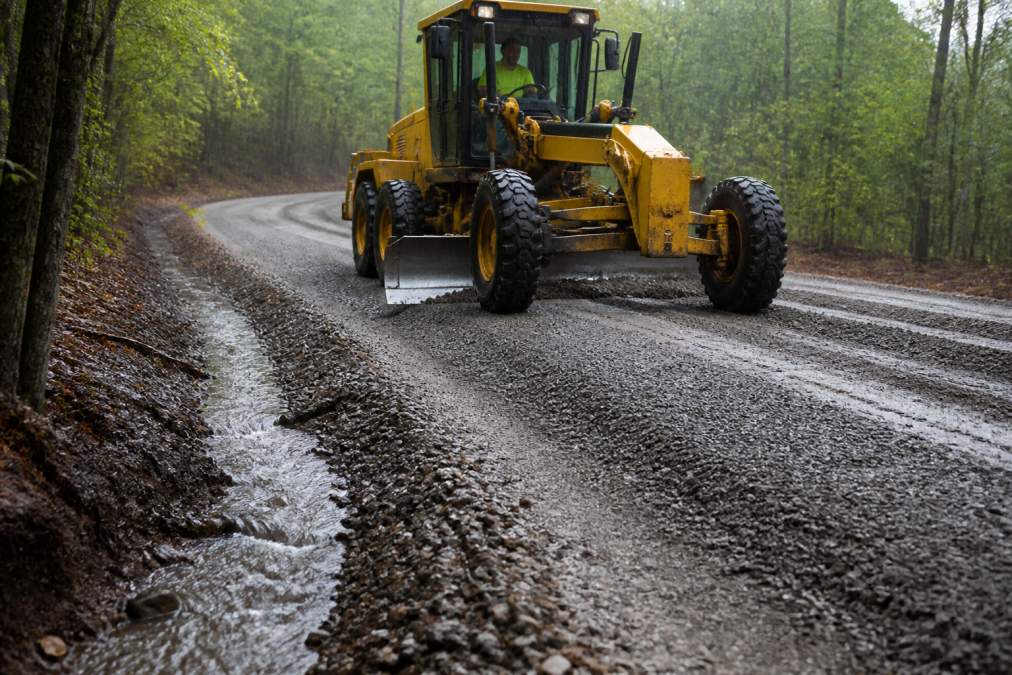
The USDA Natural Resources Conservation Service guidance on water runoff notes that managing surface flow is central to preventing erosion on unpaved surfaces. Grading is how you apply that principle to a residential driveway.
Walk your driveway after a heavy rain and watch where the water actually goes. If it sits in the wheel paths or runs toward your garage instead of the ditch, the crown is gone and no amount of new gravel will fix it.
2. Preventing Soil Erosion and Washout
Erosion and washout happen when water crosses an ungraded surface with enough energy to carry soil and aggregate away. A correct slope reduces that energy by spreading flow out and directing it off the driveway quickly.
The signs are easy to read: exposed edges, deepening side ruts, and a fan of gravel at the bottom of the slope. Left alone, washout cuts into the sub-base and each storm deepens the channel.
A common approach is to reestablish the crown and cut shallow ditches along the uphill side to intercept water before it reaches the driving surface, preventative maintenance that costs far less than rebuilding a washed-out driveway.
3. Extending the Lifespan of Paving Materials
Grading extends the life of asphalt, gravel, and concrete by keeping water out of the layers beneath the surface. Water in the sub-base weakens the support under the pavement, and that support carries the load.
For gravel driveways, grading redistributes aggregate back into the wheel paths where it belongs. For asphalt, correcting the slope prevents the edge cracking and potholing that follow repeated freeze-thaw cycles.
Skipping grading because the surface “still looks fine” can be an expensive mistake. By the time potholes appear, the sub-base has usually already failed, and repair can mean full reconstruction rather than a maintenance pass.
4. Eliminating Tripping Hazards and Vehicle Damage
Uneven surfaces create two problems at once: pedestrian safety risks and mechanical wear on vehicles. Heaved edges and deep ruts are trip hazards that punish suspension, tires, and undercarriage every time a car pulls in.
Proper grading removes those hazards by restoring a smooth, consistent profile, and corrects the transitions at the road and garage apron, the two spots where vehicles take the most abuse.
For anyone wondering how road surface conditions affect vehicle wear, the short answer is that repeated impact from uneven surfaces accelerates suspension and tire damage. Smoothing the profile is the fix.
5. Protecting Foundation Stability and Structural Integrity
Foundation integrity depends on keeping water away from the base of your home. A driveway sloping toward the house directs runoff into the foundation zone, causing settling, cracking, and basement moisture.
Grading reverses that by pitching the surface away from the structure toward a controlled drainage path, the same principle behind site sloping for any building.
If your driveway drains toward the garage or foundation, that is a structural risk, not a cosmetic annoyance. Correcting the slope is one of the most cost-effective forms of infrastructure protection available.
6. Improving Curb Appeal and Property Value
Curb appeal is the benefit most homeowners expect from grading, so it is worth being precise about what actually changes.
A graded driveway reads as intentional because the profile is consistent: uniform crown, defined edges, smooth transitions at the road and garage apron. That consistency registers as “maintained.” A rutted, washed-out driveway registers the opposite, from the road, before a buyer or appraiser steps out of the car.
What Appraisers and Buyers Actually See
Deferred maintenance is one of the few things a property evaluation reads at a glance. A driveway holding water, gravel fanned into the lawn, or edges crumbling into a ditch signals that drainage and grading around the foundation may have been neglected too. Correcting the grade removes that signal.
It also restores function, which separates a usable rural property from an unusable one. A driveway drivable in any weather keeps access open for deliveries, emergency vehicles, and everyday use, value that shows up in how a property is described and priced.
The Mechanism Behind the Look
Curb appeal from grading is not a cosmetic add-on, it is a byproduct of correct water management. When the crown sheds water to the edges and into a ditch or swale, the surface stays intact, aggregate stays in the wheel paths, and the edges stop washing out.
That is why patching a rutted driveway with fresh gravel rarely improves curb appeal for long. Without fixing the underlying slope, the new material migrates to the same low spots after the next heavy rain, and the driveway looks exactly as it did before.
If you are preparing a property for sale or refinancing, walk the driveway after a rain and photograph where water stands. That single image tells you more about the grade than any surface inspection, and it is the same thing a careful buyer will notice.
A Note on Climate and Long-Term Appearance
How long a graded driveway holds its appearance depends on local conditions. Freeze-thaw cycles heave and settle the surface seasonally, and heavy seasonal rainfall stresses edges and ditches. Neither makes grading less worthwhile, it makes the post-grading maintenance schedule more important, covered later in this article.
The practical takeaway: curb appeal from grading is durable only when the grade is maintained. A driveway that drains correctly looks correct season after season, the version of curb appeal that holds up at resale.
Signs of Poor Driveway Drainage You Should Never Ignore
Poor driveway drainage announces itself long before major damage appears. Catching these signs early is what separates a routine grading pass from a full rebuild. The checklist below is the same one a competent grader uses on a site assessment.
The Diagnostic Checklist
Walk the driveway after a heavy rain and look for:
- Standing water that lingers more than a day. Water sitting in the wheel paths means the crown is gone. Water sitting anywhere on a supposedly flat surface means there is no functional slope at all.
- Gravel fanned out at the bottom of a slope. This is washout in progress. Aggregate is migrating downhill, and the wheel paths are losing material with every storm.
- Ruts that deepen in the same spots each season. Recurring ruts are a grade problem, not a surface problem. Adding gravel without fixing the slope just resets the clock.
- Cracks along the driveway edges. Edge cracking on asphalt usually follows water infiltrating the sub-base and weakening the support under the pavement.
- Water staining or moisture near the foundation or garage. This is the highest-priority sign. A driveway sloping toward the structure is directing runoff into the foundation zone.
- A visible lip or drop at the road transition or garage apron. These are the two points where vehicles take the most impact, and they are the first places a failing grade shows up.
Any one of these points to a grading problem. Two or more usually means the sub-base has already been compromised.
Do You Need Re-Grading, or Something Else?
Not every drainage complaint requires a full grading pass. A useful way to triage:
- Surface looks even, water still pools. Likely a lost crown. Re-grading to restore the crown and pitch is usually the fix.
- Ruts in the wheel paths, edges intact. Often a maintenance pass, reestablish the crown, redistribute aggregate, and cut or clean the side ditches.
- Edges washing out, gravel leaving the property. The slope and ditch system need correction, not just surface smoothing.
- Water reaching the foundation or garage. Treat this as urgent. Correcting the slope away from the structure is the priority, and it is one of the most cost-effective forms of infrastructure protection available.
- Potholes and widespread cracking on asphalt. The sub-base has likely failed. This is reconstruction territory, not a grading pass.
What Happens If You Wait
The supporting question here is often about repair: property owners searching for [how to repair gravel driveway(/gravel-driveway-installation-cost-2026/) damage | extension.psu.edu] typically discover that surface fixes fail unless the underlying grade is corrected first. Patching ruts without restoring the crown just buys time.
On the cost side, cost of driveway grading services varies widely with driveway length, material, and site conditions, which is why a proper assessment matters before any work begins. Timber Shredders LLC builds clear project plans and estimates from an on-site evaluation, so there are no surprises once work starts.
The Maintenance Schedule Nobody Talks About
Grading is not a one-time fix. The grade is a living surface that responds to weather, traffic, and seasonal ground movement.
A practical schedule:
- After each winter. Inspect the crown and edges for heaving and settlement. Freeze-thaw cycles are the single biggest cause of seasonal grade degradation in cold-winter regions.
- After any major storm. Check the side ditches and the road transition for washout and debris. Clear anything blocking flow before the next rain.
- Annually, before the wet season. Recheck the pitch away from the foundation and garage. This is the inspection that protects the structure.
- Every few years, or sooner in high-rainfall regions. Plan on a maintenance pass to restore the crown and redistribute aggregate. Properties in heavy-rainfall or freeze-thaw climates need this more often than properties in mild, dry climates.
Climate Changes the Timeline
This is the part most generic grading content skips. The same driveway in two different climates will need very different upkeep:
- Freeze-thaw regions. Ground movement heaves and settles the surface each winter. Expect more frequent crown inspections and a shorter interval between maintenance passes.
- Heavy-rainfall regions. Ditch capacity and edge stability matter more. Sediment and debris accumulate faster, and washout risk is higher year-round.
- Mild, dry regions. Grades hold longer, but wind erosion and infrequent-but-intense storms can still cause localized washout. Inspections can be less frequent, but not skipped.
If you remember one thing: driveway problems are almost always water problems, and water problems are almost always grading problems. Fix the grade, then maintain it on a schedule that matches your climate, that is what keeps the fix from becoming a repeat expense.
Frequently Asked Questions
What is the average cost to grade a driveway?
The cost of driveway grading services depends on driveway length, material, site access, and the amount of corrective work needed. Short gravel driveways with minor washboarding cost less than long, steep, or badly eroded driveways that need new aggregate and ditching. Because every property is different, Timber Shredders LLC provides a free on-site assessment and a written estimate before any work begins. Request a quote to get an accurate number for your driveway.
How often should a gravel driveway be graded?
Most gravel driveways need grading once every one to two years, but heavy use, steep slopes, and intense spring runoff can shorten that interval. A practical rule: after the spring thaw and again before winter. Inspect for ruts, potholes, and lost crown each season. If water pools on the surface after rain or your tires leave deep tracks, schedule grading sooner. Regular preventative maintenance costs far less than rebuilding a failed driveway.
What are the signs that your driveway needs professional grading?
Watch for standing water after storms, potholes that return within weeks of filling, gravel migrating into your lawn, a flattened crown, ruts along tire paths, and cracks or edge crumbling on asphalt. These are classic signs of poor driveway drainage and a failing sub-base. If your vehicle bottoms out or you notice water pooling near the foundation, call a professional. Grading restores slope, pitch, and compaction before damage spreads to structures.
Can professional grading prevent driveway erosion?
Yes. Proper grading creates a crown and correct slope so surface runoff moves off the driveway instead of soaking in and carving channels. Combined with ditching and compacted aggregate, this reduces washout and soil erosion significantly. Professional operators also address water infiltration at the sub-base level, which is where most erosion damage starts. If you already see gullies or exposed gravel edges, grading plus fresh aggregate can reverse early erosion before it undermines the entire driveway.
How do you repair gravel driveway damage?
Start by identifying the cause: poor drainage, lost crown, or a failing sub-base. Rake out potholes, add fresh aggregate, and compact in lifts. For deeper damage, regrade the full surface to restore pitch and crown, then re-compact. If water is the root problem, add or clean ditches and consider a culvert. On badly rutted driveways, a professional can excavate, rebuild the base, and re-grade in one pass for a longer-lasting repair.